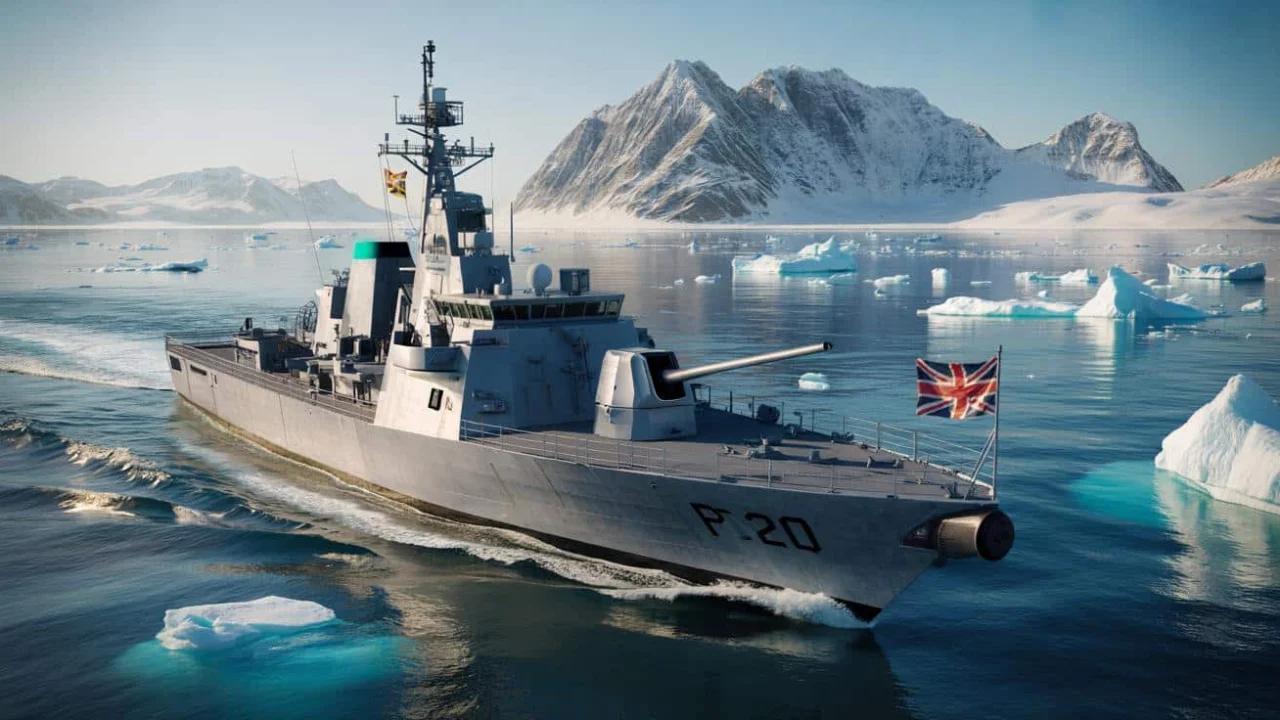
Picture this: while you’re sipping your morning coffee and checking the weather app for the day ahead, a crew of Royal Navy sailors is navigating icy waters thousands of miles from home, their breath visible in the sub-Antarctic air. Their mission isn’t glamorous, but it speaks volumes about Britain’s quiet determination to maintain its presence in some of the most remote corners of the world.

That’s exactly what happened this winter when HMS Forth, a compact but capable patrol vessel, completed what military officials are calling a significant demonstration of British sovereignty in the South Atlantic. Far from the headlines dominated by other global conflicts, this operation represents something equally important: the UK’s commitment to defending territories that most people couldn’t find on a map.
For the families back home in Portsmouth or Plymouth, these deployments mean months of separation and uncertainty. But for Britain’s strategic interests, they represent an unbreakable link to territories that have been British for generations.
What Makes This Mission Different
The HMS Forth patrol vessel recently wrapped up Operation Southern Sovereignty, a deployment that covered an area roughly the size of Western Europe. This wasn’t just another routine patrol – it was a carefully orchestrated demonstration of Britain’s ability to project military power across vast distances.
The operation connected three key British territories: the Falkland Islands, Ascension Island, and South Georgia. Each location presents unique challenges, from the windswept hills of the Falklands to the volcanic terrain of Ascension Island.

“This operation proved that the UK can still coordinate complex military activities across 1.5 million square miles of ocean,” said a Ministry of Defence spokesperson. “HMS Forth served as the maritime backbone of an operation that included naval, land, and air components.”
The timing wasn’t coincidental. With global attention focused on conflicts in Europe and the Middle East, Britain wanted to remind the world that it hasn’t forgotten about its South Atlantic responsibilities.

Breaking Down the Operation’s Scope
Operation Southern Sovereignty represented one of the most comprehensive British military exercises in the South Atlantic in recent years. Here’s what made it significant:
| Duration | Southern Hemisphere summer (December 2025 – February 2026) |
| Coverage Area | 1.5 million square miles of ocean |
| Key Locations | Falkland Islands, South Georgia, Ascension Island |
| Vessel Type | River-class Batch 2 Offshore Patrol Vessel |
| Ship Weight | 2,000 tonnes |
The operation included several key components that demonstrated Britain’s multi-domain capabilities:

- Naval patrols covering critical shipping lanes
- Joint exercises with Falkland Islands Defence Force
- Coordination with RAF Mount Pleasant operations
- Environmental monitoring and fisheries protection
- Search and rescue readiness exercises
HMS Forth, permanently based at Mare Harbour since 2020, served as the operational hub. The vessel replaced HMS Clyde and represents Britain’s commitment to maintaining a continuous naval presence in the region.
“What people don’t realize is that HMS Forth isn’t just showing the flag,” explained a former Royal Navy officer familiar with South Atlantic operations. “She’s actively protecting British fishing rights, conducting environmental surveys, and providing emergency response capabilities in one of the world’s most challenging maritime environments.”
Why This Matters Beyond Military Circles
The implications of Operation Southern Sovereignty extend far beyond naval strategy. For the 3,000 residents of the Falkland Islands, the presence of HMS Forth represents security and connection to the UK mainland.
The economic impact is substantial. British territories in the South Atlantic contribute significantly to the UK economy through fishing licenses, tourism, and strategic positioning for global shipping routes. HMS Forth patrol vessel operations help protect these interests.
From an environmental perspective, the South Atlantic contains some of the world’s most pristine marine ecosystems. The patrol vessel conducts regular monitoring to ensure compliance with international conservation agreements.
“These waters are home to massive populations of seabirds, seals, and whales,” noted a marine biologist who has worked in the region. “HMS Forth’s presence helps enforce fishing quotas and prevent illegal activities that could devastate these ecosystems.”
The geopolitical message is equally important. Argentina has never abandoned its claim to the Falkland Islands, and other nations watch closely to see if Britain remains committed to defending its overseas territories.
For British taxpayers, the operation demonstrates that their military can still punch above its weight. Despite budget constraints and competing priorities, the Royal Navy proved it can coordinate complex operations across vast distances.
The success of Operation Southern Sovereignty also validates the River-class patrol vessel concept. These ships may not grab headlines like aircraft carriers or destroyers, but they provide the sustained presence that maintains British influence in remote regions.
“People often ask whether these small patrol ships make a real difference,” said a defense analyst specializing in maritime security. “Operations like this prove that persistent presence matters more than occasional shows of force.”
Looking ahead, HMS Forth will continue her patrol duties from the Falklands base. The vessel’s next major deployment could involve supporting scientific research missions or responding to emergencies across the South Atlantic’s challenging waters.
For the sailors aboard HMS Forth, the mission represents both professional pride and personal sacrifice. Months away from family in harsh conditions, they maintain Britain’s presence in waters that have strategic importance far beyond their remote location.
FAQs
What is HMS Forth and where is it based?
HMS Forth is a River-class Batch 2 offshore patrol vessel permanently stationed at Mare Harbour in the Falkland Islands since 2020.
How large is the area covered by Operation Southern Sovereignty?
The operation covered approximately 1.5 million square miles of ocean, connecting the Falkland Islands, South Georgia, and Ascension Island.
Why does Britain maintain a naval presence in the South Atlantic?
The presence protects British overseas territories, enforces fishing rights, provides emergency response capabilities, and demonstrates continued sovereignty over these remote regions.
How long did Operation Southern Sovereignty last?
The operation ran during the Southern Hemisphere summer from December 2025 through February 2026.
What other military assets support HMS Forth in the region?
The ship works alongside the Falkland Islands Defence Force, RAF Mount Pleasant, and visiting Royal Navy vessels to maintain British military presence.
What are the main threats HMS Forth protects against?
The vessel guards against illegal fishing, provides search and rescue capabilities, conducts environmental monitoring, and maintains visible deterrence against any potential territorial challenges.
About the Author