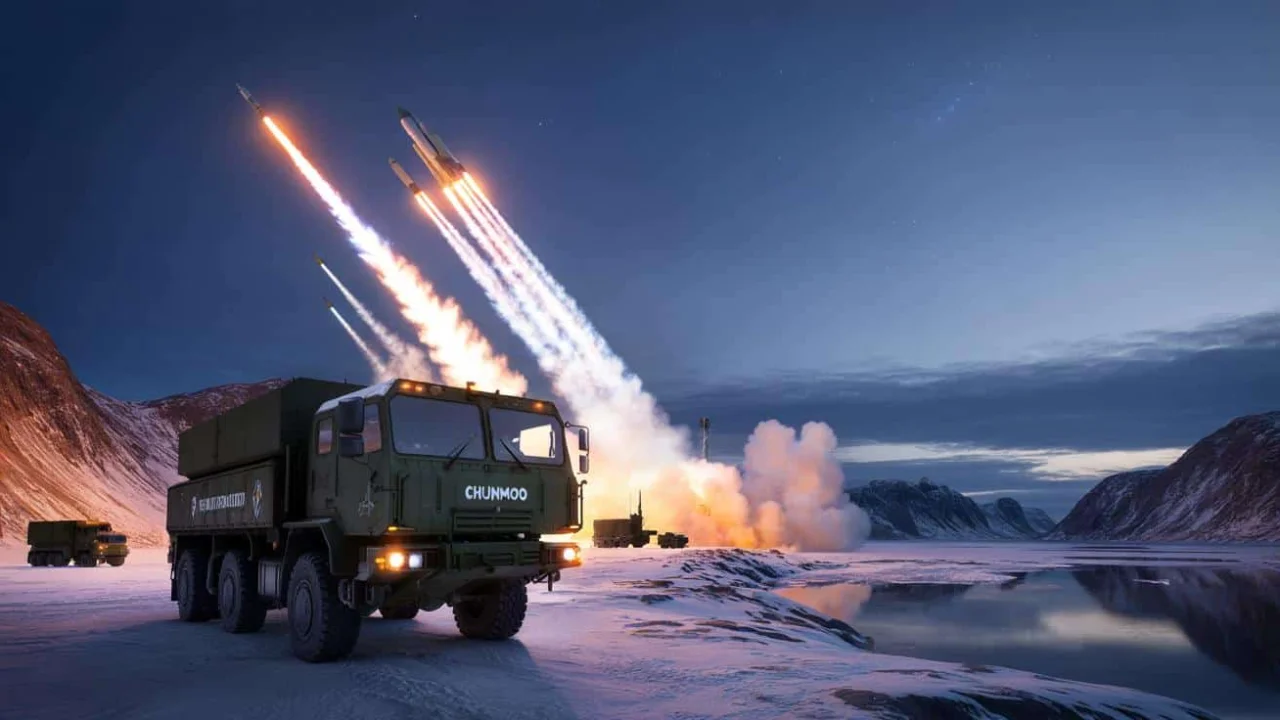
When Lars Andersen first heard the news at his morning briefing in Bardufoss, he couldn’t hide his surprise. The veteran Norwegian artillery officer had spent twenty years working with American and German systems, training alongside NATO partners who all used similar Western equipment. Now his government was betting the farm on rockets from South Korea.

“My first thought was honestly, ‘Are we sure about this?'” Lars admitted to his colleague over coffee. “But when I saw the specs and the price tag, everything clicked. Sometimes the best choice isn’t the familiar one.”
Lars isn’t alone in his initial skepticism turned enthusiasm. Across Norway’s military community, the selection of the Hanwha Chunmoo rocket artillery system has sparked conversations about changing security priorities and the evolving defense landscape in the Arctic region.

South Korea Wins Norway’s Biggest Military Deal in Years
Norway just made headlines by choosing South Korea’s Hanwha Aerospace over traditional Western suppliers for a massive $2 billion rocket artillery upgrade. The decision marks one of the largest military investments in Norwegian Army history and signals a significant shift in how NATO’s northernmost members think about long-range firepower.
Defence Minister Tore O. Sandvik called the purchase “one of the largest investments ever made for the Army.” The 19 billion Norwegian kroner deal will bring 16 K239 Chunmoo multiple launch rocket systems into service, along with a substantial missile stockpile that can reach targets up to 500 kilometers away.
The Hanwha Chunmoo rocket artillery system beat out competitors from Germany, France, and the United States in a competition that began in late 2024. For the first time, Norway will possess the ability to strike high-value targets deep behind enemy lines, whether firing from coastal positions or inland bases.
“This gives us reach we’ve never had before,” explained a senior Norwegian military official familiar with the procurement process. “We can now hold at-risk targets that previously required air power or long-range missiles we didn’t possess.”

What Norway Gets for $2 Billion
The comprehensive package Norway negotiated with Hanwha Aerospace includes much more than just the rocket launchers themselves. Here’s what the deal covers:
| Component | Quantity/Details | Key Capability |
|---|---|---|
| K239 Chunmoo Launchers | 16 units | Multiple rocket types, wheeled mobility |
| Short-range missiles | Large stockpile | Tactical battlefield targets |
| Medium-range missiles | Substantial inventory | Operational depth strikes |
| Long-range missiles | Strategic quantity | 500km reach for deep targets |
| Training package | Multi-year program | Full crew and maintenance training |
| Support systems | Complete logistics chain | Sustained operations capability |
The three-tier missile system gives Norwegian forces unprecedented flexibility. Short-range rockets handle immediate battlefield threats, medium-range missiles can engage operational targets, and the 500-kilometer long-range option allows strikes deep into enemy territory.

What made the Hanwha Chunmoo rocket artillery particularly attractive was its proven track record. The system has been battle-tested and continuously refined by South Korean forces, who face their own complex security challenges.
- Wheeled chassis provides superior mobility compared to tracked competitors
- Rapid reload capability keeps sustained fire rates high
- Advanced targeting systems integrate with NATO command structures
- Modular design allows easy maintenance and upgrades
- Cost-effective pricing beat European and American alternatives
“The Koreans offered the best combination of capability, price, and delivery timeline,” noted a defense industry analyst following the competition. “Their system met all the technical requirements while coming in significantly under budget.”
Why This Deal Matters Beyond Norway
The implications of Norway’s choice extend far beyond Scandinavian borders. This marks a significant departure from traditional NATO procurement patterns, where member nations typically buy from established American or European defense contractors.
South Korea’s defense industry has been aggressively expanding internationally, leveraging competitive pricing and battle-proven technology. The Hanwha Chunmoo rocket artillery win in Norway could open doors across Europe, where many nations are modernizing their artillery capabilities in response to changing security threats.
For Norway specifically, the new capability addresses growing concerns about Russian activity in the Arctic region. The High North has become increasingly militarized, with both sides closely monitoring each other’s movements in the Barents Sea and Arctic Ocean.
“This isn’t just about having longer-range rockets,” explained a former Norwegian defense official. “It’s about deterrence and ensuring we can respond effectively to threats in our region.”
The timing coincides with broader NATO efforts to strengthen northern defenses. Finland and Sweden’s recent alliance membership has created new opportunities for coordinated defense planning, and Norway’s enhanced rocket artillery could play a key role in regional security architecture.
European defense manufacturers are likely studying this outcome carefully. If other NATO members follow Norway’s example and choose Asian suppliers for major systems, it could reshape the competitive landscape for military contracts across the alliance.
The deal also highlights changing dynamics in the global arms trade. South Korean companies have become serious competitors to traditional Western suppliers, offering modern technology at competitive prices with reliable delivery schedules.
“We’re seeing a multipolar defense market emerge,” observed a European defense analyst. “Countries are no longer automatically turning to American or European suppliers. They’re shopping globally for the best value.”
For Norwegian taxpayers, the Hanwha Chunmoo selection represents significant value. The comprehensive package includes not just hardware but extensive training, logistics support, and technology transfer arrangements that build domestic capabilities.
The first Chunmoo systems are expected to begin arriving in Norway within the next two years, with full operational capability achieved by 2028. Norwegian artillery crews are already preparing for intensive training programs that will transition them from their current systems to the new Korean platforms.
FAQs
Why did Norway choose South Korean rockets over American or European options?
The Hanwha Chunmoo offered the best combination of capability, price, and delivery timeline, beating competitors on technical requirements while staying significantly under budget.
How far can the new Norwegian rockets reach?
The system includes missiles with ranges up to 500 kilometers (310 miles), giving Norway its first deep-strike capability against high-value targets.
When will the new rocket artillery be operational?
The first systems arrive within two years, with full operational capability expected by 2028 after comprehensive crew training and integration.
Does this deal affect Norway’s NATO commitments?
No, the Chunmoo system is designed to integrate with NATO command structures and enhance collective defense capabilities in the High North.
How many rocket launchers is Norway buying?
The $2 billion deal includes 16 K239 Chunmoo multiple launch rocket systems plus large stockpiles of three different missile types.
What makes the Korean system better than existing options?
The Chunmoo offers superior mobility on wheeled chassis, rapid reload capability, advanced targeting, and proven battlefield performance at competitive pricing.
About the Author