Lieutenant Colonel Erik Lindström still remembers the moment everything changed for Sweden’s air force. It was during a NATO exercise last year when he watched allied jets unleash precise strikes hundreds of kilometers away while his Gripen fighters remained limited to shorter-range missions.

“We had excellent aircraft, skilled pilots, but we lacked the reach,” Lindström recalls. “That’s when we realized Sweden needed more than just defensive capabilities.”
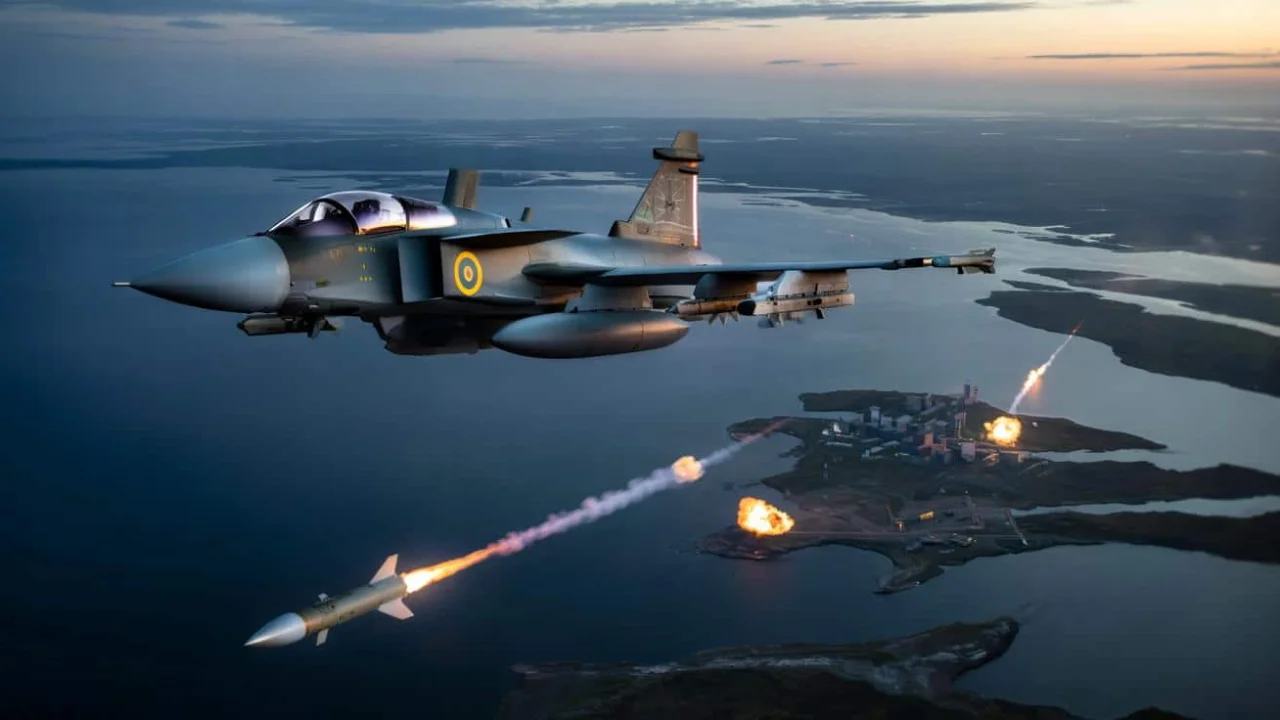
That realization is now driving one of the most significant military upgrades in Swedish history. The country is fast-tracking the integration of Gripen Taurus missiles, transforming its air force from a defensive shield into a long-range strike force capable of hitting targets far beyond Swedish borders.

Why Sweden is Racing Against Time
Sweden’s Air Force is accelerating its timeline to arm JAS 39 Gripen fighters with the Taurus KEPD 350 cruise missile. Originally scheduled for 2028, the integration has been “shifted left” significantly, according to senior Swedish military officials.
The Gripen Taurus missiles represent Sweden’s first true deep-strike capability, allowing pilots to engage hardened targets over 500 kilometers away. This dramatic shift reflects growing security concerns across Europe and Sweden’s evolving role as a NATO member.

“We’re compressing development phases that traditionally took years into months,” explains defense analyst Maria Andersson. “Sweden recognizes that waiting until 2028 might be too late given current geopolitical tensions.”
The acceleration involves unprecedented cooperation between Sweden’s Air Force, the Defence Materiel Administration (FMV), and defense contractor Saab. Instead of sequential development phases, teams are now overlapping testing, integration, and certification processes.

Technical Specifications and Strategic Impact
The Gripen Taurus missiles integration represents a quantum leap in Swedish air power capabilities. Here’s what makes this upgrade so significant:
| Specification | Details |
|---|---|
| Range | 500+ kilometers |
| Warhead | 480 kg penetrating/blast fragmentation |
| Guidance | GPS/INS with terrain matching |
| Target Types | Hardened bunkers, bridges, command centers |
| Launch Platform | JAS 39 Gripen C/D and E variants |
The missile’s advanced penetration capabilities allow it to destroy targets buried deep underground or protected by thick concrete. Its precision guidance system can navigate complex terrain while avoiding air defenses.
Key advantages of the Gripen Taurus missiles combination include:
- Stand-off capability keeping Swedish pilots safe from enemy air defenses
- All-weather, day/night operational capability
- Ability to strike moving and stationary targets
- Low radar signature reducing detection probability
- Multi-target engagement from single aircraft
“This isn’t just about adding a new weapon,” notes former Swedish Air Force commander General Lars Helmerson. “It’s about fundamentally changing how Sweden approaches deterrence and defense.”
Real-World Implications for European Security
The accelerated Gripen Taurus missiles program sends ripples far beyond Swedish borders. European allies are watching closely as Sweden transforms from a neutral nation focused on territorial defense into an active NATO partner with power projection capabilities.
For ordinary Swedes, this shift means their military can now deter threats before they reach Swedish territory. The psychological impact alone changes the security equation in Northern Europe.
Regional implications include:
- Enhanced Baltic Sea security as Sweden can now strike targets across the region
- Stronger NATO interoperability with standardized long-range strike capabilities
- Deterrent effect on potential adversaries operating in Northern European waters
- Reduced reliance on allied support for deep-strike missions
Industry experts predict other European nations will accelerate their own long-range strike programs in response. Finland, Denmark, and Norway are all evaluating similar capabilities for their air forces.
“Sweden’s decision creates a domino effect,” observes defense economist Dr. Nils Hagström. “When one Nordic nation gains deep-strike capability, neighbors naturally want to keep pace.”
The economic impact extends beyond defense spending. Swedish defense contractor Saab expects increased international interest in Gripen fighters equipped with Taurus missiles. Several potential customers have already inquired about similar configurations.
For pilots, the transition requires intensive retraining. The Gripen Taurus missiles integration introduces new tactical scenarios, requiring crews to master long-range mission planning, threat assessment, and precision targeting techniques.
Training programs now include:
- Extended-range navigation and fuel management
- Advanced target identification and verification
- Multi-domain threat environment operations
- Coordination with intelligence and surveillance assets
The accelerated timeline means Swedish pilots will receive compressed training schedules, with some elements conducted simultaneously rather than sequentially.
Budget implications are substantial but manageable. Sweden has allocated additional funding to support the accelerated timeline, including overtime payments for development teams and expedited testing facilities.
“The cost of moving faster is significant, but the cost of being unprepared is potentially catastrophic,” explains defense budget analyst Christina Holm.
Looking ahead, the Gripen Taurus missiles capability positions Sweden as a more capable NATO ally while maintaining its commitment to regional stability. The enhanced deterrent effect may actually reduce the likelihood of conflict by demonstrating Swedish resolve and capability.
International partners are taking notice. Several nations have requested briefings on Sweden’s accelerated integration process, hoping to apply similar approaches to their own military modernization programs.
FAQs
What makes Gripen Taurus missiles so effective?
The combination provides 500+ kilometer range with precision guidance, allowing Swedish fighters to strike hardened targets while staying safely outside enemy air defense zones.
Why is Sweden accelerating this program now?
Growing security tensions in Europe and Sweden’s new NATO membership have created urgency to develop long-range strike capabilities years ahead of the original 2028 timeline.
How many Gripen fighters will carry Taurus missiles?
While exact numbers remain classified, Sweden plans to equip a significant portion of its Gripen fleet with Taurus missile capability across both C/D and E variants.
Will other countries buy Gripen fighters with Taurus missiles?
Several nations have expressed interest in this configuration, potentially boosting Saab’s export prospects for the Gripen platform.
What targets can Taurus missiles destroy?
The missiles can penetrate and destroy hardened bunkers, command centers, bridges, and other high-value infrastructure targets protected by thick concrete or buried underground.
How does this change Sweden’s military strategy?
It shifts Sweden from purely defensive operations to deterrent-based strategy, where the ability to strike distant targets helps prevent conflicts from reaching Swedish territory.
About the Author