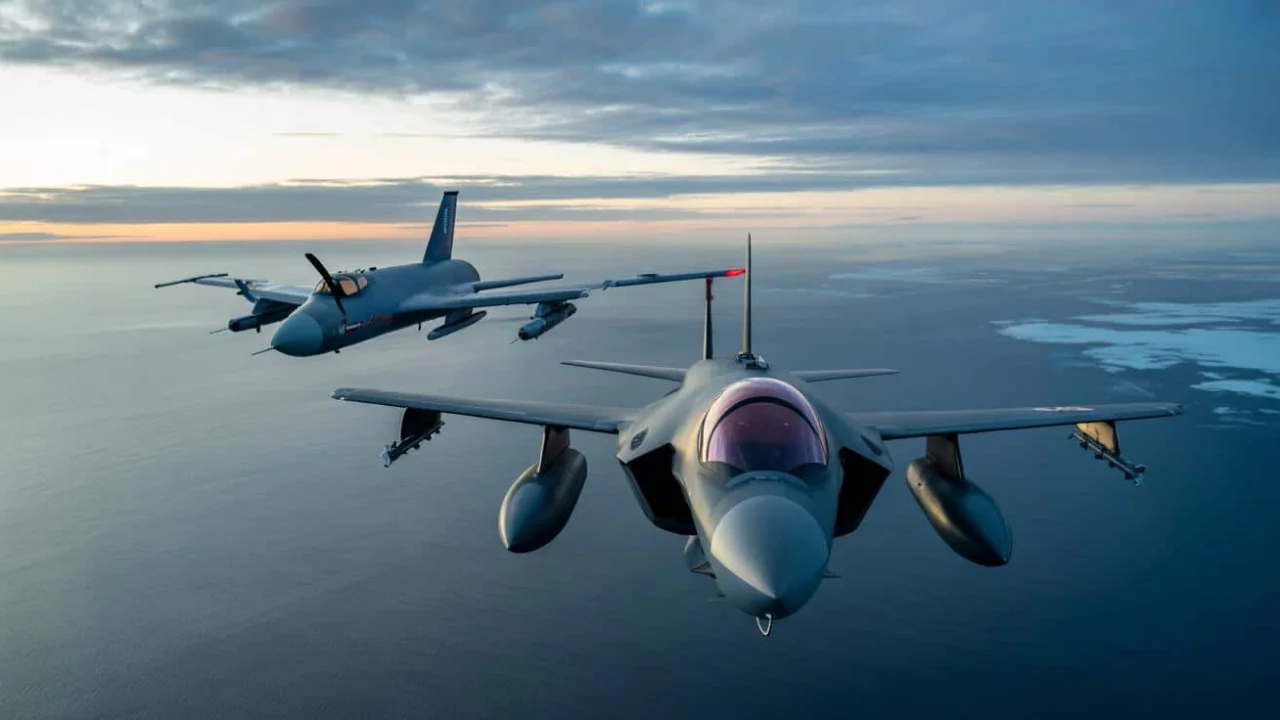
Lieutenant Colonel Erik Hansen was sipping his morning coffee in the pilot ready room at Evenes Air Station when the alarm bell pierced the Arctic silence. Within seconds, his peaceful Tuesday morning transformed into a high-stakes race against time. The familiar adrenaline surge kicked in as he sprinted toward his F-35A Lightning II, knowing that somewhere out there in the vast Norwegian Sea, a Russian aircraft was testing NATO’s resolve once again.
This wasn’t Hansen’s first scramble, and it certainly wouldn’t be his last. For Norwegian pilots stationed along the country’s northern frontier, intercepting Russian aircraft has become as routine as checking the weather. Yet each mission carries the weight of defending not just Norwegian airspace, but the entire northern flank of NATO.
The reality is stark: when Norway scrambles F35 fighters, it’s not just a military exercise. It’s a carefully choreographed dance of deterrence that plays out in one of the world’s most strategically important regions, where the slightest miscalculation could have far-reaching consequences.
What Happened During the Latest Intercept
On January 6th, 2025, the Royal Norwegian Air Force launched two F-35A Lightning II jets from Evenes Air Station after radar operators detected a Russian Tu-142 “Bear-F” maritime patrol aircraft approaching Norwegian airspace. The massive four-engine turboprop, designed during the Cold War for anti-submarine warfare and maritime reconnaissance, was conducting what Moscow calls a “routine patrol” in international waters.
“The Russian aircraft maintained professional behavior throughout the intercept,” explained Air Force spokesman Major Lars Andersen. “They stayed in international airspace and responded appropriately to our visual identification procedures.”
The Norwegian F-35s reached the Tu-142 within minutes, flying alongside the Russian aircraft to visually confirm its identity and intentions. The entire operation lasted approximately 45 minutes before the Russian plane turned back toward its home base, likely on the Kola Peninsula.
This marked Norway’s first Quick Reaction Alert (QRA) scramble of 2025, but military analysts expect it won’t be the last. Russian long-range aviation has significantly increased its activity in Arctic waters over the past two years, with some months seeing multiple intercepts.
The Technical Details That Matter
When Norway scrambles F35 aircraft for these missions, the operation follows strict NATO protocols designed to maintain both security and prevent escalation. Here’s how the system works:
| Phase | Timeline | Action |
|---|---|---|
| Detection | 0 minutes | Radar identifies unknown aircraft |
| Alert | 2-5 minutes | NATO command center issues scramble order |
| Launch | 15 minutes max | F-35s airborne from Evenes |
| Intercept | 20-30 minutes | Visual identification of aircraft |
| Escort | Variable | Monitor until aircraft leaves area |
The F-35A Lightning II represents a massive technological leap for Norwegian air defense. Unlike older fighters, the F-35’s advanced sensors can identify and track multiple targets simultaneously while remaining largely invisible to enemy radar.

- Maximum speed: Mach 1.6 (1,200 mph)
- Service ceiling: 50,000 feet
- Combat radius: 669 nautical miles
- Stealth capability: Nearly undetectable to most radars
- Sensor fusion: 360-degree awareness system
“The F-35’s situational awareness is game-changing,” noted defense analyst Dr. Maria Volkov from the Norwegian Defence Research Establishment. “Pilots can see threats and identify aircraft types from distances that would have been impossible with previous generation fighters.”
Norway maintains two F-35As on permanent QRA status at Evenes, with pilots and ground crews ready to launch 24 hours a day, 365 days a year. The country operates a total of 52 F-35A aircraft, making it one of the largest F-35 fleets outside the United States.
Why These Intercepts Really Matter
Every time Norway scrambles F35 fighters, it sends multiple messages that ripple across international relations. For ordinary Norwegians living in cities like Tromsø or Bodø, these intercepts represent the thin line between peace and potential conflict in their backyard.
The strategic implications extend far beyond a simple cat-and-mouse game. Russia’s Tu-142 flights serve multiple purposes: testing NATO response times, gathering electronic intelligence on radar systems, and demonstrating Moscow’s continued presence in Arctic waters that are increasingly important for global shipping and resource extraction.
“These aren’t random flights,” explained former NATO commander General James Mattingly. “Russian aircraft are probing for weaknesses, measuring our response capabilities, and collecting valuable intelligence about our defensive posture.”
For NATO allies, Norwegian intercept missions provide crucial data about Russian aircraft capabilities and flight patterns. This information helps military planners understand Moscow’s strategic intentions in the High North, a region that’s becoming increasingly militarized as climate change opens new shipping routes and resource extraction opportunities.
The economic stakes are equally significant. The Arctic contains an estimated 13% of the world’s oil reserves and 30% of its natural gas. As ice coverage diminishes, these resources become more accessible, making the region a potential flashpoint for future conflicts.
Norwegian citizens in northern communities have grown accustomed to the sound of F-35s launching on scramble missions. Local resident Anna Larsen from Evenes describes the experience: “You hear that distinctive roar, and you know something important is happening. It reminds you that we’re living on the front line of a much bigger geopolitical game.”
The frequency of these intercepts has real implications for defense budgets and pilot training schedules. Each scramble costs approximately $50,000 in fuel, maintenance, and operational expenses. With dozens of intercepts annually, the financial burden adds up quickly for a nation of just 5.4 million people.
Military families also bear the emotional cost of constant readiness. F-35 pilots must maintain peak physical and mental condition, ready to launch into potentially dangerous situations with minimal notice. The stress extends to ground crews, air traffic controllers, and support personnel who keep the QRA system operational.
FAQs
How often does Norway scramble F35 fighters to intercept Russian aircraft?
Norwegian F-35s typically conduct 30-50 intercept missions annually, with activity levels varying based on Russian military exercises and geopolitical tensions.
Do these intercepts ever result in dangerous situations?
Most intercepts are conducted professionally by both sides, but close encounters between military aircraft always carry inherent risks, especially in harsh Arctic weather conditions.
Why doesn’t Norway just ignore Russian aircraft in international airspace?
NATO protocols require member nations to identify and monitor all unknown aircraft near their airspace to maintain security and gather intelligence about potential threats.
How much does it cost Norway to maintain constant F-35 alert status?
The annual cost of maintaining QRA operations exceeds $15 million, including pilot training, fuel, maintenance, and 24/7 ground crew support.
Can Norwegian F-35s actually engage Russian aircraft if necessary?
F-35s are fully armed during intercept missions and authorized to defend Norwegian airspace, though engagement would require explicit authorization from NATO command structures.
What happens if weather prevents F-35s from launching during an alert?
Norway maintains backup procedures including coordination with allied nations and alternative aircraft, though the F-35’s advanced systems allow operations in most weather conditions.
About the Author