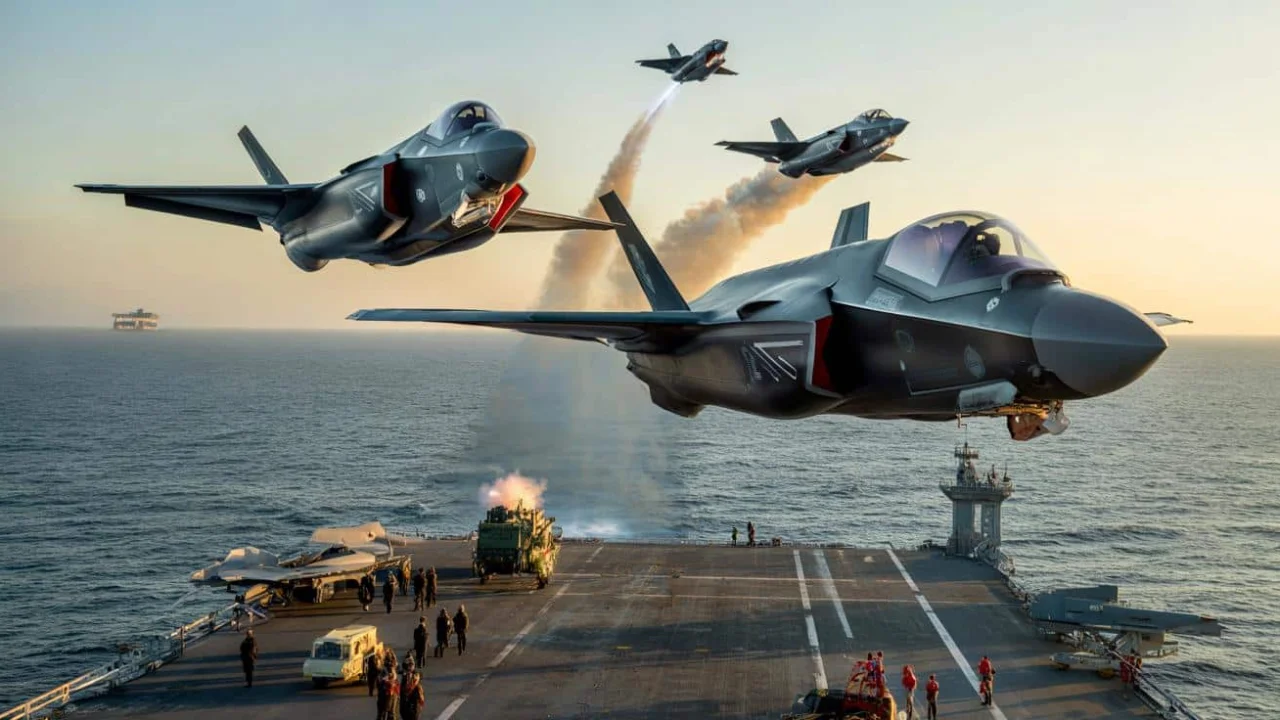
When RAF pilot Sarah Mitchell first climbed into the cockpit of an F-35B Lightning II at RAF Marham last spring, she felt the weight of history on her shoulders. The sleek stealth fighter represented something her grandfather, a Spitfire pilot in World War II, could never have imagined. Yet as she powered up the aircraft’s advanced systems, she realized she was part of the same story – Britain preparing for an uncertain future by investing in the best technology available.
That investment is about to get much bigger. The UK has quietly committed to taking delivery of 75 F35 fighter jets by 2033, marking the largest modernization of British air power in decades. For taxpayers, defense contractors, and anyone concerned about national security, this represents a fundamental shift in how Britain plans to project power around the world.
The decision, confirmed in a January parliamentary statement, goes far beyond simply buying new planes. These F35 fighter jets will become the backbone of Britain’s future military capabilities, operating from both land bases and the Royal Navy’s Queen Elizabeth-class aircraft carriers.
Britain’s Biggest Fighter Jet Commitment in Decades
Defence Minister Lord Coaker’s written reply to Parliament seemed routine, but it contained a commitment that will shape British military power for the next 30 years. By 2033, the UK will operate 75 of America’s most advanced stealth fighters, representing an investment of roughly £15 billion.
The timeline reveals Britain’s measured approach to building its F-35 fleet. Rather than rushing to acquire aircraft, the Ministry of Defence is planning a steady buildup that balances capability needs with budget constraints.
“This isn’t just about buying jets – it’s about fundamentally changing how Britain fights future wars,” explains former RAF Group Captain James Peterson. “The F-35 brings capabilities we’ve never had before, from stealth to advanced sensors that can coordinate entire battle networks.”
As of late 2025, Britain already operates 41 F35 fighter jets, all from the first procurement batch of 48 aircraft. These jets serve with both 617 Squadron RAF and the Fleet Air Arm, regularly flying from RAF Marham and deploying aboard HMS Queen Elizabeth and HMS Prince of Wales.
What Makes These Fighter Jets Special
The F-35B variant chosen by Britain offers unique capabilities that traditional fighter aircraft simply cannot match. Understanding why requires looking at what these jets can actually do:
- Stealth Technology: Advanced coatings and design make the aircraft nearly invisible to enemy radar systems
- Short Takeoff and Vertical Landing: Can operate from aircraft carriers without catapults or from short airstrips
- Advanced Sensors: Provides pilots with 360-degree situational awareness through helmet-mounted displays
- Network Integration: Shares real-time data with other aircraft, ships, and ground forces
- Multi-Role Capability: Performs air-to-air combat, ground attack, and reconnaissance missions

The procurement timeline shows Britain’s strategic patience in building this capability:
| Year | F-35 Fleet Size | Milestone |
|---|---|---|
| 2025 | 41 aircraft | Initial operational capability achieved |
| 2027 | 48 aircraft | First tranche complete |
| 2030 | 60 aircraft | Second squadron fully equipped |
| 2033 | 75 aircraft | Full planned fleet operational |
“The beauty of this timeline is that it allows us to learn and adapt as we go,” notes defense analyst Dr. Emma Richardson. “Each batch of aircraft benefits from the latest upgrades and lessons learned from earlier deliveries.”
Real Impact on Britain’s Defense and Economy
The 75-aircraft commitment affects far more than military planners sitting in Whitehall. This program touches British industry, international relationships, and the daily lives of service personnel and their families.
For the Royal Air Force and Royal Navy, the F35 fighter jets represent a generational leap in capability. Pilots who previously flew Harrier jump jets or Tornado strike aircraft now operate aircraft that can engage targets hundreds of miles away while remaining undetected.
Squadron Leader Mark Thompson, who transitioned from flying Tornados to F-35s, describes the difference: “It’s like going from driving a car to piloting a spacecraft. The amount of information available to the pilot is overwhelming at first, but once you adapt, you realize you’re operating at a completely different level.”
The economic impact extends across Britain’s defense industrial base. While the aircraft are built in the United States, British companies manufacture critical components including engines, avionics, and weapons systems. BAE Systems, Rolls-Royce, and dozens of smaller suppliers benefit from each aircraft delivered.
Regional economic effects are particularly notable around RAF Marham in Norfolk, where the F-35 fleet is based. Local businesses have seen increased activity from the influx of personnel and support equipment needed for these sophisticated aircraft.
International relationships also factor heavily into the F-35 program. Britain’s commitment to 75 aircraft strengthens its position within NATO and reinforces the special relationship with the United States. The jets provide interoperability with American forces and other F-35 operators including Italy, Australia, and Norway.
However, this dependence on American technology also creates strategic vulnerabilities. Critics argue that relying so heavily on F35 fighter jets could limit Britain’s foreign policy flexibility or create maintenance bottlenecks during international crises.
“There’s always a balance between getting the best capability and maintaining strategic independence,” explains retired Air Marshal Sir Richard Davies. “The F-35 gives us capabilities we simply couldn’t develop on our own, but it does tie us closely to American defense systems.”
The program also represents significant value for British taxpayers. Each F-35B costs approximately £200 million when including development costs, training, and initial support packages. That makes the 75-aircraft fleet one of the largest defense investments in British history.
For military families, the F-35 program means stability and career opportunities. The long-term commitment to these aircraft ensures continued employment for pilots, ground crews, and support personnel well into the 2050s.
Looking Toward 2033 and Beyond
The 75-aircraft target represents more than just a number – it reflects Britain’s vision for maintaining military relevance in an increasingly dangerous world. These F35 fighter jets will serve as the foundation for British air power through conflicts and challenges we can’t yet imagine.
The timeline to 2033 allows for careful integration of each new capability. Rather than overwhelming existing systems with rapid change, the measured approach ensures that pilots, maintainers, and commanders can fully exploit each aircraft’s potential.
Future upgrades to the F-35 fleet will likely include enhanced artificial intelligence systems, improved stealth coatings, and new weapons systems. Britain’s commitment to 75 aircraft ensures access to these improvements as they become available.
The program also positions Britain as a key partner in the broader F-35 enterprise, which includes over 15 nations operating or planning to operate these aircraft. This partnership creates opportunities for shared training, joint operations, and collaborative development of future capabilities.
FAQs
How much will 75 F-35 fighter jets cost Britain?
The total program cost is estimated at approximately £15 billion, including aircraft, training, initial support, and infrastructure improvements.
Why did Britain choose the F-35B variant over other options?
The F-35B’s short takeoff and vertical landing capability allows it to operate from Britain’s Queen Elizabeth-class aircraft carriers without requiring expensive catapult systems.
When will all 75 F35 fighter jets be delivered?
According to government statements, the final aircraft should be delivered by the end of 2033, following a steady procurement schedule over eight years.
What aircraft will the F-35s replace in British service?
The F-35s are replacing the Harrier jump jets, which were retired in 2011, and will eventually supplement and partially replace Tornado strike aircraft capabilities.
Can other countries buy parts of Britain’s F-35 program?
No, these aircraft are specifically allocated to British forces, though Britain participates in the broader international F-35 partnership for development and support.
How do F35 fighter jets compare to other modern fighters?
The F-35 emphasizes stealth, sensors, and networking over pure speed or maneuverability, making it particularly effective in contested airspace where detection equals destruction.
About the Author