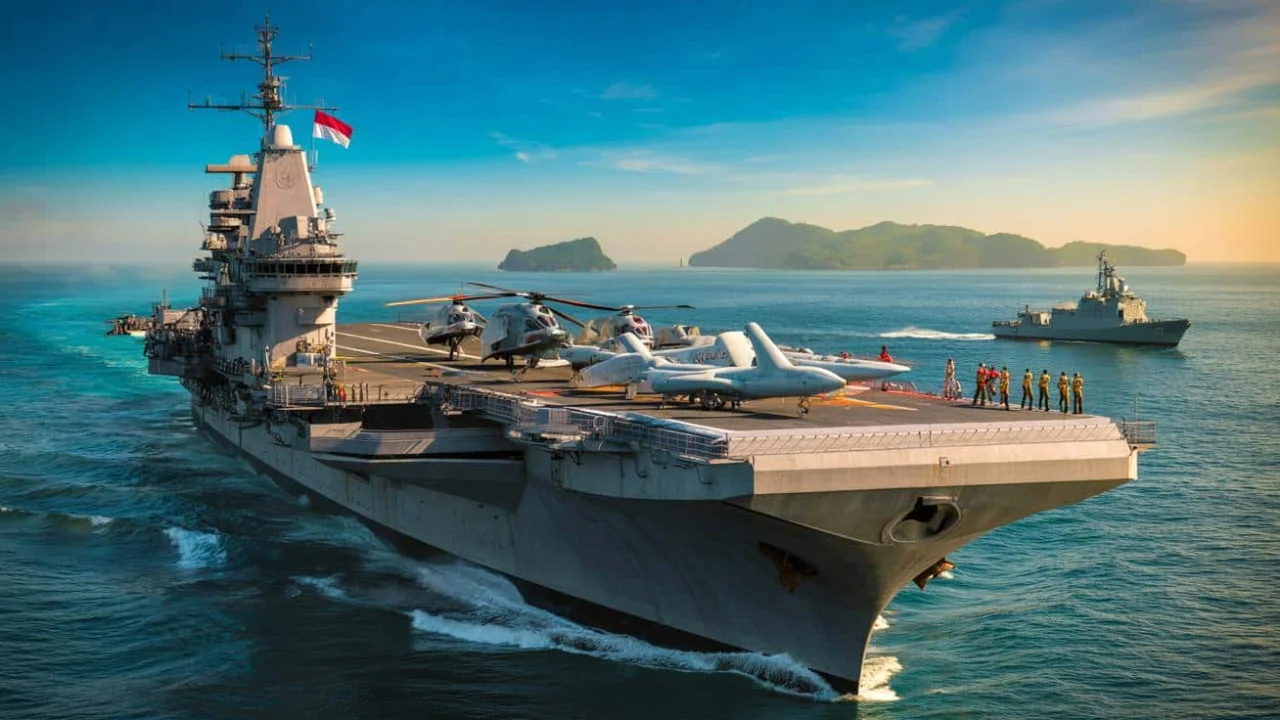
Captain Andi Suhendra still remembers the first time he saw an aircraft carrier up close. Standing on the dock in Surabaya naval base as a young officer, watching foreign warships during joint exercises, he felt a mix of awe and longing. “One day,” he told his fellow officers, “Indonesia will have its own floating airfield.” That dream, shared by countless Indonesian naval personnel over the decades, might finally become reality.

The Giuseppe Garibaldi aircraft carrier, once the pride of Italy’s naval fleet, could soon be sailing under Indonesian colors. After serving the Italian Navy with distinction for over four decades, this veteran warship is now at the center of Indonesia’s most ambitious naval modernization effort in generations.
What makes this story even more compelling is the timing. Indonesia isn’t just buying any old ship – they’re acquiring a piece of naval history that could transform their entire maritime strategy.
Why This Deal Matters More Than You Think
Indonesia is in advanced negotiations to acquire the Giuseppe Garibaldi aircraft carrier from Italy, with officials targeting delivery by October 2026. This isn’t just another military purchase – it’s a strategic leap that could reshape the balance of power in Southeast Asian waters.
Admiral Muhammad Ali, Indonesia’s Chief of Naval Staff, has confirmed that the Giuseppe Garibaldi is scheduled to reach Indonesian waters before October 5, 2026. That date isn’t random – it marks the 81st anniversary of the Indonesian National Armed Forces, turning what could be a routine military acquisition into a powerful symbol of national pride.

“The Navy wants the ship alongside in Indonesia before October 5, 2026, turning a symbolic anniversary into a showcase of new maritime ambition,” said a senior Indonesian naval official familiar with the negotiations.
The deal structure itself tells an interesting story. Rather than a straightforward purchase, Indonesia and Italy are exploring a creative financing arrangement. Brigadier General Rico Ricardo Sirait from the Indonesian defense ministry has suggested the transfer could happen as a government grant from Italy, combined with Indonesian funding for necessary refits and equipment upgrades.

This approach makes sense for both countries. Italy gets to see their retired carrier continue serving in capable hands, while Indonesia gains access to advanced naval technology without the crushing expense of building from scratch.
Breaking Down the Giuseppe Garibaldi’s Impressive Specs
Let’s talk numbers, because the Giuseppe Garibaldi aircraft carrier brings some serious capabilities to the table. Here’s what Indonesia would be getting:

| Specification | Details |
|---|---|
| Length | 180 meters (590 feet) |
| Displacement | 13,850 tons |
| Aircraft Capacity | Up to 18 aircraft/helicopters |
| Service Period | 1985-2024 (Italian Navy) |
| Primary Role | V/STOL aircraft operations |
The carrier’s key advantages include:
- Proven track record in Mediterranean and international operations
- Ski-jump design perfect for vertical takeoff aircraft
- Modern command and control systems
- Extensive helicopter operations capability
- NATO-standard equipment and procedures
What makes the Giuseppe Garibaldi particularly attractive is its versatility. Unlike massive supercarriers that require enormous support fleets, this ship can operate effectively with Indonesia’s existing naval infrastructure.
“This isn’t about projecting power across oceans like the Americans do,” explains Dr. Sarah Mitchell, a naval analyst at the Jakarta Defense Studies Institute. “Indonesia needs a carrier that can patrol their massive archipelago and respond to regional challenges – and Garibaldi fits that role perfectly.”
Real Impact on Indonesia’s Maritime Future
The acquisition of the Giuseppe Garibaldi aircraft carrier represents more than military hardware – it’s about Indonesia finally matching its geographic reality with its naval capabilities. As the world’s largest archipelagic nation, Indonesia has over 17,000 islands spread across three time zones, yet has never operated a proper aircraft carrier.
This gap has real consequences. When natural disasters strike remote islands, or when territorial disputes flare up in the South China Sea, Indonesia’s navy has struggled to project meaningful power beyond helicopter range. The Garibaldi changes that equation completely.
For regional neighbors, the implications are significant. Countries like Malaysia, Singapore, and the Philippines will suddenly find themselves dealing with an Indonesia capable of sustained air operations far from its bases. That’s not necessarily threatening, but it certainly commands respect.
“Indonesia has always been the sleeping giant of Southeast Asia,” notes Captain James Rodriguez, a retired US Navy officer who has worked extensively in the region. “A carrier capability means they’re finally waking up to their potential as a major naval power.”
The economic ripple effects could be substantial too. Operating an aircraft carrier requires specialized training, maintenance facilities, and support vessels. Indonesian shipyards and defense contractors are likely to see significant investment as the navy builds the infrastructure needed to support carrier operations.
Local communities around major naval bases can expect job creation and economic growth. When Italy operated the Garibaldi, it supported thousands of direct and indirect jobs. Indonesia can expect similar benefits, particularly in cities like Surabaya and Jakarta where naval facilities are concentrated.
The timing also aligns with Indonesia’s broader defense modernization efforts. The country has been steadily increasing its defense budget and pursuing technology transfer agreements with various international partners. Adding carrier operations to this mix creates synergies that could accelerate the entire modernization program.
Perhaps most importantly, the Giuseppe Garibaldi gives Indonesia’s navy a training platform for developing carrier aviation skills. These are highly specialized capabilities that take years to master, and having their own carrier means Indonesian pilots and naval officers can develop these skills domestically rather than relying on foreign training programs.
FAQs
When will the Giuseppe Garibaldi join the Indonesian Navy?
The target date is October 2026, specifically before the Indonesian Armed Forces anniversary on October 5th.
How much will Indonesia pay for the aircraft carrier?
The exact cost hasn’t been disclosed, but officials suggest it may be structured as a combination of an Italian government grant and Indonesian funding for refits.
What aircraft can operate from the Giuseppe Garibaldi?
The carrier is designed for vertical takeoff aircraft and helicopters, with capacity for up to 18 aircraft depending on the mix.
Why is Indonesia acquiring an aircraft carrier now?
Indonesia is modernizing its navy to better patrol its vast archipelago and enhance its regional maritime capabilities as part of its Minimum Essential Force program.
Will the carrier need major upgrades for Indonesian service?
Yes, the ship will likely require refitting and equipment upgrades to meet Indonesian Navy specifications and operational requirements.
How will this affect regional naval balance?
The acquisition significantly enhances Indonesia’s ability to project naval power across its island chain and could influence regional maritime dynamics in Southeast Asia.
About the Author