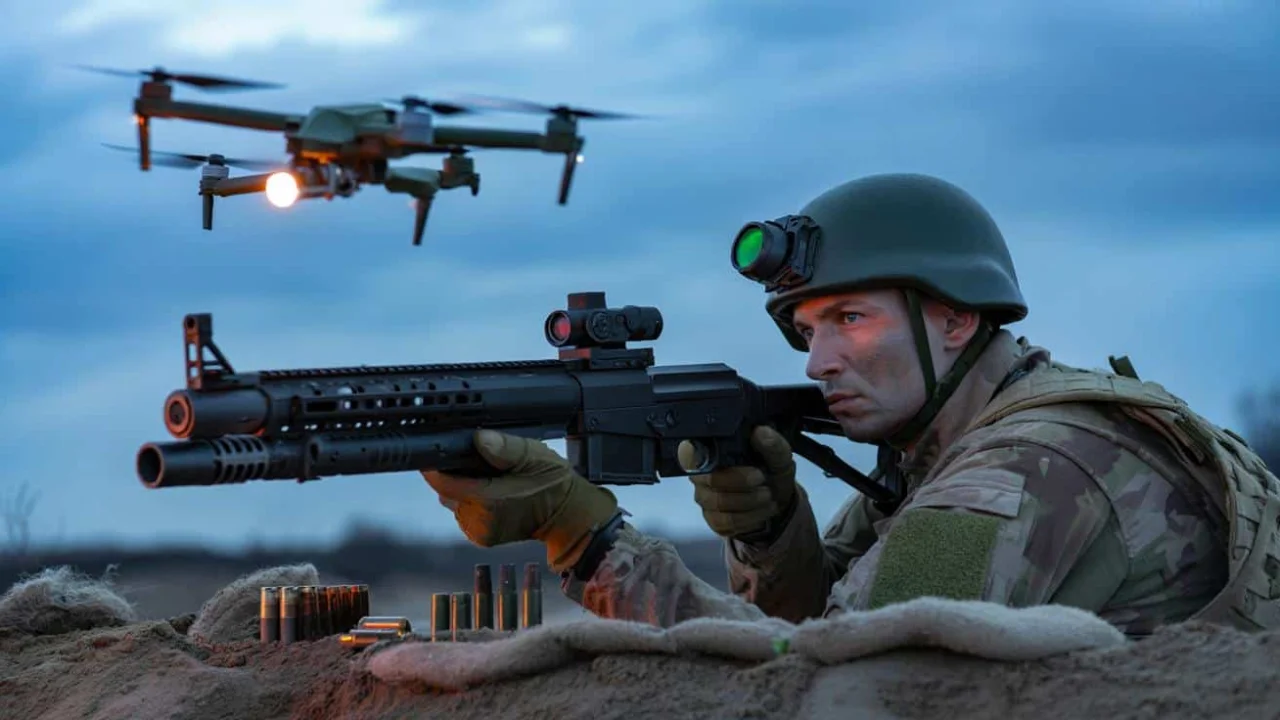
Sergei crouched in his foxhole somewhere in eastern Ukraine when he heard it—a faint buzzing sound, like an angry wasp getting closer. Twenty meters above him, a small quadcopter hovered, its camera scanning the trenches below. His assault rifle felt useless; by the time he aimed, the drone would either drop its payload or disappear. That’s when his squad leader tossed him something unexpected: a 12-gauge shotgun.
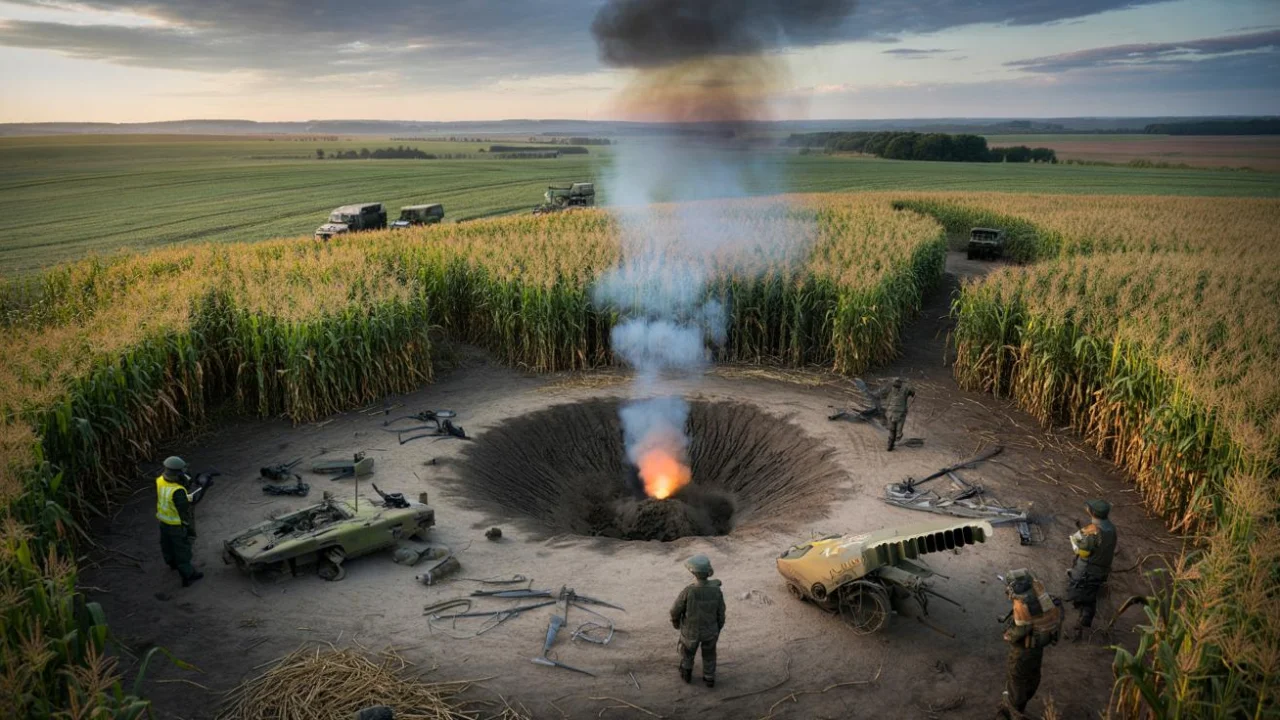
This scene is playing out across Russian positions as Moscow grapples with a battlefield reality no military academy prepared them for. Cheap consumer drones, many costing less than $500, are forcing one of the world’s most sophisticated armies to go back to basics.
The buzzing threat overhead has become so persistent that Russia’s military leadership made an unprecedented decision: equip frontline infantry units with shotguns specifically for drone defense.
When High-Tech Meets Low-Tech Reality
Russia’s shotgun drone defense strategy represents a dramatic shift in military thinking. The country’s advanced S-400 air defense systems can track stealth fighters, but they’re practically blind to a $300 drone flying ten feet off the ground.
“Traditional air defense was built to stop jets and missiles, not something you could buy on Amazon,” explains defense analyst Maria Volkov. “These small drones exploit a gap that nobody anticipated.”
Russian state arms manufacturer Rostec has acknowledged this reality publicly. The company now produces specialized shotgun ammunition designed specifically for drone interception. Unlike standard buckshot, these rounds create wider spread patterns to increase hit probability against fast-moving aerial targets.
The tactical challenge is both simple and complex. A single FPV (first-person-view) drone can carry enough explosives to disable a tank or kill multiple soldiers. Yet shooting one down with conventional weapons is surprisingly difficult—they’re small, fast, and often approach from unexpected angles.
| Defense Method | Cost per Shot | Effectiveness Against Small Drones | Range |
|---|---|---|---|
| Surface-to-Air Missile | $50,000-200,000 | Low (overkill) | 5-50km |
| Electronic Jamming | $10-100 per hour | Medium (can be countered) | 1-5km |
| Shotgun | $2-5 | High at close range | 50-100m |
| Assault Rifle | $1 | Low (precision required) | 300m |
The Economics of Modern Warfare
Russian commanders quickly realized they were fighting an economically unsustainable battle. Ukrainian forces began using cheap Chinese-made drones to probe defenses, gather intelligence, and launch precision strikes. Each successful drone mission cost Ukraine a few hundred dollars but could destroy Russian equipment worth millions.
The shotgun solution addresses this imbalance directly. A Russian soldier can carry dozens of shotgun shells for the cost of a single anti-aircraft missile. The wide spread pattern of buckshot makes hitting small, erratically moving targets much more feasible than precise rifle fire.

“It’s actually brilliant in its simplicity,” notes former NATO intelligence officer David Martinez. “You’re using 19th-century technology to solve a 21st-century problem.”
Russian military documents obtained by Western intelligence suggest the program extends beyond basic shotguns. Units are receiving:
- Modified semi-automatic shotguns with extended magazines
- Specialized anti-drone ammunition with steel shot and wider spread patterns
- Basic training on lead calculation and target prediction
- Coordination protocols for multiple shooters engaging single targets
Changing the Face of Infantry Combat
The implications extend far beyond Ukraine’s battlefields. Military observers worldwide are taking notes as the conflict reveals how drone swarms can neutralize conventional advantages. A single soldier with a shotgun can potentially stop a drone attack that might otherwise require sophisticated electronic warfare systems.
This shift affects combat roles in unexpected ways. Russian infantry squads now assign specific soldiers as “drone hunters,” responsible for scanning skies and engaging aerial threats. These specialists carry shotguns as primary weapons, fundamentally altering traditional infantry loadouts.
The psychological impact is equally significant. Soldiers report feeling less helpless against drone attacks when armed with dedicated counter-drone weapons. The ability to fight back, even with relatively simple tools, maintains morale in situations where troops previously felt defensively powerless.
“Before, you just had to hope the drone didn’t see you,” recalls one Russian deserter speaking anonymously. “With the shotgun, at least you could shoot back. Sometimes that’s all that matters.”
However, the strategy has limitations. Shotguns are effective only at close range, typically under 100 meters. Drones equipped with longer-range cameras or weapons can still operate beyond shotgun reach. Weather conditions also affect performance—wind can disperse shot patterns unpredictably.
International defense contractors are closely monitoring Russia’s shotgun drone defense approach. Several Western military manufacturers have quietly begun developing similar systems, recognizing that the drone threat isn’t limited to Ukrainian battlefields.
The prevalence of commercial drones worldwide means any future conflict could feature similar dynamics. Military planners are reconsidering infantry equipment priorities, with some suggesting shotguns should become standard issue alongside traditional rifles.
FAQs
Why are shotguns effective against drones when rifles aren’t?
Shotguns fire multiple pellets in a spread pattern, making it much easier to hit small, fast-moving targets like drones compared to the single precise shot required with rifles.
How close do soldiers need to be to hit drones with shotguns?
Most effective range is under 50 meters, with some specialized ammunition extending this to about 100 meters depending on drone size and conditions.
Are other militaries adopting similar tactics?
Yes, several NATO countries are reportedly testing shotgun-based anti-drone systems after observing their effectiveness in Ukraine.
What type of shotgun ammunition works best against drones?
Steel shot with tight patterns at close range, though some manufacturers are developing specialized anti-drone rounds with wider spread patterns.
Can electronic jamming replace shotguns for drone defense?
Electronic warfare helps but has limitations—some drones use frequency-hopping or autonomous navigation that makes jamming less effective.
How much does it cost to train soldiers in anti-drone shotgun techniques?
Basic training costs are minimal since most soldiers already know how to use shotguns, requiring only additional instruction on lead calculation and target tracking.
About the Author