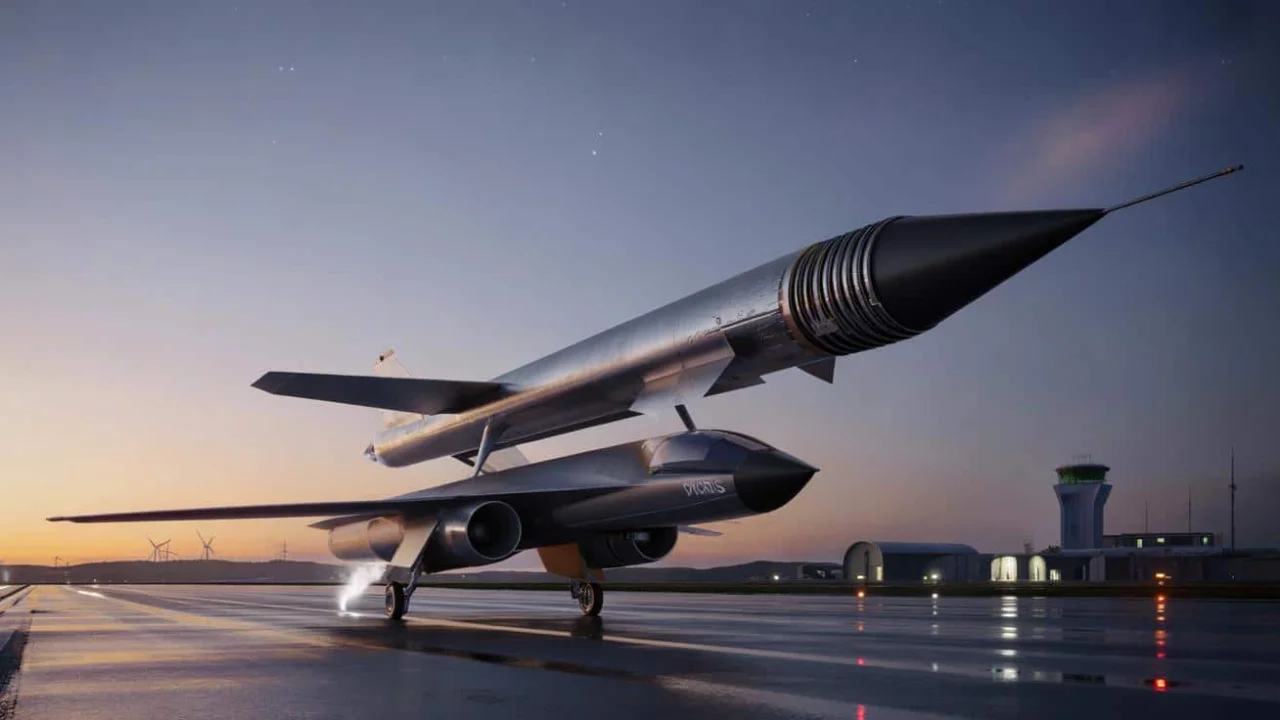
Picture this: you’re standing on the tarmac of a German airfield, watching what looks like a sleek, futuristic aircraft prepare for takeoff. But this isn’t just any plane. Within minutes, it will be screaming through the sky at speeds that make Formula 1 cars look like they’re crawling. We’re talking about velocities that exceed five times the speed of sound—faster than most bullets ever fired.

This isn’t science fiction anymore. It’s happening right now in Germany, where engineers are putting the finishing touches on a machine that could redefine how we think about flight itself. The roar of its engines will soon echo across test sites as humanity pushes yet another boundary of what’s possible.
That machine is Germany’s bold new hypersonic test vehicle, and it represents one of the most ambitious aerospace projects Europe has undertaken in decades. The German government has contracted Munich-based startup Polaris Spaceplanes to develop this groundbreaking two-stage system, marking a decisive entry into the global hypersonic race.

Germany Makes Its Move in the Hypersonic Race
The project, officially called the Hypersonic Test and Experimentation Vehicle (HYTEV), isn’t just another aircraft development program. It’s Germany’s answer to a rapidly evolving technological landscape where countries like the United States, China, and Russia are racing to master hypersonic flight.
“HYTEV represents a paradigm shift in how European nations approach advanced aerospace technology,” explains Dr. Andreas Mueller, a defense technology analyst based in Berlin. “We’re seeing Germany take a calculated risk on a startup rather than going through traditional defense contractors.”
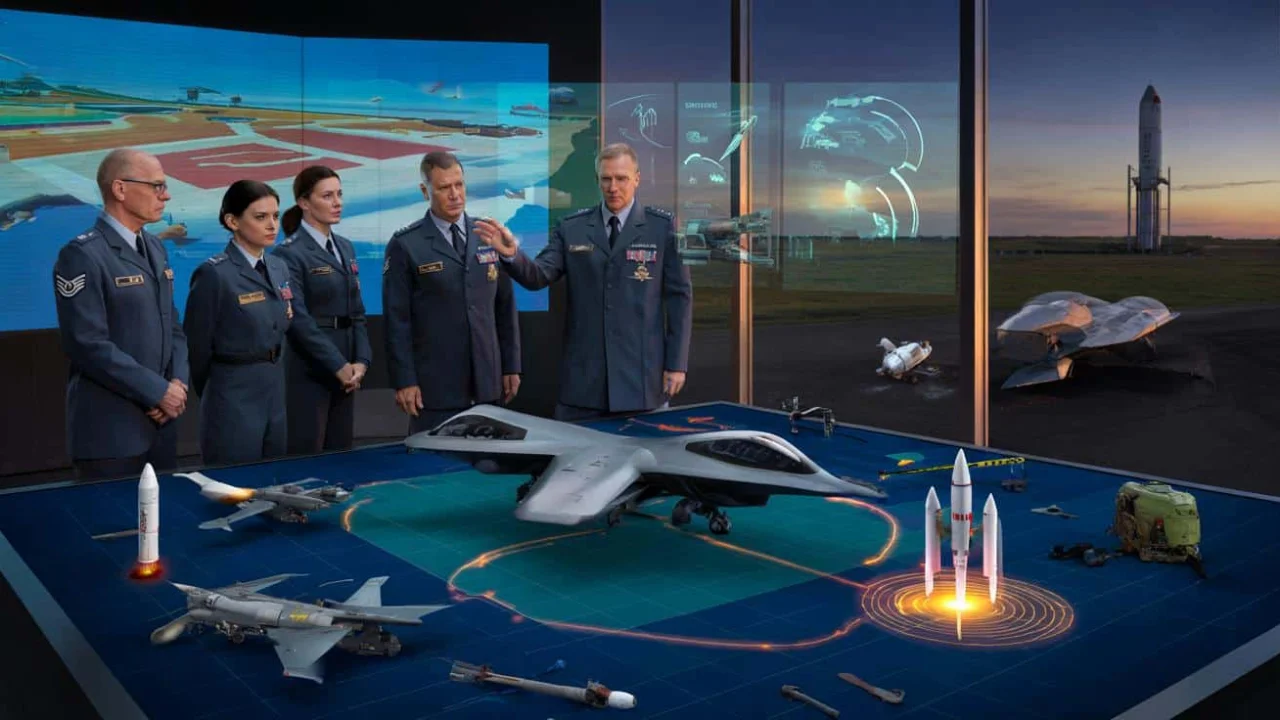
The hypersonic test vehicle will function as a reusable flying laboratory, designed to operate both within Earth’s atmosphere and at the edge of space. Unlike traditional rockets that launch vertically and often end up as expensive debris in the ocean, this system takes off and lands horizontally like a conventional aircraft.
What makes this project particularly intriguing is its timeline. Concept work ran from 2024 to 2025, with the complete system expected to be flight-ready by late 2027. For an aerospace project of this complexity, that’s remarkably fast.

“The two-stage design allows us to test hypersonic technologies without the massive infrastructure requirements of traditional space programs,” notes Maria Hoffmann, a propulsion systems engineer. “You can think of it as a hypersonic test bed that comes home after every mission.”
Technical Specs and Capabilities That Matter
The HYTEV system breaks down into two distinct stages, each serving a specific purpose in achieving hypersonic flight. Here’s how the technology stack looks:
- Stage One: Twin turbofan engines provide initial acceleration and altitude gain
- Stage Two: Advanced propulsion system (likely scramjet technology) enables hypersonic speeds
- Flight Profile: Horizontal takeoff and landing, similar to the Space Shuttle approach
- Speed Target: Mach 5+ (over 3,800 mph at sea level)
- Operational Altitude: Atmospheric flight up to space edge operations
- Reusability: Designed for multiple test flights with minimal refurbishment
| Component | Function | Technology Type |
|---|---|---|
| First Stage | Initial launch and acceleration | Conventional turbofan engines |
| Second Stage | Hypersonic flight testing | Advanced propulsion (scramjet) |
| Control Systems | Flight management and safety | Autonomous flight control |
| Test Platform | Experimental payload bay | Modular research equipment |
The Bundeswehr, Germany’s armed forces, serves as the primary customer for this hypersonic test vehicle. Their interest reflects growing concerns about hypersonic weapons development by other world powers and the need for defensive capabilities.
“This isn’t just about building a fast aircraft,” explains Colonel Thomas Weber, a military technology specialist. “It’s about understanding hypersonic flight dynamics, testing materials under extreme conditions, and developing countermeasures for hypersonic threats.”
Why This Changes Everything for European Defense
The implications of Germany’s hypersonic test vehicle extend far beyond impressive speed records. This project represents a fundamental shift in how European nations approach advanced military technology development.
For decades, Europe has lagged behind in hypersonic research while the United States, Russia, and China poured billions into these programs. Germany’s decision to work with a startup rather than established defense giants like Airbus or Thales suggests a new willingness to embrace innovation from unexpected sources.
The practical applications are numerous:
- Defense Applications: Testing hypersonic missile defense systems and reconnaissance platforms
- Scientific Research: High-speed atmospheric studies and materials testing
- Commercial Potential: Future hypersonic passenger transport development
- Space Access: Cost-effective payload delivery to low Earth orbit
But perhaps most significantly, this hypersonic test vehicle could serve as a technology demonstrator for broader European collaboration. If successful, other EU nations might join similar programs, creating a continental hypersonic development initiative.
“We’re looking at the possibility of shared hypersonic testing facilities across Europe,” reveals Dr. Elena Rossi, an aerospace policy researcher. “Germany’s HYTEV could become the foundation for a much larger cooperative program.”
The economic impact shouldn’t be underestimated either. Polaris Spaceplanes, as the primary contractor, will likely experience rapid growth and could become a major player in the global hypersonic market. The success of this program might attract additional investment to European aerospace startups.
For ordinary citizens, the development of this hypersonic test vehicle might seem like distant military technology. But the innovations required—advanced materials, propulsion systems, flight controls—often find their way into civilian applications. The internet, GPS, and countless other technologies emerged from similar military research programs.
The timeline puts Germany on track to have operational hypersonic testing capabilities before many larger nations complete their programs. If HYTEV meets its 2027 deadline, Germany could leapfrog into the top tier of hypersonic-capable nations almost overnight.
FAQs
What makes a vehicle “hypersonic”?
Hypersonic refers to speeds exceeding Mach 5, or five times the speed of sound—roughly 3,800 mph at sea level.
How is this different from existing military aircraft?
Current fighter jets typically max out around Mach 2-3, while this hypersonic test vehicle targets speeds above Mach 5 with reusable operation.
When will we see the first test flights?
Germany expects the complete HYTEV system to be ready for flight testing by the end of 2027.
Could this technology be used for passenger travel?
While designed for military testing, the underlying hypersonic technologies could eventually enable ultra-fast passenger transport.
Why did Germany choose a startup over established defense contractors?
Polaris Spaceplanes likely offered innovative approaches and faster development timelines compared to traditional aerospace companies.
What happens if the test flights are successful?
Success could lead to expanded hypersonic programs, potential European collaboration, and development of operational hypersonic systems for defense and civilian use.
About the Author