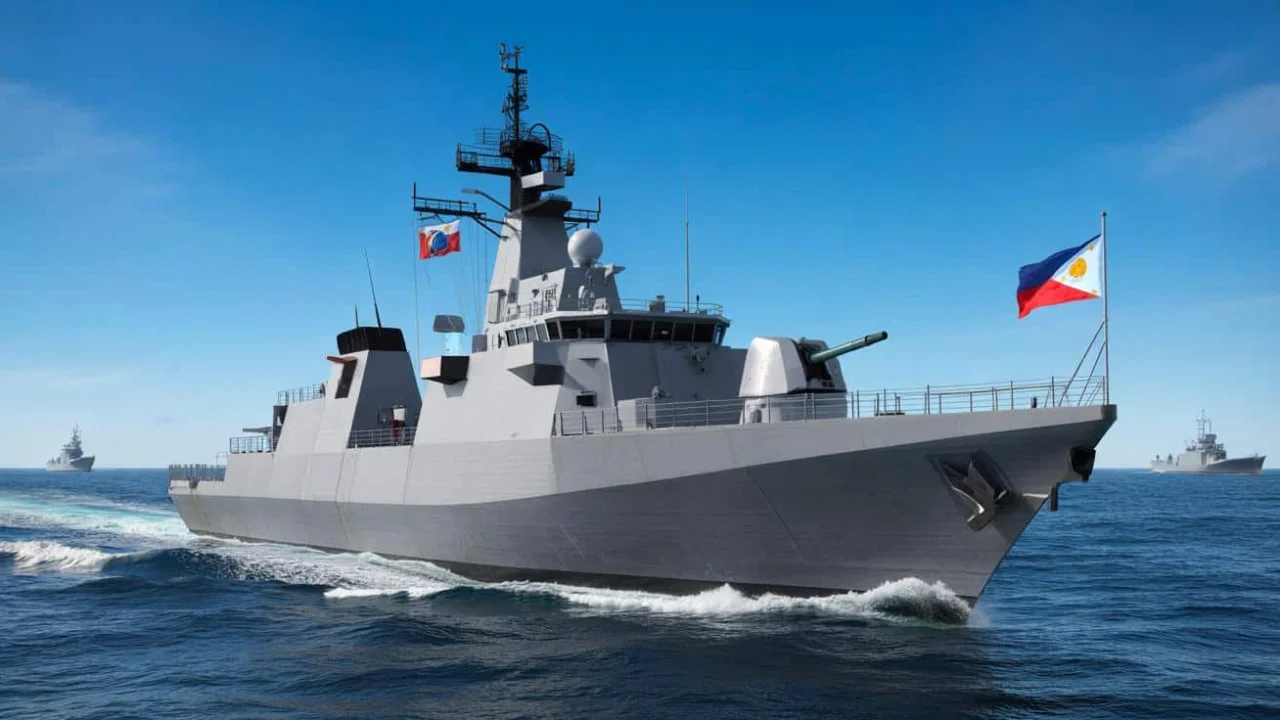
Captain Miguel Santos still remembers the day his old patrol boat broke down 200 miles from shore. It was 2019, and his crew was responding to a distress call from fishermen near Scarborough Shoal. The engine sputtered, then died completely, leaving them drifting in contested waters while foreign vessels circled nearby.
“We had to radio for help like the people we were supposed to be rescuing,” Santos recalls with a mix of frustration and embarrassment. “That’s when I knew we needed something better than these hand-me-down ships.”
Today, Santos and thousands of Filipino sailors are about to get exactly what they’ve been waiting for. The Philippines OPV delivery from South Korea represents more than just a new ship—it’s a symbol of national pride sailing toward home waters.
A Brand New Ship Changes Everything
The BRP Rajah Sulayman (PS-20) has officially left HD Hyundai Heavy Industries’ shipyard in Ulsan and is now making its way across the Pacific. This isn’t just any patrol vessel—it’s the first of six custom-built offshore patrol vessels that will transform how the Philippines protects its maritime territory.
Unlike the aging, second-hand ships that have long formed the backbone of the Philippine Navy, this new vessel was designed specifically for the country’s unique challenges. The ₱30 billion ($573 million) contract signed in 2022 represents the largest single investment in modern naval capabilities in recent memory.
“These aren’t your grandfather’s patrol boats,” explains naval analyst Dr. Maria Fernandez. “The Philippines finally has ships built for its exact needs, not whatever other navies were willing to sell.”
The timing couldn’t be more critical. As tensions continue to simmer in the South China Sea, having reliable, modern vessels capable of extended patrols has become essential for maintaining sovereignty over the Philippines’ vast maritime zones.
Technical Specs That Actually Matter
The new offshore patrol vessels pack impressive capabilities into a relatively compact design. Here’s what makes them special:
| Specification | Details |
|---|---|
| Displacement | 2,400 tonnes (full load) |
| Length | 94 meters |
| Beam | 14 meters |
| Cruising Speed | 15 knots (28 km/h) |
| Range | 5,500 nautical miles |
| Crew | 80 personnel |
| Endurance | 30 days at sea |
But numbers only tell part of the story. These vessels feature modern radar systems, advanced communication equipment, and weapons systems that can handle everything from coast guard duties to more serious maritime security challenges.
Key operational capabilities include:
- Extended patrol operations in the South China Sea and Philippine waters
- Search and rescue missions with helicopter landing capability
- Maritime law enforcement and anti-piracy operations
- Humanitarian assistance and disaster response
- Intelligence gathering and surveillance missions
“The 30-day endurance means these ships can stay on station for real patrol work, not just day trips from port,” notes maritime security expert Commander (Ret.) Jose Reyes. “That’s a game-changer for protecting our fishing grounds and territorial waters.”
Each vessel can accommodate a crew of 80, providing comfortable living conditions for extended deployments. The helicopter deck allows for rapid medical evacuations and expanded surveillance capabilities.
Why This Matters for Regular Filipinos
The Philippines OPV delivery affects ordinary citizens in ways that might not be immediately obvious. For the thousands of fishermen who venture into contested waters daily, having modern patrol vessels nearby means better protection and faster rescue response.
Elena Rodriguez, whose husband captains a fishing boat near Palawan, puts it simply: “When our boat has engine trouble or we see suspicious vessels, we need to know someone reliable will come help us. These new ships give us that confidence.”
The economic impact extends beyond fishing. Secure sea lanes mean safer cargo shipping, which keeps prices stable for imported goods. Tourism also benefits when visitors feel safe traveling to island destinations.
Here’s how different groups will be affected:
- Fishermen: Better protection in disputed areas, faster rescue response
- Cargo companies: More secure shipping lanes reduce insurance costs
- Island communities: Improved emergency response and disaster relief
- Maritime workers: Enhanced search and rescue capabilities
- Tourists: Increased safety for island-hopping and maritime activities
“These ships represent jobs, security, and national pride all rolled into one,” says economist Dr. Antonio Cruz. “When you can protect your own waters, you’re not just buying ships—you’re investing in your country’s future.”
The remaining five vessels in the class are expected to arrive over the next three years, with each delivery building the Philippines’ capacity to patrol its vast maritime territory more effectively.
The broader modernization program also includes upgrades to naval bases, training programs for crews, and maintenance facilities. This comprehensive approach ensures the new capabilities can be sustained long-term.
“We’re not just buying ships, we’re building a maritime capability that will serve the country for decades,” emphasizes Defense Secretary Maria Santos.
For Captain Santos, now preparing to serve aboard one of these new vessels, the arrival represents vindication of years of patient waiting. “Finally, we’ll have ships that won’t break down when our people need us most,” he says with visible pride.
The BRP Rajah Sulayman is expected to reach Philippine waters within the coming weeks, where it will undergo final trials before entering active service. Once operational, it will be deployed to patrol the country’s most challenging maritime areas, providing a modern presence in waters that have seen increasing tension in recent years.
FAQs
How many OPVs is the Philippines getting from South Korea?
The Philippines is receiving six offshore patrol vessels total, with the first one currently en route from South Korea.
What makes these ships better than the current Philippine Navy vessels?
These are custom-built modern ships designed specifically for Philippine needs, compared to the older second-hand vessels currently in service.
How much did the Philippines pay for these new patrol vessels?
The total contract with HD Hyundai Heavy Industries is worth ₱30 billion, approximately $573 million for all six ships.
When will all six OPVs be delivered?
The first ship is arriving now, with the remaining five vessels expected to be delivered over the next three years.
What areas will these new ships patrol?
The OPVs will patrol Philippine territorial waters, including contested areas in the South China Sea, and support various maritime security missions.
Can these ships handle military operations?
While primarily designed for patrol duties, the vessels are equipped with weapons systems and can handle various maritime security challenges beyond basic coast guard functions.
About the Author