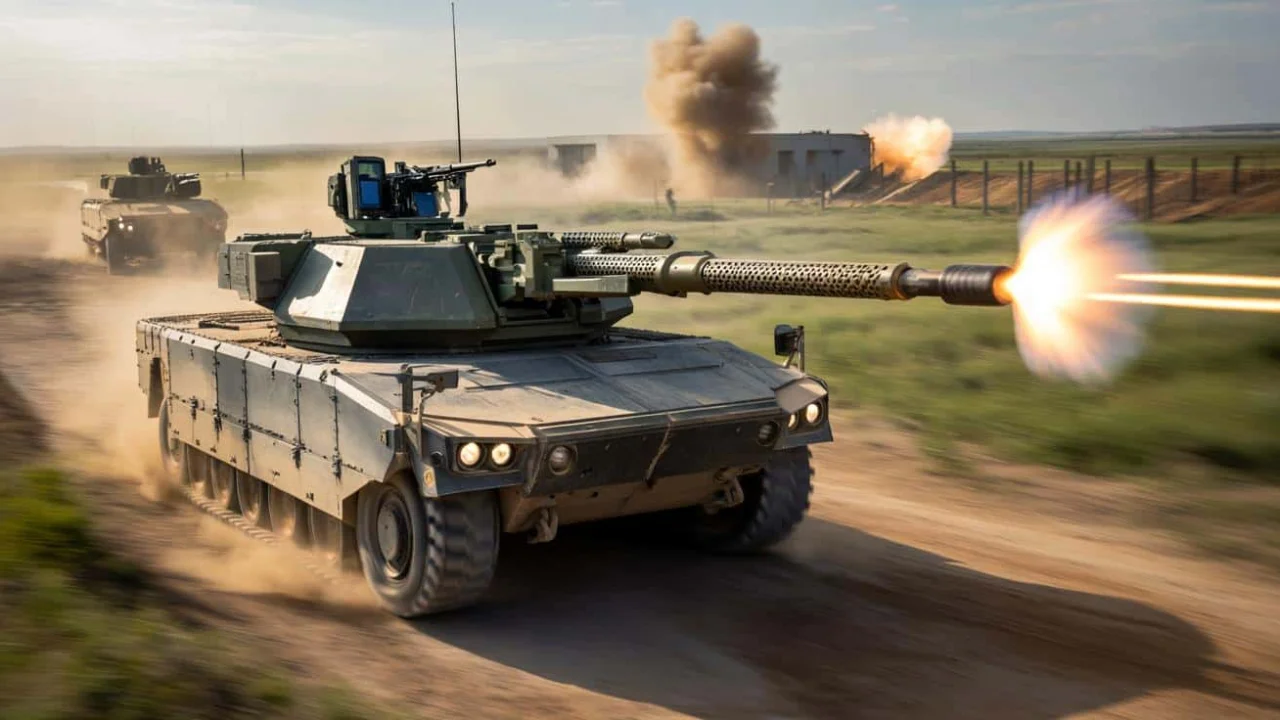
Picture this: You’re a young soldier riding in the back of an armored vehicle, knowing that the 25mm cannon up front is all that stands between your squad and enemy positions that seem to get tougher every year. That gun has served faithfully since the 1980s, but lately, it feels like bringing a knife to a gunfight.
This scenario plays out daily for American infantry troops who depend on the Bradley Fighting Vehicle. But change is coming, and it’s arriving with a much bigger punch.
The U.S. Army is quietly testing a game-changing 50mm cannon that could transform how American forces engage enemies on future battlefields. This isn’t just another military upgrade – it’s a complete rethinking of what our frontline fighting vehicles need to survive and win against increasingly dangerous opponents.
Why the Bradley Fighting Vehicle Era is Ending
The Bradley Fighting Vehicle has been America’s workhorse infantry carrier since 1981. Back then, its 25mm cannon was cutting-edge technology that could handle most threats on Cold War battlefields. Today’s reality looks very different.
“Modern adversaries have significantly upgraded their armor protection and offensive capabilities,” explains a defense analyst familiar with the testing program. “What worked against Soviet-era equipment doesn’t cut it against current-generation threats.”

The Army has ordered 16 XM913 50mm Bushmaster chain guns from Northrop Grumman, with deliveries already flowing to test units. These weapons will arm prototype vehicles competing in the XM30 Mechanized Infantry Combat Vehicle program – the official effort to replace the Bradley Fighting Vehicle across all Armored Brigade Combat Teams.
The numbers tell the story of this upgrade’s importance. The new 50mm cannon fires ammunition that’s nearly twice as heavy as the Bradley’s current 25mm rounds. That translates to dramatically increased range, penetration power, and overall battlefield effectiveness.
Breaking Down the New 50mm Cannon Capabilities
The XM913 represents the largest medium-caliber chain gun in Northrop Grumman’s proven Bushmaster family. Here’s what makes this weapon system stand out:
| Specification | Current Bradley 25mm | New XM913 50mm |
|---|---|---|
| Ammunition Size | 25x137mm | 50x228mm |
| Projectile Weight | ~184 grams | ~370 grams |
| Effective Range | 2,000 meters | 4,000+ meters |
| Rate of Fire | 200 rounds/min | 200 rounds/min |
The weapon’s key advantages include:
- Double the projectile mass for increased penetration against armored targets
- Extended engagement range allowing crews to fight from safer distances
- Compatibility with advanced programmable ammunition types
- Proven Bushmaster reliability and maintenance systems
- Ability to defeat both light armor and fortified infantry positions
“The 50mm gives our soldiers options they’ve never had before,” notes a former Army armor officer involved in vehicle testing. “You can engage targets that would require calling for backup with the current Bradley.”
Army leaders frame the XM30 program as a “lethality and survivability reset” rather than just another routine vehicle upgrade. The platform must carry infantry into battle while outgunning peer and near-peer threats, including modern infantry fighting vehicles and heavily protected defensive positions.
What This Means for Soldiers and Defense
This cannon upgrade affects real people in profound ways. Infantry soldiers who depend on their fighting vehicle’s protection and firepower will benefit from increased standoff distance and hitting power. Vehicle crews gain the confidence that comes with superior weapons systems.
The ripple effects extend beyond individual units. Army brigades equipped with 50mm-armed vehicles can engage enemy formations more effectively, potentially reducing casualties and improving mission success rates. Allies operating alongside American forces also benefit from this increased combat capability.
“When you can reliably engage and destroy threats at longer ranges, you fundamentally change the tactical equation,” explains a defense contractor familiar with the program. “Enemies can’t get close enough to use their weapons effectively.”
The timing reflects broader shifts in global military competition. Potential adversaries have invested heavily in improving their infantry fighting vehicles, main battle tanks, and defensive positions. The Bradley Fighting Vehicle’s 25mm cannon, while reliable, lacks the punch needed against these modernized threats.
Budget considerations also drive this decision. Rather than developing entirely new ammunition and logistics chains, the 50mm system leverages existing Bushmaster technology and manufacturing capabilities. This approach reduces development time and long-term costs while delivering immediate capability improvements.
Testing continues at multiple Army installations, with prototype XM30 vehicles incorporating the new cannon alongside advanced armor protection, communications systems, and crew interfaces. The Army expects to make final vehicle selections within the next two years, followed by full-scale production and deployment.
For defense contractors, this program represents a significant opportunity. Northrop Grumman’s Bushmaster family has dominated the medium-caliber cannon market for decades, and the 50mm variant extends that success into higher-intensity conflict scenarios.
“The feedback from test units has been overwhelmingly positive,” reports a program manager involved in the evaluations. “Crews immediately recognize the advantage this weapon provides in terms of range and effectiveness.”
The transition from Bradley Fighting Vehicle to XM30 with 50mm cannon capability marks more than just a technology upgrade – it represents American ground forces adapting to face tomorrow’s threats with tomorrow’s weapons.
FAQs
When will the new 50mm cannon replace the Bradley Fighting Vehicle’s 25mm gun?
The Army expects to select the final XM30 design within two years, followed by production and gradual deployment across combat units.
How much more powerful is the 50mm cannon compared to the current Bradley weapon?
The 50mm fires projectiles nearly twice as heavy with significantly greater range and penetration capability against armored targets.
Will existing Bradley Fighting Vehicle crews need extensive retraining?
The XM30 platform will require training on new systems, but the 50mm cannon uses familiar Bushmaster operating principles that crews already understand.
How many XM913 50mm cannons has the Army ordered for testing?
The Army has ordered 16 XM913 cannons from Northrop Grumman, with deliveries already underway to test units evaluating prototype vehicles.
What makes this cannon better against modern enemy vehicles?
The larger 50mm ammunition provides increased penetration power and extended range, allowing crews to engage heavily armored threats that the 25mm cannot effectively defeat.
Will allies also use vehicles with the 50mm cannon?
International interest in the XM30 program suggests allied nations may adopt similar capabilities, though specific export decisions depend on final vehicle selection and approval processes.
About the Author