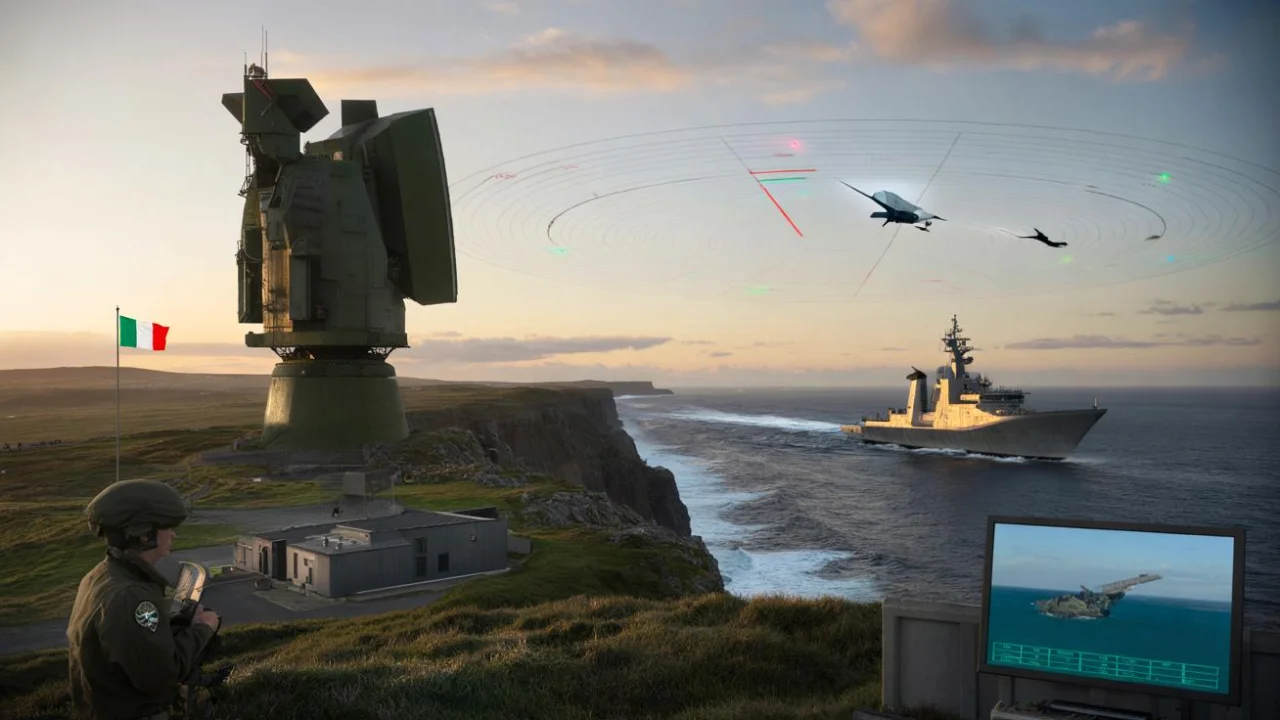
Captain Sarah Murphy had been watching her screen for three hours when something caught her eye. A small blip appeared at the edge of Ireland’s airspace, moving fast and low. She reached for her radio, then hesitated. Without proper military radar coverage, she couldn’t be certain what she was seeing. Was it a lost private plane? A military aircraft from another country? Or something else entirely?
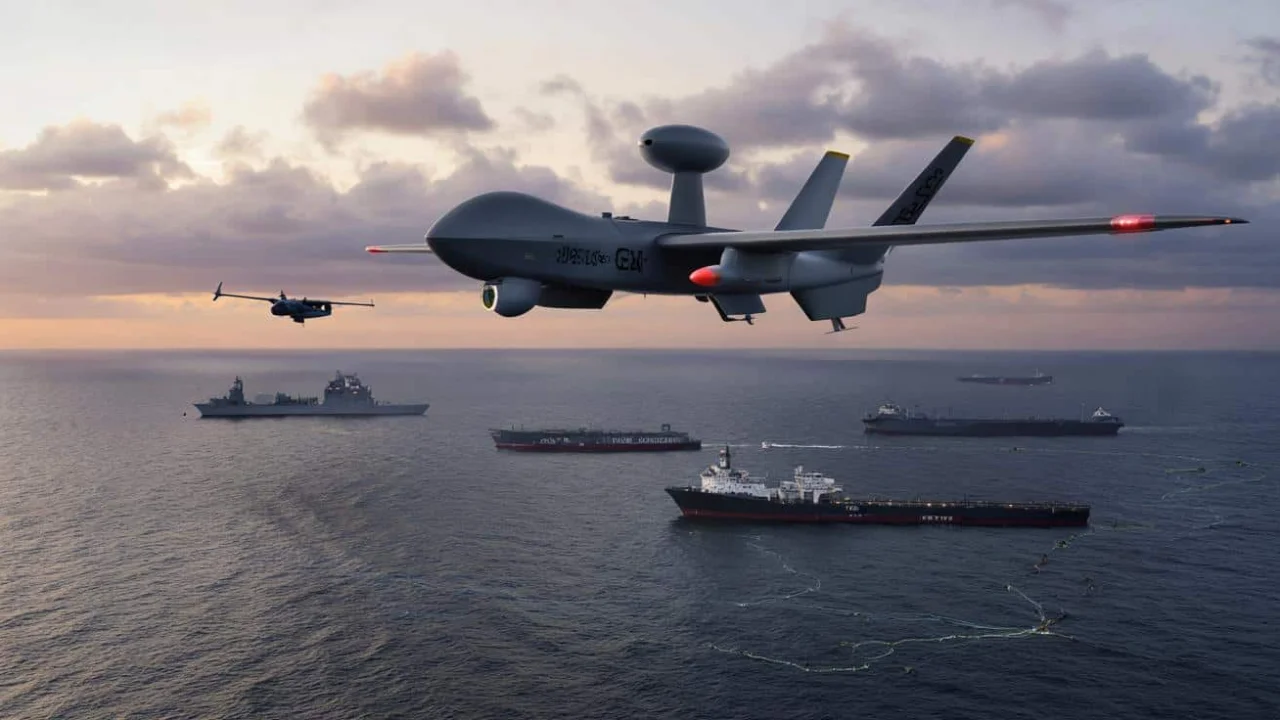
This scenario plays out more often than most Irish citizens realize. For decades, Ireland has monitored its skies using civilian air traffic control systems and friendly cooperation with neighboring countries. It works well enough for commercial flights, but leaves dangerous gaps when it comes to aircraft that don’t want to be seen.
That’s about to change. Dublin has just approved military radar negotiations with France, marking a pivotal moment in Ireland’s defense capabilities and a significant step toward closing its airspace blind spots.
Why Ireland’s Current Radar Coverage Falls Short
Ireland’s approach to airspace monitoring has always been different from most European nations. The country relies heavily on civilian air traffic control data and cooperative agreements with the UK and other neighbors. This system works perfectly for scheduled airlines and private pilots who follow the rules.
But what happens when an aircraft switches off its transponder? Or when military jets from other countries pass through Irish airspace unannounced? The current system simply can’t see them reliably.

“We’ve been essentially flying blind in many situations,” explains a former Irish Air Corps officer who requested anonymity. “If someone doesn’t want us to see them, our chances of detection drop dramatically.”
The Irish government has now approved preliminary plans for a comprehensive Military Radar Programme, with France selected as the preferred international partner. The cabinet’s approval for government-to-government negotiations represents years of planning finally coming to fruition.
Primary radar technology differs fundamentally from the secondary radar systems used in civilian aviation. Instead of waiting for aircraft to respond to identification requests, primary radar sends out radio waves and listens for echoes. This means it can detect any aircraft, regardless of whether it’s cooperating or trying to remain hidden.
What Ireland’s Military Radar System Will Include
The military radar negotiations aren’t focused on buying a single large radar installation. Instead, Irish officials are planning a comprehensive three-part capability package that addresses different aspects of airspace and maritime surveillance.
Here’s what the proposed system includes:
- Long-range primary radar stations – Multiple installations providing coverage across Irish airspace
- Mobile radar units – Flexible systems that can be deployed as needed
- Maritime surveillance capabilities – Extended coverage over Ireland’s extensive coastal waters
- Integration systems – Technology to connect new radars with existing civilian air traffic control
- Command and control infrastructure – Central monitoring and response capabilities
The French partnership brings significant advantages to these military radar negotiations. France operates some of the world’s most advanced radar systems and has extensive experience integrating military and civilian air traffic management.
| System Component | Purpose | Coverage Area |
|---|---|---|
| Primary Radar Network | Detect all aircraft | Full Irish airspace |
| Mobile Units | Flexible deployment | Specific regions as needed |
| Maritime Surveillance | Ocean monitoring | Ireland’s coastal waters |
| Integration Systems | Connect military/civilian data | Nationwide coordination |
“This isn’t just about buying equipment,” notes a defense analyst familiar with the negotiations. “It’s about building an entirely new capability that transforms how Ireland monitors and protects its sovereignty.”
Real-World Impact on Ireland’s Security and Beyond
The implications of Ireland’s military radar negotiations extend far beyond military applications. Enhanced radar coverage will affect multiple aspects of Irish life and international relationships.
Search and rescue operations will see immediate benefits. When aircraft or ships go missing, primary radar can often provide crucial tracking data that civilian systems miss. This capability could save lives during emergencies off Ireland’s rugged coastline.
International relations will also shift. Currently, Ireland depends heavily on the UK’s Royal Air Force for air policing services. The new radar system won’t replace this cooperation, but it will give Ireland much better awareness of when such assistance might be needed.
The economic impact shouldn’t be overlooked either. The military radar negotiations will likely create jobs in Ireland’s growing technology sector, both during installation and for ongoing maintenance and operations.
Drug smuggling and other illegal activities often rely on avoiding detection. Enhanced radar coverage will make it much harder for criminals to exploit gaps in Ireland’s surveillance network.
“We’re talking about a fundamental shift in how Ireland sees itself and its role in European security,” explains Dr. James O’Brien, a security studies expert at Trinity College Dublin. “This isn’t just about defense – it’s about taking fuller responsibility for what happens in Irish airspace and waters.”
The timing of these military radar negotiations also reflects broader changes in European security thinking. Russia’s actions in Ukraine have prompted many neutral countries to reconsider their defense capabilities, even while maintaining their non-aligned status.
For ordinary Irish citizens, the changes will be largely invisible day-to-day. Commercial flights will continue as normal, and the new systems are designed to integrate seamlessly with existing air traffic control. But the enhanced security and emergency response capabilities will provide benefits that extend to everyone who lives in or visits Ireland.
Aviation professionals are particularly optimistic about the planned improvements. “Better radar coverage means better safety for everyone who flies in Irish airspace,” notes a senior air traffic controller at Dublin Airport. “We’ll have a much clearer picture of what’s happening up there.”
The French partnership in these military radar negotiations also opens doors for future cooperation in other defense and technology areas. France’s expertise in aerospace and defense technology could benefit Ireland’s broader economic development goals.
FAQs
When will Ireland’s new military radar system be operational?
The negotiations are just beginning, so implementation will likely take several years. Government sources suggest initial capabilities could be online within 3-5 years.
Will this affect civilian flights or air traffic?
No, the new military radar will integrate with existing civilian air traffic control systems. Regular flights should see no disruption and may actually benefit from enhanced safety monitoring.
How much will the military radar system cost Ireland?
Specific costs haven’t been announced, but similar systems in other countries typically require hundreds of millions of euros in investment over several years.
Does this mean Ireland is joining NATO or changing its neutral status?
No, enhanced radar capabilities don’t change Ireland’s military neutrality. Many neutral countries operate sophisticated defense systems while maintaining non-aligned foreign policies.
Why did Ireland choose France as its partner for military radar negotiations?
France offers advanced radar technology, experience with civilian-military integration, and a willingness to work through government-to-government agreements that suit Ireland’s procurement preferences.
Will the new radar detect drones and small aircraft?
Modern military radar systems can typically detect much smaller objects than civilian radar, including drones and light aircraft, though specific capabilities will depend on the final system configuration.
About the Author