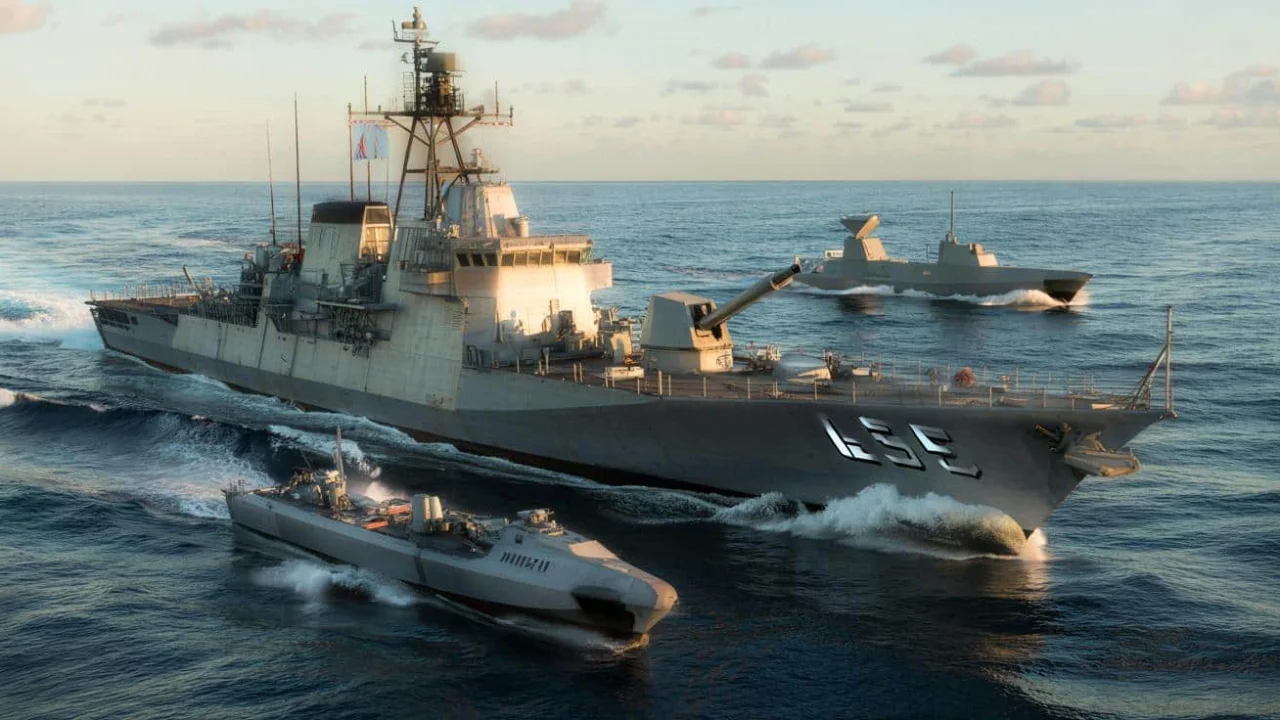
Captain Sarah Mitchell still remembers the day her destroyer crew spent twelve hours chasing down a drug smuggler’s speedboat in the Caribbean. The irony wasn’t lost on her – here was a $1.8 billion warship, loaded with cutting-edge radar and missiles designed to track enemy submarines, playing maritime cop with a few guys hauling cocaine in a cigarette boat.

“We joked about it afterward,” she recalls, “but honestly, it felt like using a Ferrari to deliver pizza. Sure, it works, but there’s got to be a smarter way.”
That conversation – repeated in wardrooms across the fleet – helps explain why the U.S. Navy just unveiled specs for its new FF(X) navy frigate program. Instead of building more billion-dollar destroyers, the service wants smaller, faster, cheaper ships that can handle the bread-and-butter missions without breaking the budget.
When Coast Guard Meets Navy: A Radical Design Shift
The FF(X) navy frigate program represents a complete departure from how the Navy traditionally builds warships. Rather than designing a brand-new hull from scratch, planners decided to modify the Coast Guard’s proven Legend-class National Security Cutter.
This decision shocked many naval architects, but it makes perfect sense when you dig into the numbers. Huntington Ingalls Industries already builds these cutters in series production. The hull design is mature, tested, and most importantly – available now.
“We’re trading perfectionism for practicality,” explained NAVSEA executive director Chris Miller during the Surface Navy 2026 conference. “The Navy needs more hulls in the water by the late 2020s, not another development program that takes fifteen years.”
The FF(X) will slot into the Navy’s planned “low-medium-high” surface force structure. Think of it as the Honda Civic of naval warfare – reliable, affordable, and perfectly suited for everyday missions that don’t require a destroyer’s overwhelming firepower.

FF(X) Specifications: What’s Under the Hood
The revealed specs show a ship designed for flexibility over raw power. Here’s what we know about the FF(X) navy frigate program’s key features:
| Specification | FF(X) Frigate | Current DDG-51 |
|---|---|---|
| Length | 418 feet | 509 feet |
| Displacement | ~4,500 tons | ~9,200 tons |
| Primary Gun | 57mm Bofors | 5-inch/62 cal |
| VLS Cells | 16-32 (modular) | 96 |
| Estimated Cost | $600-800M | $1.8B+ |
| Crew Size | ~110 | ~300 |
The weapon systems tell the story of a ship built for different missions:
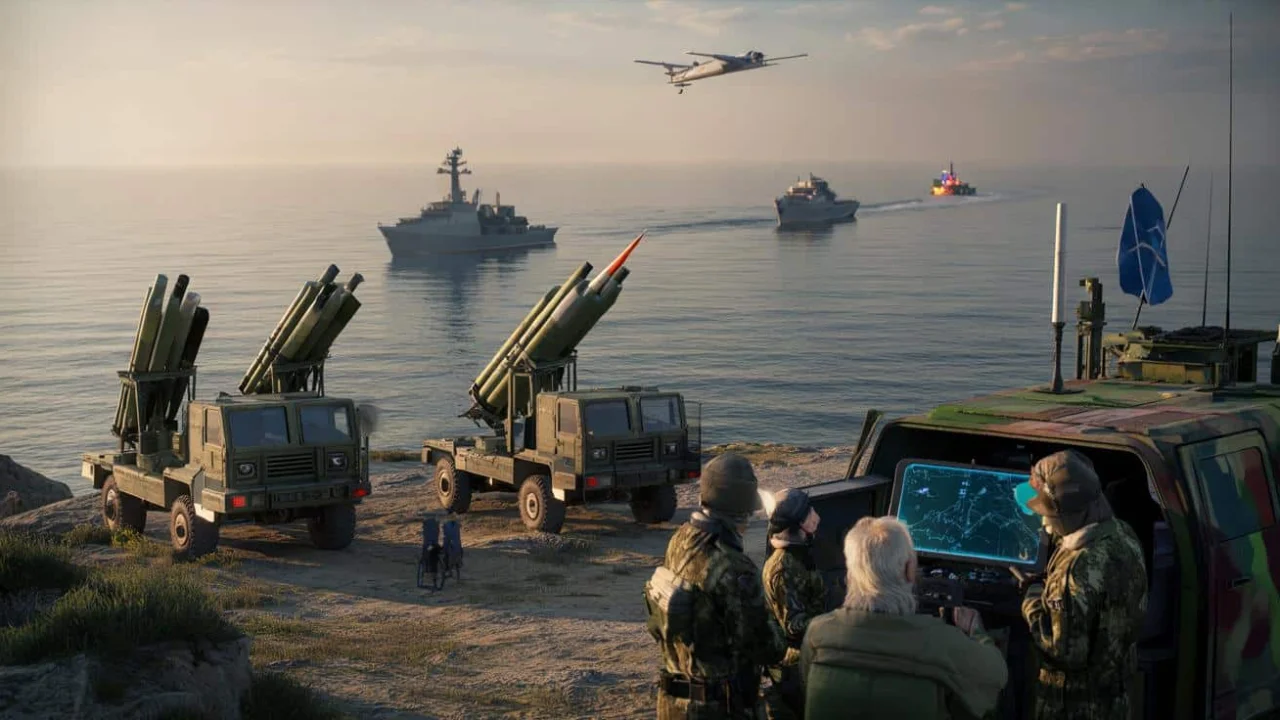
- 57mm Bofors gun: Perfect for surface targets and coastal operations, but lighter than destroyer-class weapons
- Modular VLS system: 16-32 cells depending on mission package, allowing commanders to tailor loadouts
- Smart missile integration: Designed around newer, smaller precision weapons rather than heavy long-range interceptors
- Flexible stern configuration: Space for mission modules, small boats, or additional equipment based on deployment needs
Rear Admiral Derek Trinque emphasized the philosophy behind these choices: “We want a ship that can be built quickly, in quantity, and tailored by mission package rather than locked into heavy combat systems.”
The modular approach means different FF(X) vessels could carry anti-submarine warfare packages, mine countermeasures equipment, or enhanced communications gear depending on where they’re headed.
Real-World Impact: More Ships, Different Missions
For American taxpayers, the FF(X) navy frigate program promises better bang for the buck. Instead of building ten destroyers for $18 billion, the Navy could potentially field fifteen to twenty frigates for the same money.
That math matters when you consider what these ships will actually do day-to-day. Naval analyst Rebecca Torres points out the practical benefits: “Most naval operations aren’t high-intensity combat. They’re showing the flag, conducting freedom of navigation operations, or working with allies. You don’t need a destroyer for that.”
The program also addresses a critical manning shortage. Smaller crews mean less strain on Navy personnel systems, while faster construction timelines could help meet fleet size goals that have remained elusive for years.
Regional commanders will likely see FF(X) frigates handling missions like:
- Counter-narcotics operations in the Caribbean and Eastern Pacific
- Maritime security cooperation with allies in Africa and Southeast Asia
- Routine patrol duties that currently tie up expensive destroyers
- Humanitarian assistance and disaster relief operations
“Think of it as having the right tool for the job,” explains former surface warfare officer Commander Jake Peterson. “You wouldn’t use a sledgehammer to hang a picture frame. Same principle applies here.”
The timeline looks aggressive but achievable. Using the Coast Guard hull as a baseline should cut development time significantly, with the first FF(X) potentially joining the fleet by 2029.
Critics worry about capability gaps, arguing that lighter armament might prove insufficient if threats escalate. However, Navy leadership seems confident that the high-end DDG-51 Flight III destroyers and future BBG(X) large surface combatants will handle peer adversary scenarios.
The FF(X) navy frigate program ultimately represents a return to naval common sense – building enough of the right ships rather than a few perfect ones. For sailors like Captain Mitchell, that means using destroyers for destroyer missions while letting frigates handle everything else.
As one senior Navy official put it during the conference: “Sometimes the best solution isn’t the most sophisticated one. Sometimes it’s just the one that works.”
FAQs
When will the first FF(X) frigate enter service?
Current timelines suggest the first FF(X) could join the fleet by 2029, assuming development stays on track.
How does FF(X) differ from the Constellation-class frigate?
FF(X) uses a modified Coast Guard hull for faster delivery and lower costs, while Constellation-class ships are purpose-built naval combatants with longer development times.
Will FF(X) frigates be able to defend themselves against serious threats?
Yes, they’ll carry modern defensive systems and smart missiles, though they’re designed for different missions than high-intensity naval combat.
How many FF(X) frigates does the Navy plan to build?
Specific numbers haven’t been finalized, but the program aims for larger quantities than traditional frigate classes to provide more hulls at lower per-unit costs.
Why use a Coast Guard design instead of building from scratch?
The Legend-class hull is already proven, in production, and available, which dramatically reduces development time and risk compared to starting with a clean sheet design.
What missions will FF(X) frigates primarily handle?
Counter-narcotics, maritime security, presence operations, ally cooperation, and routine patrols that don’t require destroyer-level capabilities.
About the Author