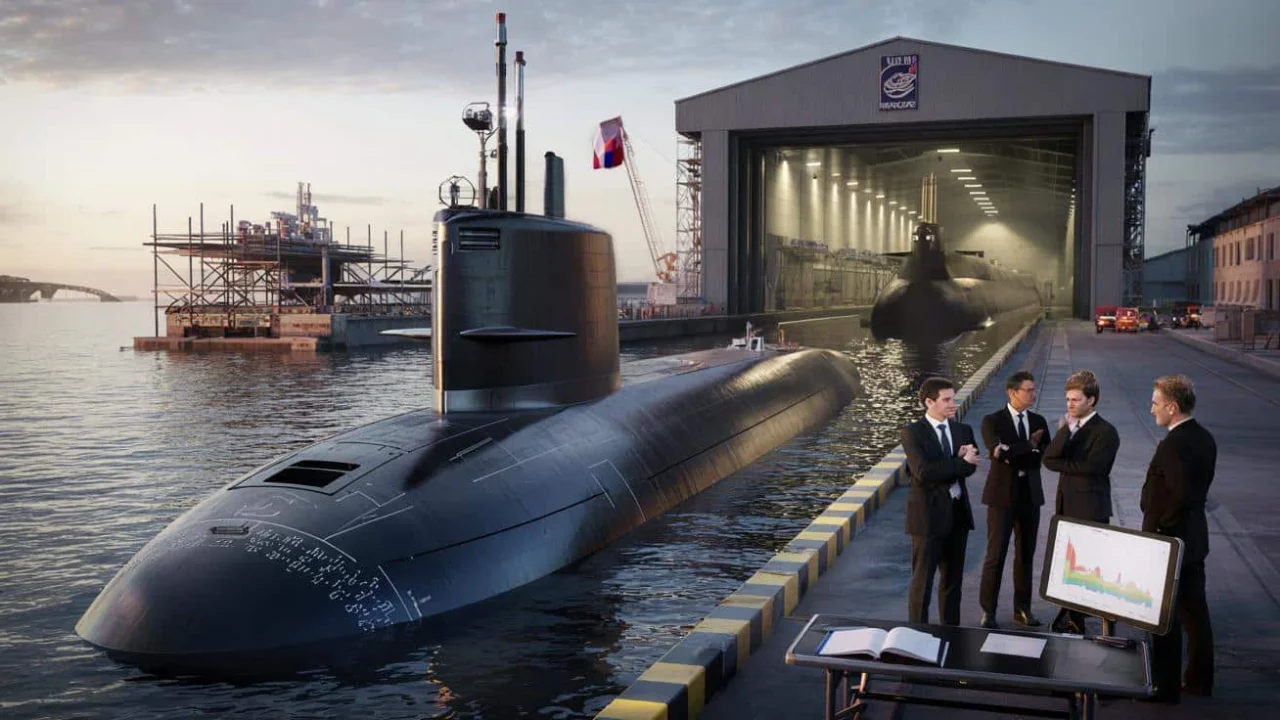
Captain María Elena Rossi still remembers the silence that fell over Buenos Aires Naval Base in November 2017. The radio had gone quiet for hours, then days. The ARA San Juan submarine, carrying 44 of her colleagues, had vanished somewhere in the South Atlantic. As search teams scoured thousands of square miles of ocean, one thing became painfully clear to every Argentine naval officer: their country’s underwater defense had just suffered a devastating blow.
Eight years later, that same naval base is buzzing with different energy. Argentina is negotiating a massive loan with France to purchase three advanced Scorpene submarines, marking the nation’s most ambitious attempt to rebuild its underwater capabilities since that tragic day.
The timing couldn’t be more critical. With tensions rising over territorial waters and fishing rights in the South Atlantic, Argentina finds itself almost defenseless beneath the waves, relying on a single aging submarine that’s barely fit for training missions.
France Offers Argentina a Lifeline Under the Waves
President Javier Milei’s government has set its sights on French Naval Group’s Scorpene submarines, specifically the “Evolved” variant that represents the cutting edge of conventional submarine technology. But there’s a catch – Argentina needs financing to make this dream a reality.
The proposed deal involves a complex loan arrangement with France that would allow Argentina to acquire three Scorpene submarines over the next decade. These aren’t just any submarines; they’re based on the same design that Brazil successfully deployed with its Riachuelo-class vessels, but with significant technological upgrades.

“Argentina sees this as more than just replacing lost capability,” explains naval defense analyst Roberto Mendez. “These Scorpene submarines would give them patrol endurance and firepower they’ve never had before.”
The French loan structure reportedly includes favorable interest rates and extended payment terms, recognizing Argentina’s current economic constraints while acknowledging the strategic importance of the deal for both nations.
What Makes These Scorpene Submarines Special
The Scorpene Evolved variant that Argentina is pursuing represents a significant technological leap. Here’s what sets these submarines apart from conventional designs:
| Feature | Scorpene Evolved | Argentina’s Current Capability |
|---|---|---|
| Patrol Duration | 50+ days submerged | 15-20 days (ARA Salta) |
| Crew Size | 35 personnel | 44 personnel |
| Diving Depth | 350+ meters | 300 meters |
| Weapons Systems | Torpedoes + Anti-ship missiles | Torpedoes only |
| Sonar Technology | Advanced digital arrays | 1980s analog systems |
The submarines would feature several key advantages:

- Air-independent propulsion systems for extended underwater operations
- Advanced sonar arrays capable of detecting threats at greater distances
- Modern combat systems that can launch both torpedoes and anti-ship missiles
- Reduced acoustic signatures for stealth operations
- Digital command and control systems with real-time data sharing capabilities
“The technological gap between what Argentina has now and what these Scorpene submarines offer is absolutely massive,” notes submarine warfare expert Captain (Ret.) Luis Fernandez. “We’re talking about moving from 1980s technology straight into the 2020s.”
Each submarine would cost an estimated $600-700 million, making this a multi-billion dollar investment for Argentina’s defense capabilities.
Why This Deal Matters Beyond Argentina’s Borders
The implications of Argentina acquiring French Scorpene submarines extend far beyond Buenos Aires. The South Atlantic has become an increasingly contested maritime region, with multiple nations asserting territorial claims and fishing rights.
For Argentina, these submarines would restore their ability to patrol the Malvinas/Falkland Islands region and protect valuable fishing grounds from illegal trawling operations. The extended range and endurance of Scorpene submarines would allow Argentina to maintain a persistent underwater presence across their claimed territorial waters.
The deal also represents a significant geopolitical shift. France’s willingness to provide financing for these submarines signals stronger defense cooperation between the two nations, potentially affecting regional power balances.
“Argentina’s neighbors are watching this deal closely,” explains regional security analyst Carmen Rodriguez. “Three modern submarines would dramatically change Argentina’s naval projection capabilities in the South Atlantic.”
Brazil, which operates its own Scorpene submarines, has reportedly offered technical support for Argentina’s submarine program, suggesting broader regional cooperation in underwater warfare capabilities.
The economic impact extends beyond defense spending. The submarine deal includes provisions for technology transfer and local manufacturing components, potentially creating hundreds of jobs in Argentina’s struggling defense industry.
For France, the deal represents an opportunity to expand Naval Group’s presence in Latin America while strengthening diplomatic ties with a key South American partner. The financing arrangement also demonstrates France’s willingness to support allied nations’ defense modernization efforts despite economic constraints.
However, the complex financing structure still requires approval from both countries’ legislatures. Argentine Congress must approve the loan terms, while French authorities need to finalize the credit arrangements and export licenses.
The timeline remains ambitious but challenging. If negotiations conclude successfully, the first Scorpene submarine could enter Argentine service by 2030, with all three vessels operational by 2035.
“This isn’t just about submarines,” observes naval historian Dr. Patricia Santos. “It’s about Argentina reclaiming its position as a serious maritime power in the South Atlantic after nearly a decade of underwater blindness.”
FAQs
How long would it take for Argentina to receive the Scorpene submarines?
If the deal is finalized, the first submarine could be delivered by 2030, with all three operational by 2035.
What happened to Argentina’s previous submarine fleet?
The ARA San Juan was lost in 2017 with 44 crew members, leaving only the aging ARA Salta in service as a training vessel.
How much will the three Scorpene submarines cost Argentina?
Each submarine is estimated to cost $600-700 million, making this a multi-billion dollar investment requiring French financing.
What makes Scorpene submarines different from conventional submarines?
Scorpene submarines feature air-independent propulsion, advanced sonar systems, and can stay submerged for 50+ days compared to older submarines’ 15-20 day limit.
Will other countries be involved in this submarine deal?
Brazil, which operates similar Scorpene submarines, has offered technical support for Argentina’s program, suggesting regional cooperation.
What are the main challenges facing this submarine deal?
The complex financing arrangement requires legislative approval in both Argentina and France, and Argentina’s economic situation makes the loan structure particularly important.
About the Author