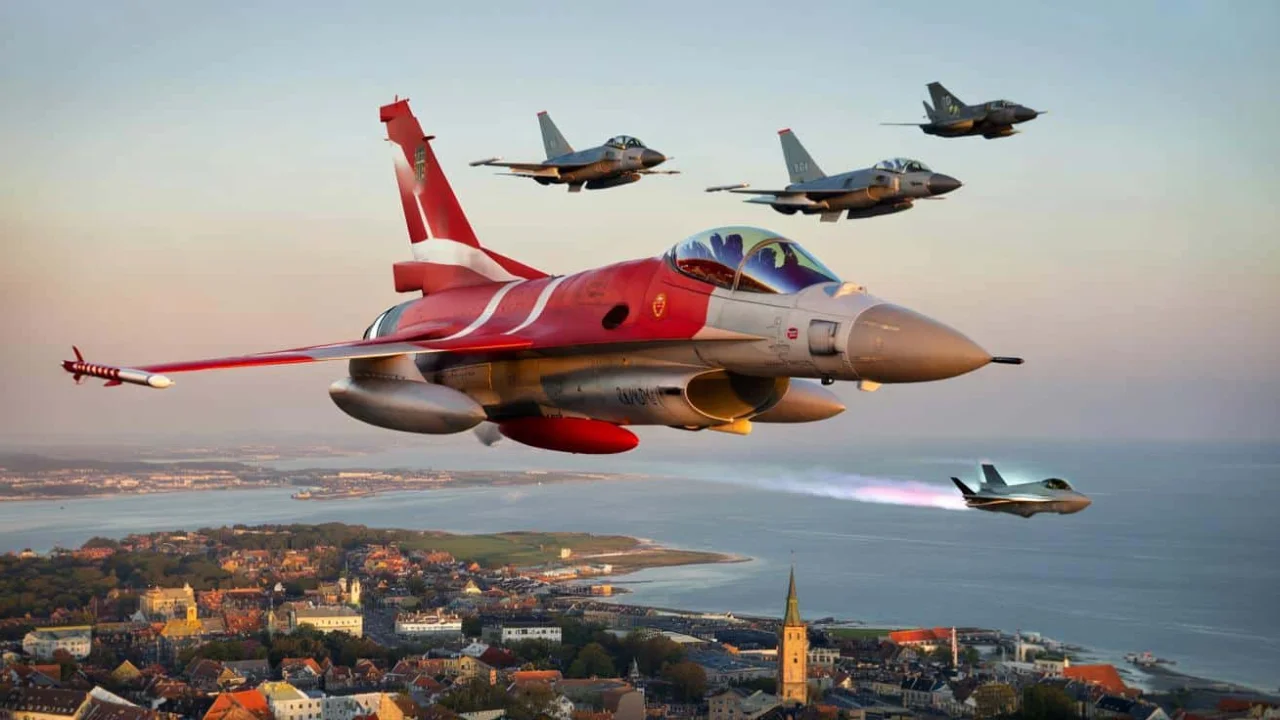
Captain Lars Nielsen remembers the first time he saw an F-16 streak across the Danish sky in 1980. He was just eight years old, playing in his grandmother’s backyard near Aalborg Air Base, when the distinctive sound of General Electric engines split the morning quiet. “I knew right then I wanted to fly one of those,” he recalls, his voice tinged with emotion as he prepares for his final F-16 mission after 25 years in the cockpit.

That childhood dream came true, but now Captain Nielsen—along with every other Danish F-16 pilot—must say goodbye to the aircraft that defined their careers. Denmark’s F-16 farewell marks the end of one of aviation’s most enduring partnerships.
After serving faithfully for 46 years, Denmark’s Fighting Falcons are making their final flights over Danish territory. The last operational F-16s will be retired by the end of 2024, replaced entirely by the more advanced F-35A Lightning II stealth fighters that have been gradually taking over since 2021.

Why This Historic Farewell Matters to Denmark
The Denmark F-16 farewell represents far more than a simple aircraft retirement. These versatile fighters became the backbone of Danish air defense during some of the most turbulent decades in modern European history.
Denmark originally acquired 77 F-16A and F-16B Fighting Falcons in the late 1970s as part of NATO’s largest-ever multinational fighter procurement program. The deal, worth billions in today’s money, saw Denmark join Belgium, the Netherlands, and Norway in purchasing what would become one of the world’s most successful military aircraft.
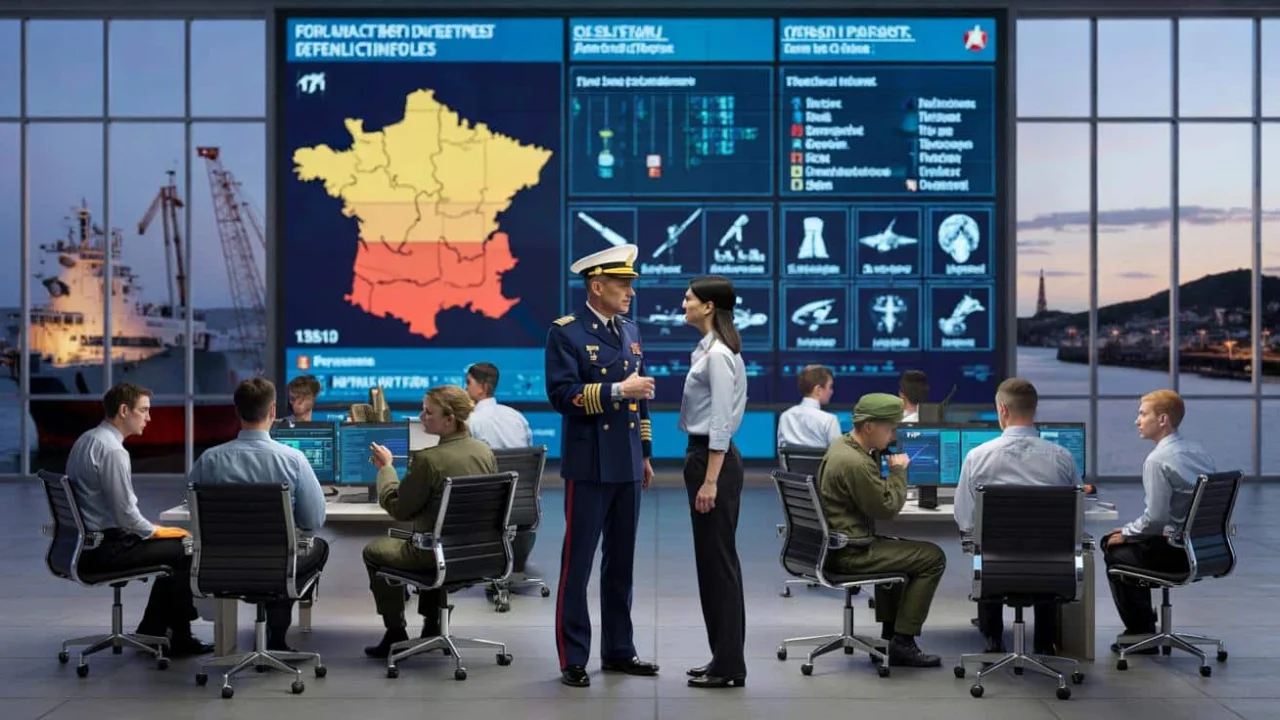
“The F-16 wasn’t just our main fighter—it was our only fighter for most of the past three decades,” explains retired Air Force Colonel Michael Christensen, who flew F-16s during NATO missions over the Balkans. “These aircraft carried the entire burden of defending Danish airspace through the Cold War’s end, 9/11, and everything since.”
Danish F-16s logged thousands of combat hours in real-world operations, from patrolling Baltic airspace to enforce NATO’s Article 5 commitments to conducting precision strikes in Afghanistan and Libya. The aircraft proved remarkably adaptable, receiving multiple upgrades over the decades to keep pace with evolving threats.

Where Denmark’s F-16s Are Heading Next
While Denmark waves farewell to its F-16 fleet, many of these battle-tested aircraft aren’t heading for the scrapyard. Instead, they’re getting remarkable second lives in two very different corners of the world.
| Destination | Number of Aircraft | Purpose | Expected Delivery |
|---|---|---|---|
| Ukraine | 19 F-16s | Combat operations against Russia | 2024-2025 |
| Argentina | 24 F-16s | Air defense modernization | 2025-2026 |
| Other NATO allies | 12 F-16s | Training and support | 2024-2025 |
| Museums/Display | 4 F-16s | Historical preservation | 2024 |
The transfer to Ukraine represents perhaps the most significant chapter in this farewell story. Danish F-16s will soon be engaging Russian forces, adding a poignant twist to aircraft that spent decades preparing for exactly that scenario during the Cold War.

Key aspects of Denmark’s F-16 transfer program include:
- Comprehensive pilot training programs in Denmark and the United States
- Full maintenance and logistics support packages
- Advanced weapons systems integration
- Spare parts inventories to sustain operations for years
- Technical documentation and training materials
“We’re not just handing over the keys,” notes Danish Defense Minister Jakob Ellemann-Jensen. “We’re ensuring these aircraft can operate effectively in their new roles, whether that’s defending Ukrainian skies or modernizing Argentine air capabilities.”
The Human Side of Denmark’s Fighter Transition
Behind every Denmark F-16 farewell story lies a deeply personal connection between pilots, ground crews, and their aircraft. For many Danish Air Force personnel, the F-16 wasn’t just a machine—it was a trusted companion through decades of service.
Master Sergeant Anna Thomsen has spent 18 years maintaining F-16 engines at Skrydstrup Air Base. She knows each aircraft’s quirks, its maintenance history, even which ones tend to run slightly hotter than others. “You develop a relationship with these planes,” she explains. “Each one has its own personality, its own way of telling you what it needs.”
The transition to F-35A Lightning II fighters brings significant changes for Danish personnel. The new stealth fighters require completely different maintenance approaches, advanced computer systems, and specialized training that takes years to master.
Danish pilots are experiencing mixed emotions about the changeover. While the F-35A offers unprecedented capabilities—stealth technology, advanced sensors, and network-centric warfare abilities—many feel genuine sadness about losing their F-16s.
“The F-16 is like flying a sports car,” explains Captain Nielsen, the pilot who first saw Fighting Falcons as a child. “It’s responsive, agile, and you feel completely connected to the aircraft. The F-35 is incredibly capable, but it’s more like flying a computer.”
Ground crews face perhaps the biggest adjustment. F-16 maintenance relied heavily on hands-on mechanical skills and years of experience with specific systems. F-35 maintenance involves complex diagnostic computers, specialized tools, and strict protocols that leave little room for the intuitive troubleshooting that characterized F-16 operations.
Despite the challenges, Danish Air Force leadership remains confident about the transition. The F-35A offers capabilities that the F-16 simply cannot match: near-invisibility to enemy radar, advanced electronic warfare systems, and the ability to share real-time intelligence with allied forces.
As Denmark’s last F-16s prepare for their final flights, air bases across the country are planning ceremonial events to mark the occasion. Aalborg Air Base will host the largest farewell ceremony, featuring formation flights, static displays, and opportunities for the public to see these historic aircraft one last time.
The Denmark F-16 farewell represents more than military modernization—it symbolizes the end of an era when a single, reliable aircraft could serve a nation’s defense needs for nearly half a century. As Captain Nielsen prepares for his final F-16 mission, he reflects on the aircraft that defined his career: “These planes kept Denmark safe for 46 years. That’s a legacy worth celebrating, even as we say goodbye.”
FAQs
Why is Denmark retiring its F-16 fighters now?
Denmark is replacing F-16s with more advanced F-35A stealth fighters that offer superior capabilities against modern threats, including stealth technology and advanced electronic warfare systems.
How many F-16s did Denmark originally have?
Denmark acquired 77 F-16A and F-16B Fighting Falcons in the late 1970s and early 1980s, though several were lost in accidents over the decades of service.
What will happen to Denmark’s retired F-16s?
Most will go to Ukraine and Argentina, with 19 aircraft heading to Ukraine for combat operations and 24 to Argentina for air defense modernization, while others go to NATO allies or museums.
When will the last Danish F-16 fly?
The final operational Danish F-16 flights are scheduled for late 2024, with ceremonial farewell events planned at air bases across the country.
How long did Denmark operate F-16 fighters?
Denmark operated F-16 Fighting Falcons for 46 years, from 1980 to 2024, making it one of the longest-serving aircraft in Danish Air Force history.
Are Danish F-16 pilots switching to F-35s?
Yes, Danish F-16 pilots are transitioning to F-35A Lightning II fighters, though the process requires extensive retraining due to the significant technological differences between the aircraft.
About the Author