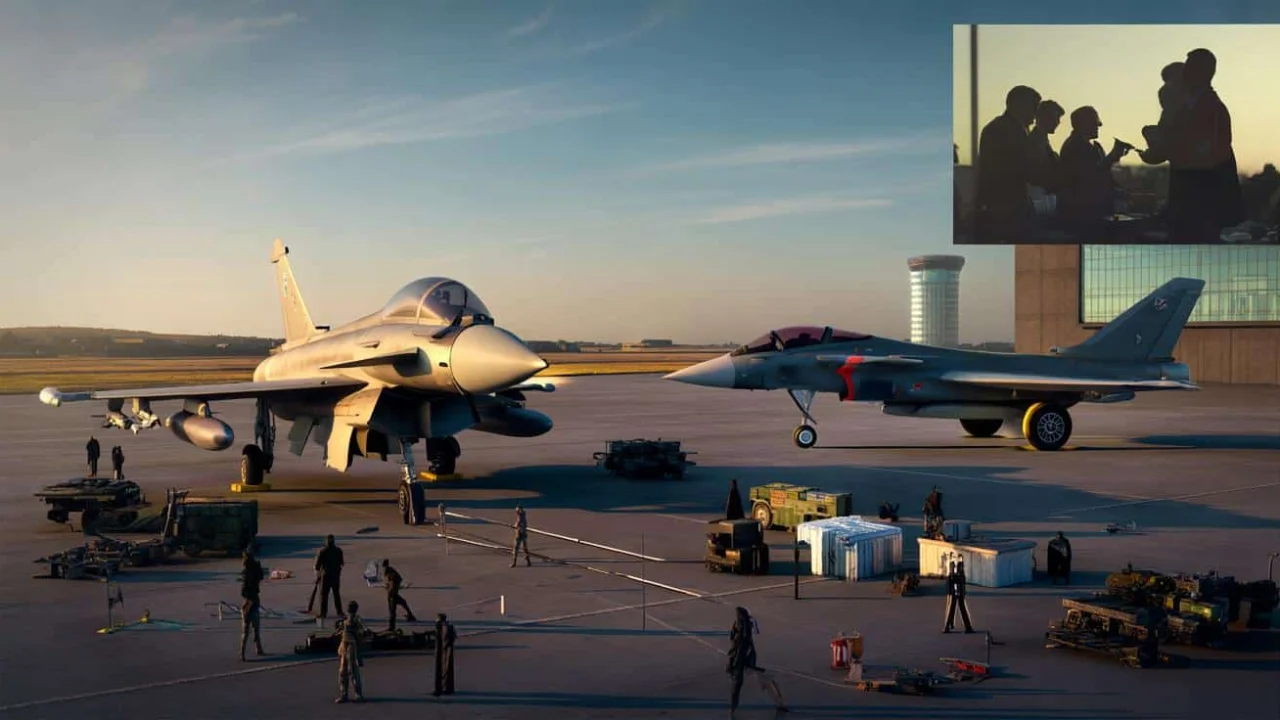
Picture this: you’re a defense minister sitting in a meeting, and someone slides a report across the table showing that your country’s flagship fighter jet program costs nearly double what your neighbor paid for theirs. The room goes quiet. That uncomfortable silence is exactly what European defense officials are facing right now, as a new French Senate report reveals the stark reality behind the Eurofighter’s price tag.
The numbers are eye-watering. While France’s Rafale jets rolled off production lines at a reasonable cost, the Eurofighter program managed to burn through budgets at nearly twice the rate. Now, as Europe tries to build its next generation of fighter aircraft, this expensive lesson from the past is casting a long shadow over current negotiations.
What makes this revelation particularly painful is the timing. France, Germany, and Spain are locked in heated discussions about their Future Combat Air System, and old wounds about cost overruns are being ripped wide open.
When European Cooperation Gets Expensive
The Eurofighter unit cost comparison isn’t just about numbers on a spreadsheet. It’s about fundamentally different approaches to building complex military equipment across multiple countries. The French Senate report has thrown this issue into sharp focus just as Europe’s biggest defense powers are arguing over who should lead their next major fighter jet project.
“The Eurofighter program became a textbook example of how not to manage a multinational defense project,” explains a senior defense analyst familiar with European military procurement. “When you have four countries trying to lead simultaneously, costs spiral out of control.”
The Future Combat Air System, known as FCAS or SCAF in French, is supposed to deliver Europe’s next-generation fighter by the 2040s. But behind closed doors, the same old tensions that plagued the Eurofighter are surfacing again. Dassault Aviation wants clear French leadership, while Airbus pushes for a more collaborative approach.
German officials tried to sound optimistic in December, claiming there was “plenty of time” to resolve disagreements. But industry insiders paint a different picture of months-long standoffs and increasingly sharp public exchanges between executives.
Breaking Down the Real Numbers
The cost comparison between these two European fighter programs tells a sobering story about defense procurement efficiency:
| Aircraft Program | Estimated Unit Cost | Development Model | Partner Countries |
|---|---|---|---|
| Eurofighter Typhoon | ~€90 million | Four-nation consortium | UK, Germany, Italy, Spain |
| Dassault Rafale | ~€45 million | French-led with subcontractors | Primarily France |
| Projected FCAS/NGF | TBD | Under negotiation | France, Germany, Spain |
The reasons behind the Eurofighter’s inflated costs become clearer when you examine the program structure:
- Four separate production lines across different countries
- Complex workshare agreements that prioritized politics over efficiency
- Multiple design requirements to satisfy different air forces
- Lengthy decision-making processes requiring consensus from all partners
- Duplicated management structures and oversight bodies
“Every time we needed to make a technical decision, we had to get four governments to agree,” recalls a former Eurofighter program official. “That’s not just time-consuming – it’s expensive.”
Meanwhile, the Rafale benefited from streamlined French decision-making and a more focused approach to requirements. Dassault could make technical choices quickly and stick with them, rather than constantly renegotiating with multiple partners.
What This Means for Europe’s Defense Future
The Eurofighter unit cost revelation isn’t just historical trivia – it’s shaping real decisions happening right now. European taxpayers and military planners are watching to see whether the continent can learn from past mistakes or is doomed to repeat them.
Defense budgets across Europe are under intense pressure. Every euro spent on inflated fighter jet costs is money that can’t go toward other critical military capabilities. With geopolitical tensions rising, efficiency isn’t just about saving money – it’s about national security.
“We simply cannot afford another Eurofighter-style cost overrun,” warns a European defense ministry official. “The strategic environment has changed, and we need capabilities delivered on time and on budget.”
The current FCAS negotiations are essentially a battle between two philosophies. The French approach, exemplified by the Rafale program, emphasizes clear leadership and streamlined decision-making. The German-Spanish position favors more equal partnership, similar to the Eurofighter model.
Industry executives on both sides are increasingly vocal about their concerns. Dassault argues that blurred responsibilities lead to delays and cost overruns. Airbus counters that French dominance would sideline German and Spanish capabilities and jobs.
The stakes extend beyond just building fighter jets. Success or failure of FCAS could determine whether Europe can maintain technological independence in defense or becomes increasingly dependent on American systems. The program is also seen as a test case for broader European defense cooperation.
Military experts worry that another cost disaster could undermine public support for European defense integration. “Politicians can explain cost overruns once, maybe twice,” notes a Brussels-based defense consultant. “But if FCAS goes the way of Eurofighter, it might be the last major collaborative program we see.”
The irony is that Europe desperately needs the capabilities that FCAS promises to deliver. Advanced stealth fighters, networked combat systems, and artificial intelligence integration are essential for future warfare. The question isn’t whether Europe needs these technologies – it’s whether European countries can cooperate effectively enough to develop them affordably.
FAQs
Why did the Eurofighter cost so much more than the Rafale?
The Eurofighter involved four countries with separate production lines and complex decision-making processes, while the Rafale had streamlined French leadership and more efficient production.
What is the Future Combat Air System (FCAS)?
FCAS is a joint French-German-Spanish program to develop next-generation fighter aircraft and combat systems for deployment in the 2040s, but it’s currently stalled due to disagreements over program leadership.
How much did each Eurofighter actually cost?
According to the French Senate report, the Eurofighter unit cost reached approximately €90 million per aircraft, nearly double the Rafale’s €45 million unit cost.
Will the FCAS program face the same cost problems as Eurofighter?
That depends on whether European partners can agree on a more efficient program structure, but current disagreements between France and Germany suggest similar challenges may arise.
Why does fighter jet cost matter for European defense?
Higher costs mean fewer aircraft can be purchased with limited defense budgets, and repeated cost overruns could undermine public support for European defense cooperation programs.
What lessons can Europe learn from the Eurofighter experience?
Clear leadership structures, streamlined decision-making, and avoiding excessive political interference in technical choices can help control costs and improve program efficiency.
About the Author