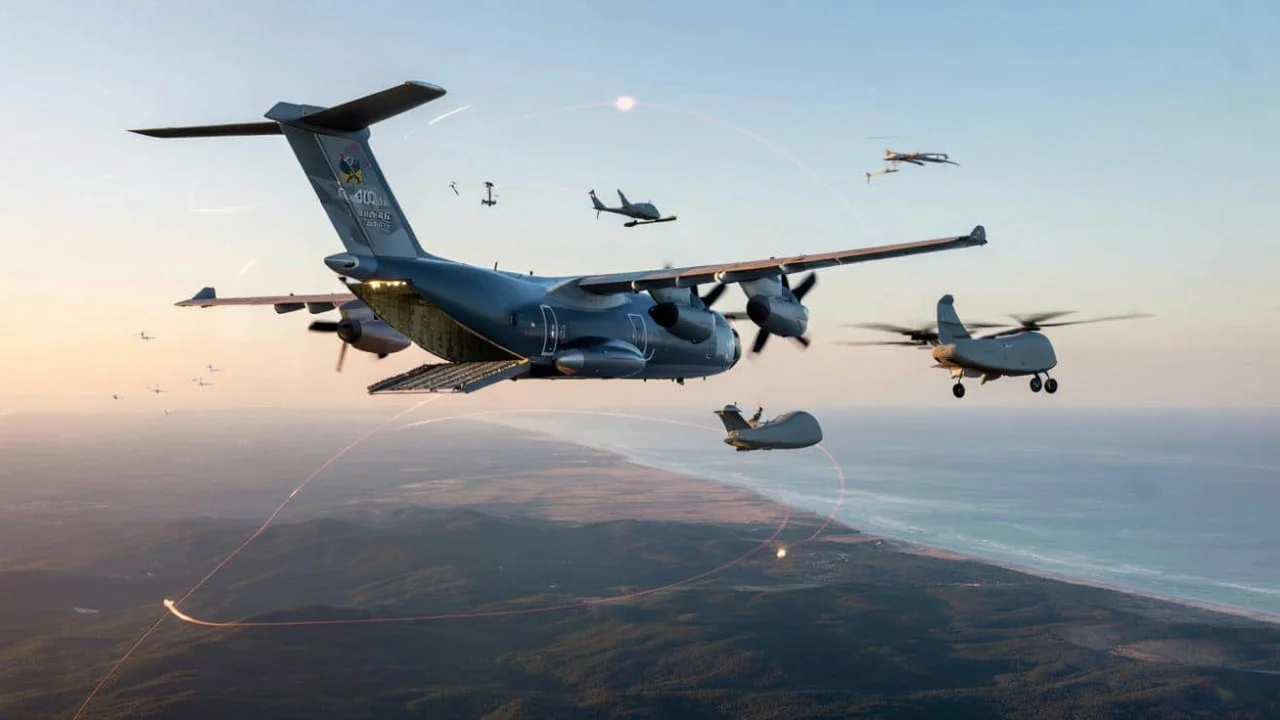
Picture this: you’re a pilot flying a massive transport plane over hostile territory when suddenly your aircraft becomes the nerve center for dozens of unmanned drones, coordinating their missions while simultaneously serving as their mobile headquarters. This isn’t science fiction anymore.
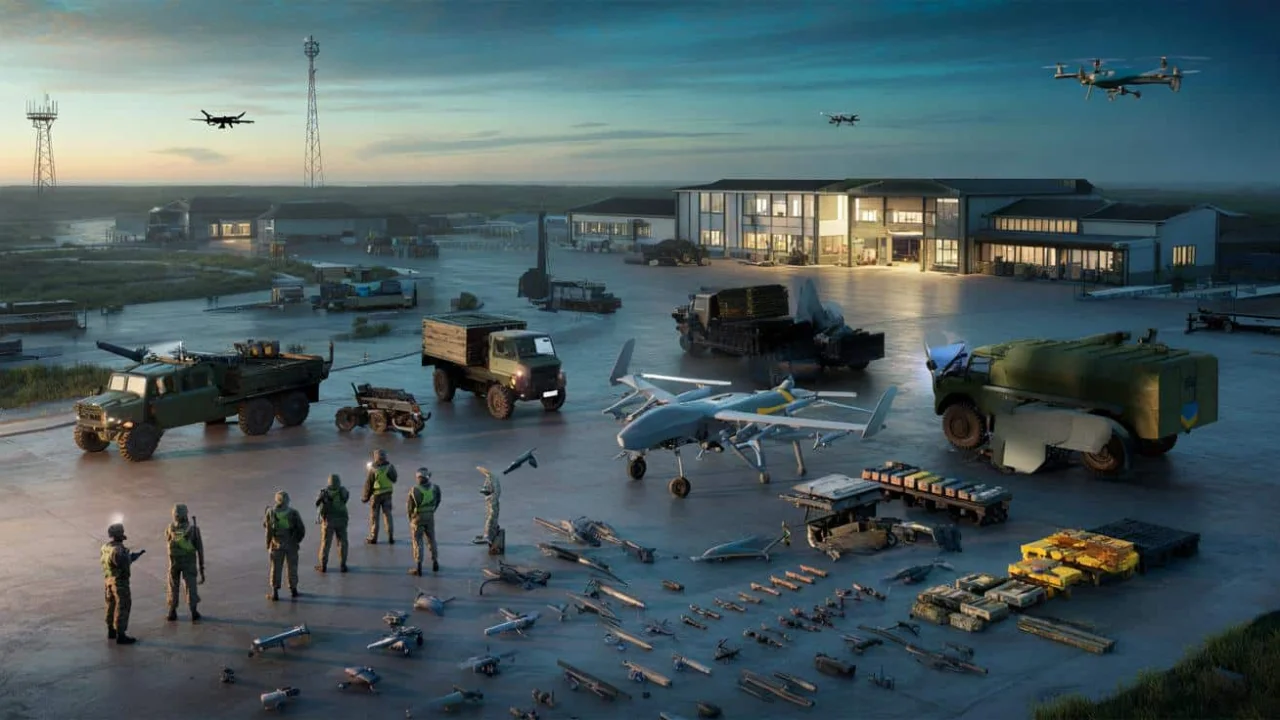
What sounds like something from a futuristic war movie is actually happening right now with Europe’s A400M transport aircraft. Airbus is quietly transforming this workhorse into something far more ambitious than anyone originally imagined.
The days when military transport planes simply moved cargo from point A to point B are ending fast. Today’s battlefields demand something entirely different.
When a Transport Plane Becomes a Flying Command Center
The Airbus A400M has had a rocky journey. For years, it was plagued by delays, budget overruns, and technical headaches that made headlines for all the wrong reasons. Those growing pains are mostly behind it now.
Today, European air forces rely on the A400M as their primary heavy-lift aircraft. But Airbus isn’t content to let it remain just another cargo hauler. The company is betting big on transforming the A400M mother ship concept into reality.
“The A400M is gradually shifting from heavy lifter to flying command post, data router and drone carrier,” explains a senior Airbus defense official familiar with the program.
This transformation isn’t happening overnight. Airbus and its customer nations have mapped out a careful upgrade path organized into successive “blocks” and standards. The current standard, known as SOC 3, should wrap up around 2026. After that, the focus shifts dramatically toward digital connectivity, data management, and unmanned systems integration.
The aircraft is being prepared for warfare where transport planes do far more than move people and equipment. They become flying digital hubs that orchestrate complex operations across vast distances.
The Technical Blueprint Behind the Mother Ship Vision
The first major step is called “Block 0,” negotiated through OCCAR, the European organization managing cooperative defense programs. While this upgrade doesn’t completely revolutionize the aircraft’s mission, it lays crucial groundwork for what’s coming next.
Here’s what the Block 0 package includes:
- Enhanced secure communications between aircraft and ground forces
- Advanced data processing capabilities for real-time mission coordination
- Improved electronic systems integration for multiple simultaneous operations
- Upgraded navigation systems optimized for drone deployment missions
- Reinforced cargo bay configurations designed for unmanned vehicle transport
But the real excitement comes with what Airbus calls the “mother ship” capability. The concept envisions the A400M carrying multiple drones in its spacious cargo bay, deploying them mid-flight, and then coordinating their operations from the air.
| Capability | Current A400M | Future Mother Ship Version |
|---|---|---|
| Drone Capacity | None | Up to 12 medium drones |
| Communication Range | Standard military radio | 300+ km secure data links |
| Mission Duration | 8-10 hours | 12+ hours with drone coordination |
| Data Processing | Basic navigation | Real-time battlefield analysis |
“We’re essentially creating a flying aircraft carrier for unmanned systems,” notes a European defense analyst who has reviewed the program specifications. “The A400M’s large cargo capacity makes it perfect for this role.”
The technical challenges are significant. The aircraft must manage multiple data streams simultaneously, maintain secure communications with dozens of assets, and coordinate complex operations while remaining airborne for extended periods.
What This Means for Modern Warfare
The A400M mother ship concept represents a fundamental shift in how militaries think about air operations. Instead of separate platforms for transport, command and control, and drone operations, one aircraft handles multiple roles simultaneously.
This approach offers several practical advantages. Military planners can deploy comprehensive capabilities with fewer aircraft, reducing logistical complexity and operational costs. The A400M’s ability to operate from shorter, rougher airstrips means these capabilities can reach forward operating bases that traditional command aircraft cannot access.
European NATO members are particularly interested in this development. Many of these nations operate smaller air forces that need maximum flexibility from their aircraft investments.
“For countries that can’t afford separate specialized platforms for every mission type, the A400M mother ship concept provides remarkable versatility,” explains a former NATO air operations planner.
The implications extend beyond Europe. Several other A400M operators, including Malaysia and Turkey, are watching these developments closely. If the mother ship modifications prove successful, they could transform how medium-sized air forces approach complex operations.
The timing aligns with broader military trends. Drone operations are becoming central to modern conflicts, but coordinating multiple unmanned platforms remains challenging. Having a mobile command center that can deploy, control, and recover drones provides unprecedented operational flexibility.
Combat scenarios that previously required multiple specialized aircraft and ground-based coordination centers could soon be managed by a single A400M mother ship operating hundreds of kilometers from friendly bases.
The program also addresses a key limitation of current drone operations: range and endurance. While individual drones have limited flight time and communication range, a mother ship can extend their effective operating radius dramatically by serving as a mobile relay station and refueling point.
“This could revolutionize how we think about air power projection,” suggests a defense industry consultant specializing in unmanned systems. “Instead of building more bases, you create mobile bases in the sky.”
The first operational tests of these enhanced A400M capabilities are expected to begin in late 2026, with full mother ship functionality potentially available by 2028. Success could position the A400M as the template for next-generation multi-role military aircraft.
FAQs
What exactly is the A400M mother ship concept?
It’s Airbus’s plan to transform the A400M transport plane into a flying command center that can carry, deploy, and coordinate multiple drones during missions.
How many drones can the A400M mother ship carry?
Current plans suggest up to 12 medium-sized drones, though this depends on the specific drone types and mission requirements.
When will the A400M mother ship be operational?
Initial testing should begin in late 2026, with full capabilities potentially available by 2028.
Which countries are interested in this upgrade?
All current A400M operators in Europe are involved, with other nations like Malaysia and Turkey watching developments closely.
Can existing A400M aircraft be upgraded to mother ship standard?
Yes, Airbus designed the upgrades to be retrofittable to existing aircraft through the planned Block upgrade program.
What makes the A400M suitable for this mother ship role?
Its large cargo bay, ability to operate from short runways, long endurance, and existing military systems integration make it ideal for coordinating drone operations.
About the Author