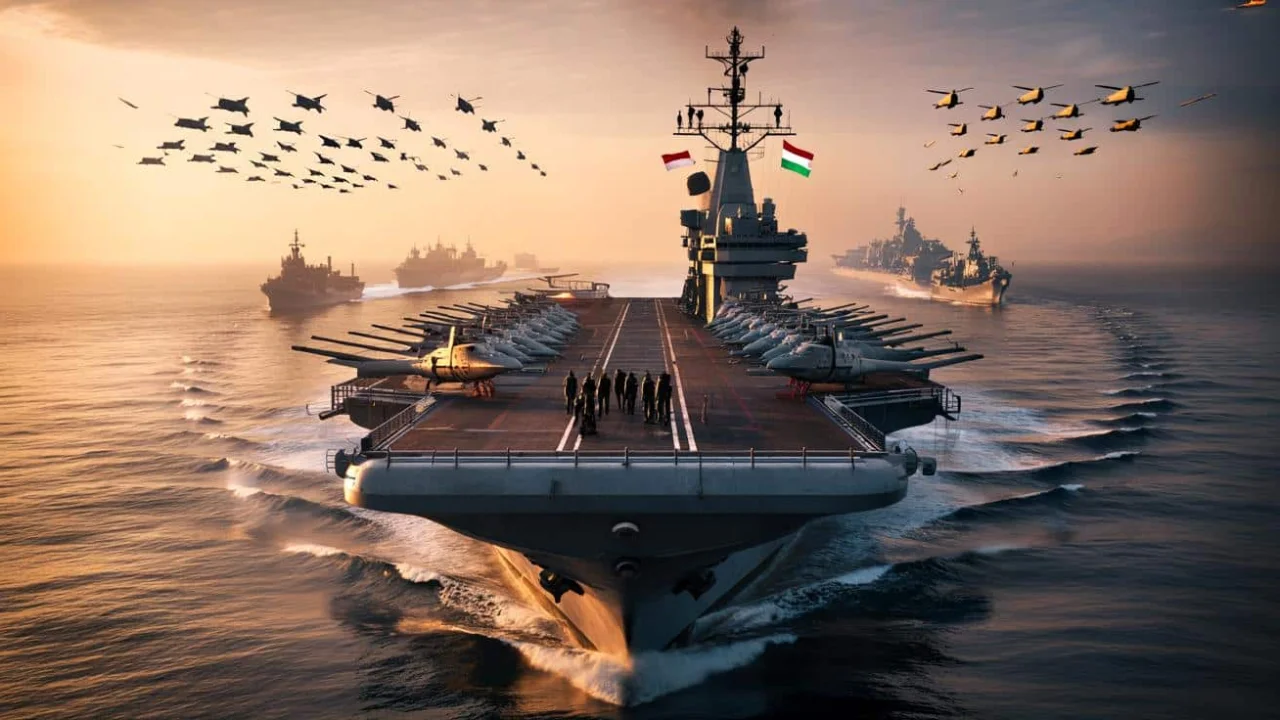
Captain Sari watched from her patrol boat as a massive cargo ship passed through the Malacca Strait, its deck loaded with containers bound for Singapore. Like thousands of Indonesian naval officers, she’d spent her career protecting these vital sea lanes with aging frigates and patrol vessels. But lately, she’d been hearing whispers in the mess halls about something that seemed almost too good to be true – Indonesia might finally get its first aircraft carrier.

For a nation made up of over 17,000 islands, the dream of projecting naval power beyond coastal waters has always felt distant. Now, that dream might be closer than anyone imagined.
The Indonesian navy aircraft carrier ambitions are taking a dramatic turn as Jakarta races against time to secure a former Italian warship. The Giuseppe Garibaldi, Italy’s decommissioned aircraft carrier, could soon sail under the Indonesian flag – but only if negotiations wrap up in record time.

Why October 5th Matters More Than You Think
Admiral Muhammad Ali, Indonesia’s Chief of Naval Staff, has set an ambitious deadline that’s got everyone talking. He wants the ex-Italian carrier in Indonesian waters before October 5th, which marks the 81st anniversary of the Indonesian National Armed Forces.
This isn’t just about getting a new ship. The timing is everything. Indonesia’s military anniversary features the country’s biggest naval parade, where new equipment gets shown off to the world. Having an aircraft carrier – even a used one – would send a powerful message to neighboring countries about Indonesia’s growing naval ambitions.

“The navy is aiming to showcase Indonesia’s first aircraft carrier capability during the country’s most watched military ceremony of the year,” according to naval sources familiar with the negotiations.
But here’s the catch: there’s still no signed contract. The Indonesian navy aircraft carrier deal remains in active negotiations with Italian officials, creating a high-stakes race against the calendar.

What We Know About This Historic Naval Deal
The Giuseppe Garibaldi represents a massive upgrade for Indonesia’s naval capabilities. Here’s what makes this potential acquisition so significant:
| Specification | Details |
|---|---|
| Length | 180 meters (591 feet) |
| Displacement | 13,850 tons |
| Aircraft Capacity | Up to 16 aircraft/helicopters |
| Service History | Italian Navy 1985-2024 |
| Potential Cost | Estimated $50-100 million |
The ship’s capabilities would transform Indonesia’s naval operations:
- Extended patrol range across Indonesia’s vast maritime territory
- Ability to launch helicopters and vertical takeoff aircraft
- Command and control center for fleet operations
- Humanitarian assistance and disaster relief platform
- Training base for developing carrier operations
“This would give Indonesia the ability to project power well beyond its traditional coastal defense role,” explains maritime security analyst Dr. James Peterson. “For a country with Indonesia’s geography, that’s a game-changer.”
However, the Indonesian navy aircraft carrier project faces several practical challenges. The ship would need significant refitting to meet Indonesian operational requirements, and training crews for carrier operations takes years, not months.
The Real Impact on Southeast Asian Naval Balance
If Indonesia succeeds in acquiring the Giuseppe Garibaldi, it would join an exclusive club. Currently, only a handful of nations in the region operate aircraft carriers or similar vessels.
The timing isn’t coincidental. China’s growing naval presence in the South China Sea has prompted several Southeast Asian nations to upgrade their maritime capabilities. Thailand operates a small carrier, and Singapore has advanced naval vessels, but Indonesia’s potential acquisition would represent the largest capability jump in the region.
“Indonesia has always been the sleeping giant of Southeast Asian navies,” notes retired Admiral William Hayes, a former US Pacific Fleet commander. “An aircraft carrier would wake that giant up in a very visible way.”
The Indonesian navy aircraft carrier acquisition would likely influence procurement decisions across the region. Malaysia, Vietnam, and the Philippines are all watching to see how this deal unfolds.
For Indonesia’s 280 million citizens, the carrier represents more than military capability. It’s a symbol of the country’s growing international status and its determination to secure its vast maritime territory.
The economic implications are equally significant. Operating an aircraft carrier requires substantial ongoing investment in fuel, maintenance, and specialized personnel. Indonesia would need to develop entirely new training programs and potentially build new port facilities.
“The purchase price is just the beginning,” warns naval procurement expert Sarah Chen. “The real costs come over the following decades of operations.”
Yet for many Indonesians, those costs seem worth it. The country’s strategic location between the Indian and Pacific Oceans makes it a natural maritime power, and an aircraft carrier would finally give the navy tools to match that geography.
As negotiations continue with Italy, all eyes remain on that October 5th deadline. Whether the Indonesian navy aircraft carrier deal succeeds or fails, it’s already changing how the region thinks about naval power and Indonesia’s role in Southeast Asian security.
The next few months will determine whether Captain Sari and thousands of other Indonesian naval officers will soon be learning an entirely new way to project their country’s power across the seas.
FAQs
Why does Indonesia want an aircraft carrier?
Indonesia’s vast archipelago of over 17,000 islands requires long-range naval capabilities to protect sea lanes and project power across its maritime territory.
How much would the Giuseppe Garibaldi cost Indonesia?
While no official price has been announced, estimates range from $50-100 million for the initial purchase, plus significant refitting and operational costs.
What aircraft could operate from this carrier?
The Giuseppe Garibaldi was designed for helicopters and vertical takeoff aircraft like the AV-8B Harrier, though Indonesia would need to acquire compatible aircraft separately.
When could the carrier become fully operational?
Even if delivered by October, full operational capability would take years due to crew training, refitting requirements, and integration with existing fleet operations.
How would this affect relations with neighboring countries?
The acquisition would likely prompt other Southeast Asian nations to consider their own naval upgrades and could shift regional maritime security dynamics.
What happens if the October deadline isn’t met?
The deal could still proceed, but Indonesia would miss the symbolic opportunity to showcase the carrier during its major military anniversary celebration.
About the Author