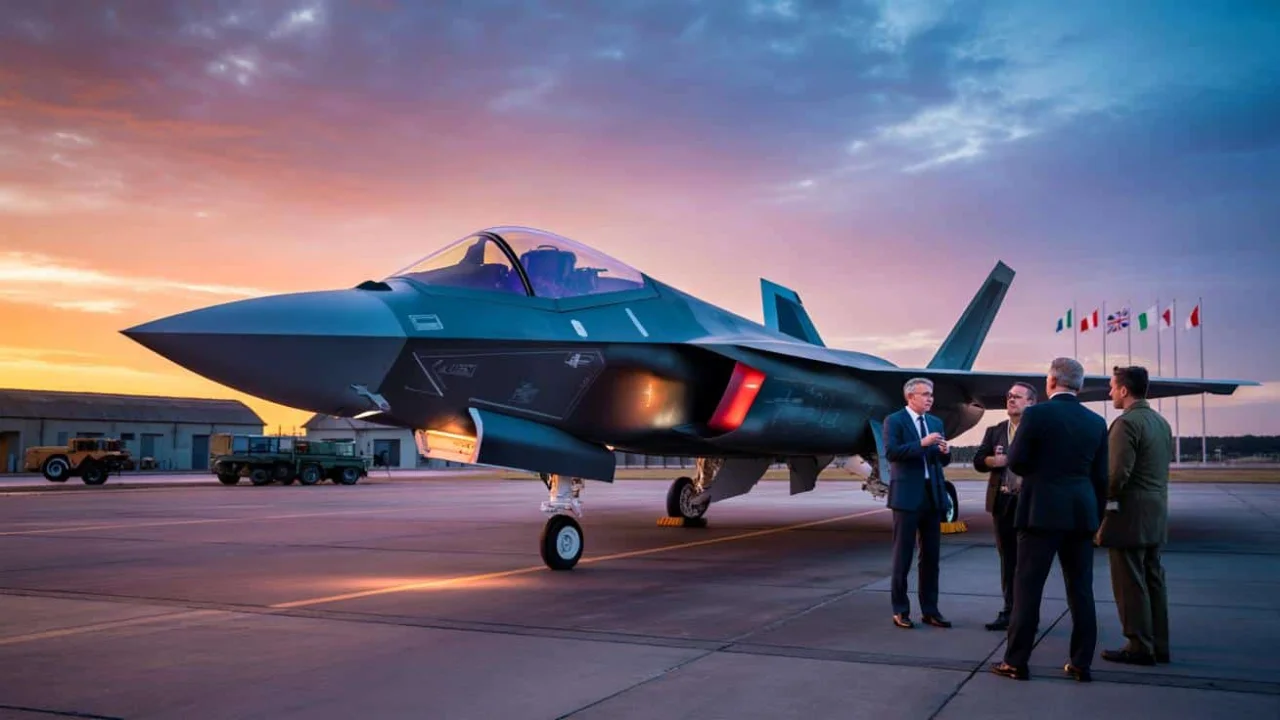
Marco Rossi still remembers the day his son asked him why Italy needed to spend so much money on fighter jets. “Papa, couldn’t we use that money to fix the schools instead?” the 12-year-old had wondered aloud after seeing a news report about military spending.
It’s a question that millions of Italian families might be asking themselves right now. The country’s parliament is wrestling with a jaw-dropping price tag that has tripled in just five years—and it’s all for a single military project that won’t even fly until the 2030s.
Welcome to the reality of GCAP warplane costs, where Italy’s slice of a next-generation fighter jet program has ballooned from €6 billion to a staggering €18.6 billion, or roughly $21.8 billion at today’s exchange rates.
When Military Budgets Spiral Out of Control
The Global Combat Air Programme, known as GCAP, was supposed to be Italy’s ticket into an exclusive club. Alongside the United Kingdom and Japan, Italy signed up to develop what promises to be the world’s most advanced stealth fighter jet.
Back in 2021, when Italian defense officials first pitched this ambitious project to lawmakers, they painted a picture of controlled spending and clear timelines. The price tag? A manageable €6 billion spread across two key development phases.
Fast forward to today, and those same officials are back with a very different story. The GCAP warplane costs have exploded to levels that make this the single most expensive weapons program in modern Italian history—even more costly than the country’s entire F-35 fleet.
“We’re looking at a fundamental shift in how we approach defense procurement,” explains Dr. Alessandro Marrone, a defense policy analyst at the International Affairs Institute in Rome. “The GCAP represents not just a technological leap, but a financial commitment that will define Italy’s military capabilities for decades.”
The numbers tell a sobering story. Of the revised €18.6 billion budget, around €2 billion has already been secured and partially spent on early design work and technology development. That leaves a remaining €16.6 billion that parliament must approve to keep the program alive.
Breaking Down the Massive Price Tag
Understanding where all this money goes isn’t straightforward, but the Italian government has provided some clarity on how GCAP warplane costs will unfold over the coming years.
The program is structured in distinct phases, each with its own financial requirements:
- Phase 1: Concept assessment and preliminary design work
- Phase 2: Full development of the aircraft and all key systems
- Future phases: Production and manufacturing (costs not yet disclosed)
Here’s how the government plans to spread the remaining €16.6 billion through 2037:
| Time Period | Funding Required | Main Activities |
|---|---|---|
| 2025-2027 | €4.2 billion | Advanced design and prototype development |
| 2028-2032 | €7.8 billion | Full-scale development and testing |
| 2033-2037 | €4.6 billion | Final integration and pre-production |
These figures don’t even include the eventual production costs, which could add billions more to Italy’s total commitment. “We’re talking about a program that could easily exceed €25 billion when all is said and done,” warns former defense procurement official Giuseppe Conte.
The financial pressure is particularly intense because Italy must coordinate its spending with its GCAP partners. The UK and Japan are making similarly massive investments, creating a trilateral dependency that makes it nearly impossible for any country to back out without derailing the entire project.
What This Means for Italian Taxpayers and Defense
The ballooning GCAP warplane costs aren’t happening in a vacuum. Italy faces pressing domestic challenges, from infrastructure needs to healthcare system strains, making every billion euros spent on defense a subject of intense political debate.
Opposition lawmakers have already begun questioning whether the country can afford such a massive commitment. “We’re asking Italian families to tighten their belts while we write blank checks for a fighter jet that won’t fly for another decade,” argues Senator Maria Lombardi, a vocal critic of the program.
But defense experts paint a different picture. They argue that GCAP represents more than just a military purchase—it’s an investment in Italy’s technological future and industrial base.
The program promises significant benefits for Italian companies:
- Leonardo, Italy’s aerospace giant, will lead major portions of the development
- Hundreds of smaller suppliers will participate in the supply chain
- Advanced manufacturing jobs will be created across multiple regions
- Technology transfer will boost Italy’s broader aerospace sector
“This isn’t just about buying planes,” explains defense industry consultant Francesca Romano. “We’re essentially purchasing a seat at the table for the next generation of military aviation technology.”
The timing adds another layer of complexity. With geopolitical tensions rising across Europe and the Mediterranean, Italy’s defense establishment argues that cutting-edge military capabilities are more necessary than ever.
The GCAP fighter is designed to replace aging fleets across all three partner nations by the 2040s. For Italy, this means eventually retiring older Eurofighter Typhoons and some F-35s with a more advanced platform.
However, the immediate impact on Italian taxpayers is unavoidable. The €16.6 billion commitment represents roughly 1% of Italy’s entire GDP, spread over more than a decade. While the annual burden may seem manageable, it comes at a time when public finances remain under pressure.
Parliament is expected to vote on the revised funding request within the coming months. The outcome will determine not just Italy’s role in GCAP, but also its position in future international defense partnerships.
“The decision we make now will echo through Italian defense policy for the next 30 years,” notes defense policy researcher Dr. Roberto Marchi. “There’s no middle ground—we’re either all in, or we risk being left behind in military aviation.”
As families like the Rossis continue to grapple with the implications of such massive defense spending, one thing remains clear: Italy’s commitment to the GCAP warplane costs represents one of the most significant financial decisions in the country’s post-war military history.
FAQs
What exactly is the GCAP warplane program?
GCAP is a joint project between Italy, the UK, and Japan to develop a next-generation stealth fighter jet expected to fly in the 2030s.
Why have the costs increased so dramatically?
The original €6 billion estimate proved insufficient as the program’s complexity became clearer, leading to the current €18.6 billion price tag.
When will Italian taxpayers start paying for this?
The government wants to spread the €16.6 billion in new funding from 2025 through 2037, with the heaviest spending in the late 2020s and early 2030s.
Will Italy get any economic benefits from this spending?
Yes, Italian companies like Leonardo will lead major development work, creating jobs and advancing the country’s aerospace technology capabilities.
What happens if Italy backs out of the program?
Withdrawing would likely collapse the entire trilateral project and could damage Italy’s relationships with key defense partners while wasting the €2 billion already invested.
How does this compare to other Italian military purchases?
The GCAP program is now the most expensive weapons program in modern Italian history, surpassing even the country’s F-35 fighter jet fleet.
About the Author