When Mike Thompson started his career as an Air Force maintenance technician, he never imagined he’d spend years watching one aircraft program drain billions from the defense budget. “Every time we heard about another loss on the KC-46, we’d shake our heads,” Thompson recalls. “We’re the ones who have to work on these planes, and meanwhile, Boeing keeps losing money hand over fist.”
Thompson’s frustration echoes across military bases and corporate boardrooms nationwide. The Boeing KC-46 tanker program has become a financial nightmare that just won’t end.
Now, Boeing has reported yet another staggering $565 million loss on the KC-46 program, bringing total losses to over $8 billion since the contract began more than a decade ago.
Another Quarter, Another Massive Loss
The Boeing KC-46 loss story continues to unfold with painful regularity. In the fourth quarter of 2025, Boeing took a fresh $565 million hit on their troubled tanker program, adding to what’s already become one of the most expensive defense contract disasters in recent memory.
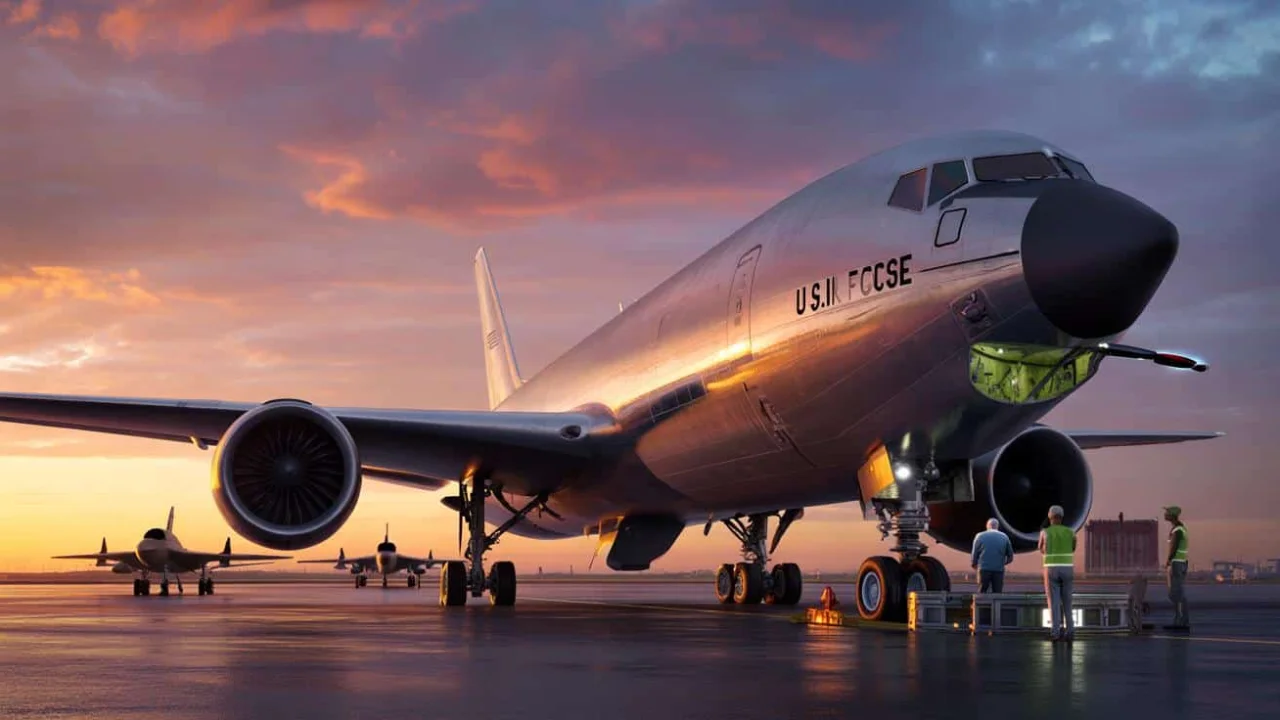
The KC-46 Pegasus, built on Boeing’s commercial 767 platform, was supposed to be a straightforward conversion project. Instead, it’s turned into a money pit that keeps getting deeper. CEO Kelly Ortberg called the latest charge “disappointing” but insisted the aircraft is finally showing signs of stability.
“We’re seeing real progress in production and service reliability,” said a Boeing defense executive during the earnings call. “While these charges are painful, we believe we’re turning the corner on this program.”
The latest losses stem primarily from escalating supply chain costs and additional production support needed at Boeing’s Everett, Washington facility. Rising prices for parts, labor, and engineering support have pushed an already unfavorable contract even further underwater.
Breaking Down Boeing’s KC-46 Financial Disaster
The numbers behind Boeing’s KC-46 struggles paint a sobering picture of how defense contracts can go wrong. Here’s what taxpayers and investors need to know:
| Financial Impact | Amount | Timeline |
|---|---|---|
| Latest Q4 2025 Loss | $565 million | Oct-Dec 2025 |
| Total Program Losses | Over $8 billion | 2011-Present |
| Original Contract Value | $4.4 billion | 2011 |
| Aircraft Delivered | 89 units | As of Q4 2025 |
The financial breakdown reveals several key problem areas:
- Supply chain disruptions: Parts shortages and vendor delays have increased costs significantly
- Production inefficiencies: The Everett facility has required additional support and modifications
- Engineering changes: Ongoing technical modifications continue to drain resources
- Fixed-price contract structure: Boeing bears all cost overruns under the original agreement
“The fixed-price nature of this contract means Boeing eats every dollar of cost growth,” explained a defense industry analyst. “It’s a painful lesson in contract structure and risk management.”
Despite these mounting losses, the Air Force continues to order more KC-46 aircraft, signaling confidence in the platform’s eventual success. The service has committed to purchasing 179 tankers total, with 89 already delivered.
What This Means for Boeing’s Future and Your Tax Dollars
The Boeing KC-46 loss saga affects more people than you might think. Taxpayers foot the bill for Air Force operations, while Boeing shareholders watch billions disappear from company profits. But the ripple effects go much deeper.
For Boeing employees, particularly those at the Everett facility, job security depends partly on the company’s ability to eventually turn this program around. “We’re all invested in making this work,” says a Boeing technician who requested anonymity. “Nobody wants to see more layoffs because of program failures.”
The Air Force, meanwhile, desperately needs these tankers to replace its aging KC-135 fleet. Some of those aircraft are over 60 years old and becoming increasingly expensive to maintain. Despite Boeing’s financial struggles, military leaders remain committed to the KC-46 program.
“We need this capability,” stated an Air Force procurement official. “Boeing’s financial challenges don’t change our operational requirements.”
Looking ahead, Boeing hopes to negotiate a more favorable pricing structure for future KC-46 orders. The company argues that initial development costs should be separated from production contracts, potentially allowing for better profit margins on additional aircraft.
Industry watchers are closely monitoring how this situation might affect other Boeing defense programs. The company’s reputation for managing fixed-price contracts has taken a significant hit, potentially impacting future bid competitions.
For taxpayers, the silver lining is that Boeing, not the government, is absorbing these cost overruns. However, the program’s troubles raise questions about defense procurement practices and contract oversight.
The KC-46 story isn’t over yet. With 90 more aircraft still to be delivered and potential international sales on the horizon, Boeing has opportunities to recover some of its losses. But with over $8 billion already down the drain, the road to profitability remains long and uncertain.
As Mike Thompson puts it: “We’ll keep maintaining these aircraft regardless of what they cost Boeing. But everyone’s watching to see if they can finally figure out how to make money building them.”
FAQs
How much money has Boeing lost on the KC-46 program total?
Boeing has lost over $8 billion on the KC-46 program since the contract began in 2011, including the latest $565 million loss reported in Q4 2025.
Why does Boeing keep losing money on the KC-46 tanker?
The losses stem from a fixed-price contract structure where Boeing absorbs all cost overruns, combined with supply chain issues, production inefficiencies, and ongoing engineering modifications.
How many KC-46 aircraft has Boeing delivered so far?
Boeing has delivered 89 KC-46 tankers to the Air Force as of the fourth quarter of 2025, with 90 more aircraft still remaining on the current contract.
Will the Air Force keep buying KC-46 tankers despite Boeing’s losses?
Yes, the Air Force remains committed to the KC-46 program and continues ordering aircraft because they need to replace their aging KC-135 tanker fleet.
Could Boeing negotiate better pricing on future KC-46 contracts?
Boeing hopes to secure more favorable pricing structures for additional KC-46 orders by separating development costs from production contracts, potentially improving profit margins.
Who pays for Boeing’s KC-46 losses – taxpayers or the company?
Boeing absorbs the losses under the fixed-price contract structure, meaning taxpayers don’t directly pay for cost overruns, though they fund the Air Force’s aircraft purchases.
About the Author