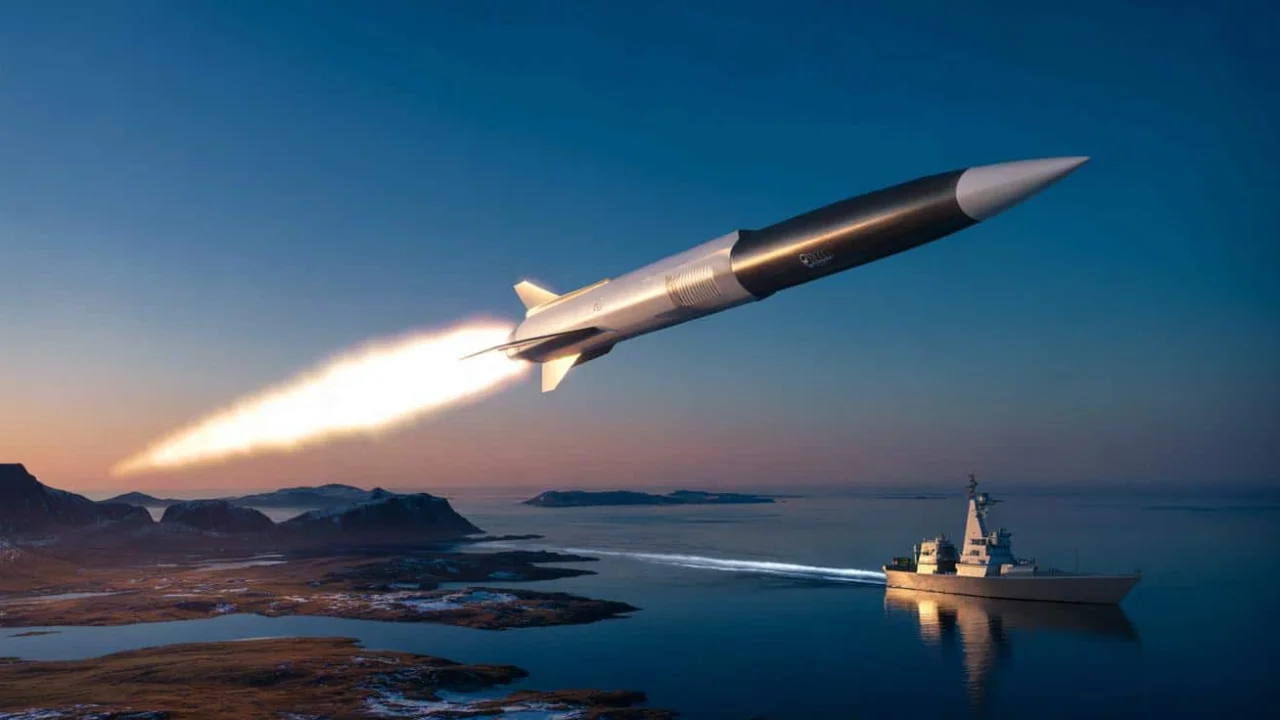
Picture this: You’re standing on a windswept Norwegian island, watching what looks like an ordinary rocket disappear into the grey Arctic sky. Minutes later, that same rocket has traveled over 300 kilometers at six times the speed of sound. What you’ve just witnessed isn’t science fiction—it’s the latest breakthrough in military technology that could reshape how nations think about warfare.
That exact scenario played out recently at the Andøya space range, where a small German startup called Hypersonica made headlines with a claim that has defense experts around the world taking notice. Their prototype hypersonic weapon didn’t just fly—it soared past every expectation.
This isn’t just another weapons test. When a relatively unknown company from Munich announces they’ve cracked the hypersonic code, it signals something much bigger: the future of military technology might not belong to superpowers alone.
Germany Enters the Hypersonic Race
Munich-based Hypersonica has thrown its hat into one of the most exclusive technological clubs on Earth. Their prototype hypersonic weapon achieved speeds exceeding Mach 6 during its test flight, covering more than 300 kilometers in just minutes.
“We validated full system performance at hypersonic speeds, right down to individual components,” said Philipp Kerth, the company’s co-founder and CEO. “Everything functioned exactly as planned during both ascent and re-entry phases.”
The test took place at Norway’s Andøya space range, a facility that’s hosted everything from sounding rockets to major defense trials. What made this particular test interesting wasn’t just the technology—it was who was watching. The French Navy’s tracking ship Monge was reportedly positioned in the area, suggesting multiple European nations wanted front-row seats to this demonstration.
But here’s what makes this story fascinating: Hypersonica isn’t a massive defense contractor with decades of experience. They’re a startup that’s managed to achieve what only a handful of nations have accomplished. That’s either incredibly impressive or incredibly concerning, depending on your perspective.
The Technical Details That Matter
While Hypersonica keeps many specifics under wraps, they’ve shared enough details to paint a picture of serious engineering. Here’s what we know about their prototype hypersonic weapon:
- Built around the HS-1 solid-fuel rocket platform
- Weighs more than one tonne when fully loaded
- Measures just under ten meters in length
- Successfully completed both atmospheric climb and descent phases
- Maintained system integrity throughout hypersonic flight regime
The technical achievement goes beyond just reaching hypersonic speeds. As defense analyst Dr. Sarah Mitchell explains, “The real challenge isn’t going fast—it’s maintaining control and system functionality while you’re going that fast. Heat, pressure, and G-forces at hypersonic speeds destroy most conventional systems.”
| Speed Classification | Mach Number | Examples |
|---|---|---|
| Subsonic | Below Mach 1 | Most commercial aircraft |
| Supersonic | Mach 1-5 | Fighter jets, Concorde |
| Hypersonic | Above Mach 5 | ICBMs, space shuttles, this prototype |
What sets hypersonic weapons apart isn’t just their speed—it’s their unpredictability. Unlike ballistic missiles that follow predictable arcs, hypersonic weapons can maneuver throughout their flight path. This makes them nearly impossible to intercept with current defense systems.
“Traditional missile defense systems track incoming threats by calculating their trajectory,” notes former NATO strategist James Harrison. “When something can change direction at Mach 6, those calculations become meaningless.”
What This Means for Global Security
The successful test of a prototype hypersonic weapon by a German company represents more than just technological progress—it’s a potential game-changer for European defense capabilities and global military balance.
Currently, only the United States, Russia, and China have demonstrated operational hypersonic weapons. If Hypersonica’s claims hold up under scrutiny, Europe could join this exclusive club much sooner than expected.
The implications ripple outward in several directions:
- European nations gain access to cutting-edge military technology without relying on foreign suppliers
- Smaller countries could potentially acquire hypersonic capabilities through partnerships or purchases
- The barrier to entry for hypersonic weapons development appears lower than previously thought
- Arms control discussions become more complex with additional players in the hypersonic arena
Military analyst Colonel (Ret.) David Thompson points out the broader strategic picture: “When startup companies can develop hypersonic weapons, we’re looking at a fundamental shift in how military technology proliferates. This isn’t just about Germany—it’s about democratizing advanced weapons technology.”
The test also raises questions about proliferation control. Hypersonic weapons represent a significant escalation in military capability, and their spread beyond major powers could destabilize regional security balances worldwide.
For NATO allies, Hypersonica’s success presents both opportunities and challenges. On one hand, it demonstrates European innovation in critical defense technologies. On the other hand, it adds complexity to alliance coordination and strategic planning.
The economic implications are equally significant. Hypersonica’s achievement could position Germany as a major player in the global hypersonic weapons market, potentially worth billions of dollars over the coming decades.
Defense industry expert Dr. Maria Rodriguez observes, “If a German startup can successfully test a prototype hypersonic weapon, it suggests the technology is more mature and accessible than many experts believed. That’s either very good news or very troubling news, depending on who you are.”
Looking ahead, the success of this prototype hypersonic weapon test likely marks the beginning of increased European investment in hypersonic technology. Other European defense companies and governments are probably accelerating their own programs to avoid falling behind in this critical military capability.
FAQs
What exactly is a hypersonic weapon?
A hypersonic weapon travels at speeds above Mach 5 (five times the speed of sound) and can maneuver during flight, making it extremely difficult to track and intercept.
How fast did the German prototype travel?
The prototype exceeded Mach 6, meaning it traveled at least six times faster than the speed of sound, covering over 300 kilometers in just minutes.
Which countries currently have hypersonic weapons?
The United States, Russia, and China are the only nations known to have operational hypersonic weapons systems, though several others are developing them.
Why are hypersonic weapons considered game-changers?
Unlike ballistic missiles, hypersonic weapons can change direction during flight, making them nearly impossible to intercept with current defense systems.
Is this German company now a major defense contractor?
Hypersonica is still a startup, but this successful test could establish them as a significant player in the hypersonic weapons market.
What happens next for this technology?
The company will likely conduct additional tests and seek partnerships with European defense agencies and NATO allies for further development and potential deployment.
About the Author