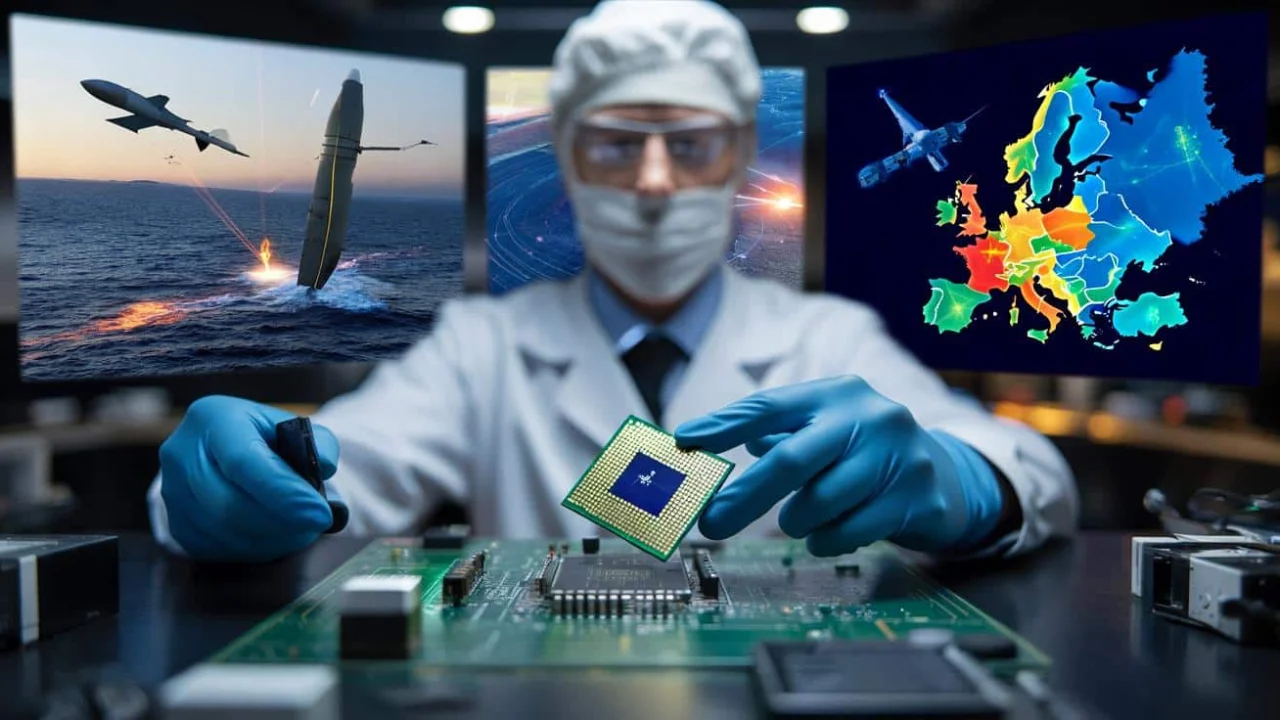
Picture this: Your smartphone suddenly goes dead during an important call. Frustrating, right? Now imagine that happening to a missile guidance system or a satellite controlling GPS navigation for millions of people. That’s exactly why a small French chip company called NanoXplore just caught the attention of Europe’s biggest defense players.

When your everyday electronics fail, you might lose a photo or miss a text. But when military and space systems fail, the consequences can be catastrophic. That’s what makes the recent NanoXplore capital opening so fascinating – and so important for all of us.
On December 17, 2025, this French semiconductor specialist announced a €20 million funding round that tells a much bigger story about Europe’s push for technological independence in an increasingly uncertain world.

Why Everyone’s Suddenly Talking About These “Invisible” Chips
NanoXplore might not be a household name, but their technology powers some of the most critical systems around us. The company specializes in FPGA chips – think of them as the ultimate shape-shifters of the electronics world.
Unlike regular computer chips that are locked into doing one specific job, FPGAs can be reprogrammed on the fly. It’s like having a Swiss Army knife that can morph into whatever tool you need, whenever you need it.

“These chips are essentially electronic chameleons,” explains Dr. Sarah Chen, a semiconductor analyst at Tech Insights Europe. “They can adapt to new requirements without physically changing the hardware.”
But here’s what makes NanoXplore special: their chips can survive in space. While your laptop would die instantly from cosmic radiation, NanoXplore components keep working for years in the harshest environment imaginable.

The NanoXplore capital opening brings in two heavyweight investors who signal just how strategic this technology has become. MBDA, Europe’s missile manufacturing giant, and Bpifrance’s Defence Innovation Fund aren’t just providing money – they’re making a statement about the future of European defense.
Breaking Down the Deal: Who Gets What and Why
The €20 million investment might seem modest compared to tech mega-deals, but the players involved make this funding round particularly significant. Here’s what we know about the partnership:

| Investor | Background | Strategic Value |
|---|---|---|
| MBDA | Europe’s largest missile manufacturer | Direct access to defense markets and requirements |
| Bpifrance Defence Innovation Fund | French state investment vehicle | Government backing and strategic technology support |
| Existing Investors | Early backers and founders | Continued technical expertise and market knowledge |
The NanoXplore capital opening represents more than just financial investment. MBDA’s involvement means direct access to some of Europe’s most demanding defense projects, while Bpifrance’s participation signals that the French government considers this technology strategically vital.
“When you see MBDA writing checks, you know we’re talking about technology that could reshape how modern weapons systems work,” notes Michel Dubois, a former defense procurement officer.
Key areas where NanoXplore plans to expand include:
- Advanced radar systems that can adapt to new threats in real-time
- Missile guidance systems requiring split-second reconfiguration
- Electronic warfare platforms that must constantly evolve
- Secure communications systems for military operations
- Next-generation satellite constellations
The company’s existing space heritage gives them a head start. Their radiation-hardened chips already power European projects like the Galileo navigation system and Copernicus Earth observation satellites.
What This Means for Europe’s Tech Independence Dream
The timing of the NanoXplore capital opening isn’t coincidental. Europe is desperately trying to reduce its dependence on foreign technology suppliers, especially in critical areas like defense and space.
For decades, European defense contractors have relied heavily on American and Asian chip suppliers. But recent global tensions have shown how quickly supply chains can be weaponized or disrupted.
“We’re seeing a fundamental shift,” explains Dr. Elena Rossi, director of the European Defence Technology Institute. “Countries that control critical chip technology will have massive advantages in future conflicts.”
The investment could trigger several important changes:
- Faster development of European-made military electronics
- Reduced dependence on foreign chip suppliers for sensitive applications
- New jobs in France’s growing defense tech sector
- Stronger partnerships between European defense companies
- Enhanced capability to compete with American and Chinese military technology
For ordinary citizens, this might seem like inside baseball. But consider this: the GPS system guiding your Uber, the satellites providing your internet, and the defense systems protecting your country all depend on similar chip technology.
The NanoXplore capital opening also reflects broader trends in how governments think about technology investment. Rather than leaving everything to private markets, countries are increasingly backing companies they consider strategically important.
“We’re moving into an era where chip technology is becoming as strategically important as oil or rare earth minerals,” says Professor James Walsh from the International Security Studies Center.
The partnership between NanoXplore and its new investors could accelerate development timelines significantly. Instead of spending years trying to understand what defense contractors need, NanoXplore now has MBDA as a direct partner and customer.
This could lead to faster innovation cycles, where new chip designs move from concept to deployment in months rather than years. In a field where technological advantages can disappear quickly, speed matters enormously.
The broader implications extend beyond just one company or one country. As Europe builds its own technological capabilities, we might see a more multipolar world where different regions control different pieces of critical technology infrastructure.
FAQs
What exactly does NanoXplore make?
NanoXplore designs FPGA chips that can be reprogrammed for different tasks, specializing in radiation-hardened versions for space and defense applications.
Why is this investment important for European defense?
It reduces Europe’s dependence on foreign chip suppliers for critical military and space systems, enhancing technological sovereignty.
How much money did NanoXplore raise?
The company raised €20 million from MBDA and Bpifrance’s Defence Innovation Fund in this latest funding round.
What makes NanoXplore chips special compared to regular computer chips?
Their chips can survive cosmic radiation in space and can be reprogrammed for new tasks without hardware changes.
Will this affect civilian technology?
Indirectly yes – advances in space and defense chips often lead to improvements in consumer electronics and communication systems.
Who are MBDA and Bpifrance?
MBDA is Europe’s largest missile manufacturer, while Bpifrance is a French state investment fund focused on strategic technologies.
About the Author