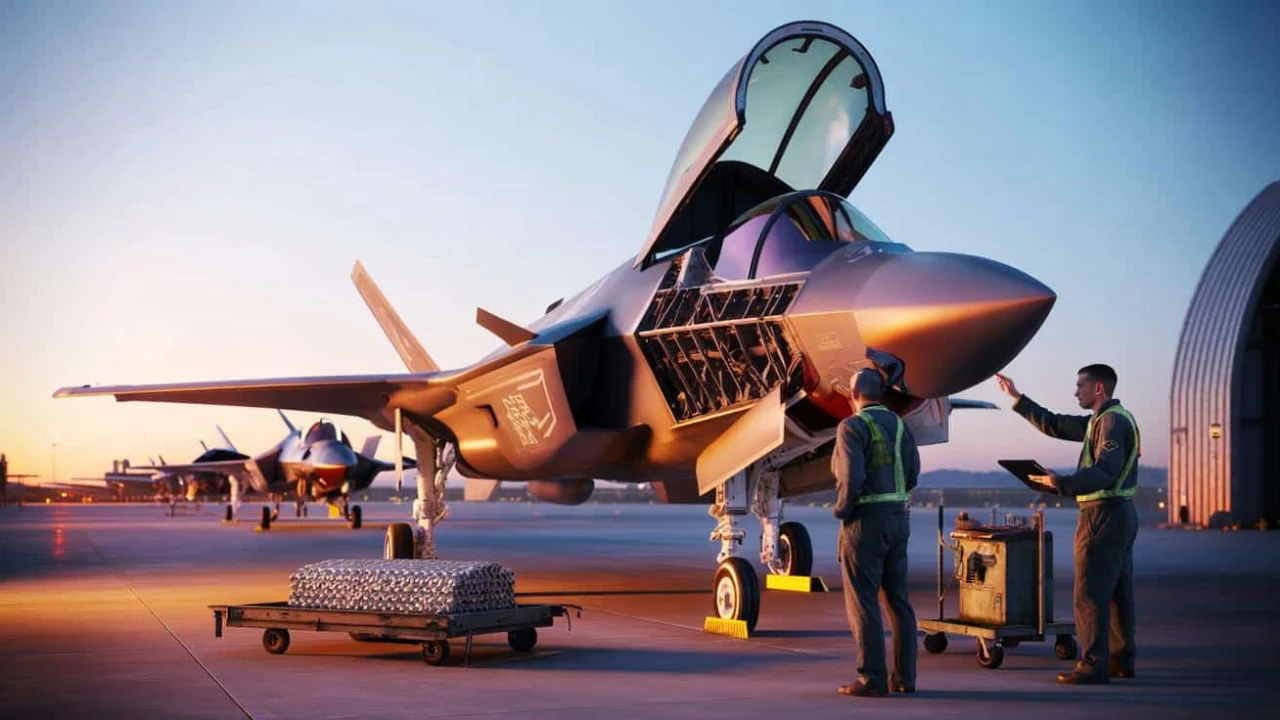
Picture this: you’re at an air show watching a $100 million F-35A Lightning II taxi down the runway. The crowd gasps at its sleek stealth design, but what they can’t see is the most shocking detail. Behind that perfectly engineered nose cone, there’s literally an empty space where one of the world’s most advanced radar systems should be installed.
It sounds like a factory error, but it’s not. The US Air Force is receiving brand-new F-35A fighter jets with everything except their electronic eyes – and it’s all by design, albeit an uncomfortable one.
This isn’t some budget cut or oversight. It’s the messy reality of upgrading America’s most expensive weapons system while keeping production lines moving and squadrons equipped.
When Cutting-Edge Technology Gets Tangled Up
The F35A radar issues stem from a collision between ambitious upgrade timelines and manufacturing realities. The Air Force’s flagship stealth fighter is caught in an awkward transition phase that nobody really planned for.
Here’s what happened: Northrop Grumman has been developing a revolutionary new radar called the AN/APG-85 since 2023. This isn’t just a minor upgrade – it’s designed to give F-35 pilots dramatically better situational awareness, longer-range missile tracking, and clearer ground imagery.
“The new radar represents a quantum leap in capability,” explains defense analyst Sarah Martinez. “We’re talking about the difference between standard HD television and 4K – but for detecting enemy threats at hundreds of miles.”
The problem? The new radar was supposed to debut with production Lot 17 aircraft, but development delays have pushed that timeline back. Meanwhile, newer F-35As are being built with Technology Refresh 3 (TR-3) configurations that can’t accommodate the older AN/APG-81 radar system.
So Lockheed Martin faces an impossible choice: stop building F-35As entirely until the new radar is ready, or deliver jets with a radar-shaped hole in their nose. They chose the latter.
What This Means for Combat Readiness
The scope of these F35A radar issues affects multiple aspects of military operations and taxpayer investments:

- Training disruptions: Pilots must learn systems twice – once with temporary radar solutions, then again with final equipment
- Mission limitations: Aircraft without full radar capability can’t perform certain combat roles
- Cost implications: Retrofit operations will require additional maintenance hours and facility time
- Fleet readiness: Some squadrons may have mixed capabilities until all aircraft receive upgrades
The radar situation creates a logistical puzzle for Air Force commanders. Colonel James Chen, a former F-35 program officer, notes: “You can’t just park million-dollar aircraft in hangars waiting for parts. But you also can’t deploy them on critical missions without their primary sensor.”
| Radar System | Status | Key Features | Timeline |
|---|---|---|---|
| AN/APG-81 (Current) | Being phased out | Standard AESA capability | 2006-2024 |
| AN/APG-85 (New) | Development delayed | Enhanced range, resolution | 2024-2026 |
| Temporary Solutions | Stop-gap measures | Limited capability | 2024-2025 |
The Air Force has implemented several workarounds while waiting for the AN/APG-85. Some aircraft receive modified versions of existing radar systems, while others get placeholder equipment that provides basic functionality.
These temporary solutions aren’t ideal, but they keep training programs running and maintain some operational capability. “It’s like driving a car with a spare tire,” explains military technology reporter David Kim. “You can get where you’re going, but you’re not operating at full performance.”
The Bigger Picture for America’s Air Power
These F35A radar issues highlight broader challenges facing modern military procurement. The F-35 program was designed around continuous upgrades rather than building entirely new aircraft every few decades.
This approach saves money in theory, but creates practical headaches when upgrade timelines don’t align with production schedules. The radar situation won’t affect America’s overall air superiority, but it does create short-term complications.
International partners are watching closely too. Countries like the UK, Netherlands, and Australia have their own F-35 orders in the pipeline. Delays with American aircraft could ripple through allied air forces worldwide.
“The F-35 is more than just an American fighter jet,” notes defense policy expert Dr. Rebecca Torres. “It’s the backbone of NATO’s future air strategy. Any disruption affects multiple countries’ defense planning.”
Lockheed Martin insists the radar delays won’t significantly impact overall program timelines. They’re working around the clock to minimize disruptions and maintain delivery schedules to domestic and international customers.
The company has established dedicated retrofit facilities to install AN/APG-85 radars once they become available. This approach keeps production lines moving while ensuring all aircraft eventually receive their intended capabilities.
For taxpayers, these radar complications represent both the challenges and benefits of modern military procurement. Yes, there are short-term complications and additional costs. But the alternative – building aircraft with outdated technology – would leave American pilots at a disadvantage against evolving threats.
The F35A radar issues should resolve themselves within the next 18-24 months as the AN/APG-85 completes development and enters full production. Until then, the Air Force must balance training requirements, operational needs, and upgrade schedules.
FAQs
Are F-35As without radar completely useless?
No, they receive temporary radar solutions that provide basic functionality for training and limited operations, though not full combat capability.
How much extra will these radar retrofits cost taxpayers?
Specific costs haven’t been disclosed, but the Pentagon budgets for such modifications as part of ongoing program expenses.
Will this delay affect other countries’ F-35 deliveries?
Some international partners may experience minor delays, but Lockheed Martin is prioritizing maintaining delivery schedules to allied nations.
How long until all F-35As have the new AN/APG-85 radar?
Current projections suggest full fleet retrofit completion by late 2026, depending on production ramp-up schedules.
Does this radar issue affect F-35B and F-35C variants too?
The transition primarily affects the Air Force’s F-35A model, though Navy and Marine Corps variants will eventually receive similar upgrades.
Can pilots still train effectively on aircraft with temporary radar?
Yes, basic flight operations and many combat systems remain functional, allowing continued pilot certification and training programs.
About the Author