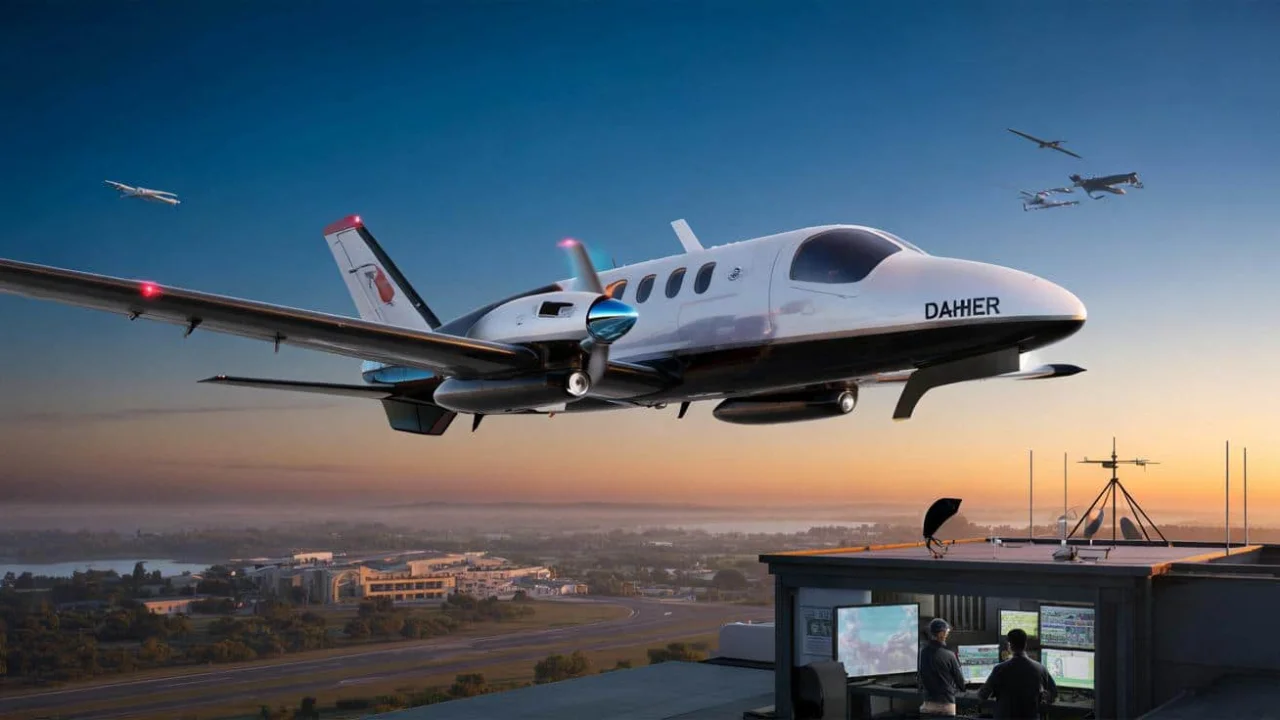
Picture this: a sleek business aircraft that once ferried executives between corporate meetings is now soaring silently over sensitive borders, its cameras scanning for threats below. There’s no pilot in the cockpit—just sophisticated computers and sensors doing the work that humans once risked their lives to accomplish.

This isn’t science fiction. It’s happening right now in a quiet corner of southwestern France, where engineers are rewriting the rules of military surveillance. What started as a familiar turboprop has become something entirely different—and it’s catching the attention of defense officials across Europe.
French aerospace manufacturer Daher has just thrown its hat into one of the most competitive defense markets in the world: male drones. Their new creation, called EyePulse, represents a fascinating approach to military unmanned systems that could change how we think about long-range surveillance.
When Business Jets Become War Machines
The transformation happening at Daher’s Tarbes facility is remarkable in its simplicity. Engineers start with their proven TBM turboprop—an aircraft that’s been carrying passengers safely for years—and perform what amounts to high-tech surgery.
Out comes the cockpit. In goes a sophisticated remote flight system developed with Thales, complete with automated takeoff and landing capabilities. The result is a male drone that can fly for hours without human intervention, conducting surveillance missions that would exhaust traditional crews.
“We’re not reinventing aviation,” explains a Daher engineer familiar with the project. “We’re taking something that already works beautifully and adapting it for missions where humans shouldn’t have to go.”
The EyePulse demonstrator recently showed off its capabilities to France’s defense procurement agency in a fully automated flight sequence. The aircraft handled its own takeoff, climbed to cruising altitude, followed a predetermined route, and executed an autonomous landing—all while ground controllers monitored from a secure command station.

For military planners dealing with crew fatigue and the risks of long surveillance missions, this level of automation represents a significant leap forward.
The Numbers Game: How EyePulse Stacks Up
Male drones occupy a sweet spot in military aviation—they’re larger and more capable than tactical drones, but smaller and more affordable than the massive strategic systems. EyePulse fits squarely in this category, offering impressive specifications that put it in direct competition with established players.
- Maximum endurance: Over 12 hours of continuous flight
- Service ceiling: 30,000 feet operational altitude
- Range: 1,000+ nautical miles without refueling
- Payload capacity: Multiple sensor packages and communication systems
- Automated systems: Full takeoff-to-landing autonomous operation
The partnership with Thales brings proven military-grade systems to the platform. The ScaleFlyt remote piloting suite includes encrypted communication links, redundant control systems, and integration capabilities for various sensor packages.
| Specification | EyePulse | Typical MALE Drone |
|---|---|---|
| Flight Duration | 12+ hours | 10-15 hours |
| Maximum Altitude | 30,000 feet | 25,000-45,000 feet |
| Development Time | 3 years | 5-8 years |
| Base Platform | Certified TBM aircraft | Purpose-built design |
What makes EyePulse particularly interesting is its foundation on a certified aircraft platform. While competitors spend years developing new airframes, Daher leveraged existing certification and proven reliability.
“Starting with a mature platform gives us a huge advantage in terms of development time and operational confidence,” notes a defense industry analyst. “When you’re building on something that’s already proven safe and reliable, you can focus on the mission-specific technology.”
Real-World Impact: Who Benefits and What Changes
The emergence of platforms like EyePulse reflects broader changes in how militaries approach surveillance and reconnaissance missions. Traditional manned aircraft require extensive crew training, create fatigue limitations, and put personnel at risk in contested environments.
European defense forces are particularly interested in male drones that can provide persistent surveillance along borders, monitor maritime activities, and support peacekeeping operations. The ability to keep aircraft aloft for 12+ hours without crew changes opens up new tactical possibilities.
Border security agencies could benefit significantly from this technology. Instead of coordinating multiple aircraft shifts to maintain continuous coverage, a single EyePulse could monitor sensitive areas throughout an entire day-night cycle.
Maritime patrol missions represent another natural application. Coastal nations dealing with smuggling, illegal fishing, or search-and-rescue operations could deploy these systems for extended ocean surveillance without the logistical complexity of crew rotations.
“The economics are compelling,” explains a procurement specialist familiar with European defense programs. “When you factor in crew costs, training requirements, and operational limitations, automated systems like this start making serious financial sense.”
The competitive landscape is heating up rapidly. Established players like General Atomics with their Predator series, Turkish Aerospace with the Anka platform, and Israeli companies with their proven track records all face fresh competition from European manufacturers taking different approaches.
For Daher, entering the male drone market represents a strategic diversification from their traditional business aviation focus. The company has been quietly building defense capabilities, and EyePulse showcases their ability to adapt civilian technology for military applications.
Industry observers note that this hybrid approach—taking proven civilian aircraft and converting them for military use—could become more common as defense budgets tighten and development timelines compress.
The timing is particularly significant as European nations seek to reduce dependence on non-EU defense suppliers. Platforms like EyePulse, developed within Europe using European technology and partnerships, align with broader strategic autonomy goals.
What happens next will depend largely on how well EyePulse performs in operational trials and whether it can secure initial orders from French forces or European allies. Success in this market often hinges on proving reliability and cost-effectiveness in real-world conditions.
The male drone segment continues growing as more nations recognize the value of persistent, unmanned surveillance capabilities. Daher’s entry with EyePulse adds another option to an increasingly crowded but lucrative market, bringing fresh competition and potentially innovative approaches to military unmanned systems.
FAQs
What exactly are MALE drones?
MALE stands for Medium Altitude, Long Endurance—these are unmanned aircraft designed to fly at moderate heights for extended periods, typically used for surveillance and reconnaissance missions.
How does EyePulse differ from other military drones?
Unlike purpose-built military drones, EyePulse starts with a proven civilian aircraft platform (the TBM turboprop) and converts it for unmanned operations, potentially reducing development time and costs.
Can EyePulse operate completely without human pilots?
Yes, the system can handle fully autonomous missions from takeoff to landing, though human operators monitor and can intervene from ground control stations when needed.
Who are Daher’s main competitors in the MALE drone market?
Major competitors include General Atomics (Predator series), Turkish Aerospace (Anka), Israeli companies, and other European manufacturers developing similar long-endurance unmanned systems.
What advantages does using a civilian aircraft base provide?
Starting with a certified civilian platform like the TBM gives Daher proven reliability, shorter development times, and potentially lower costs compared to designing military aircraft from scratch.
When might EyePulse enter operational service?
While still in demonstration phase, operational deployment will depend on securing orders from military customers and completing operational trials, likely taking several more years of development and testing.
About the Author