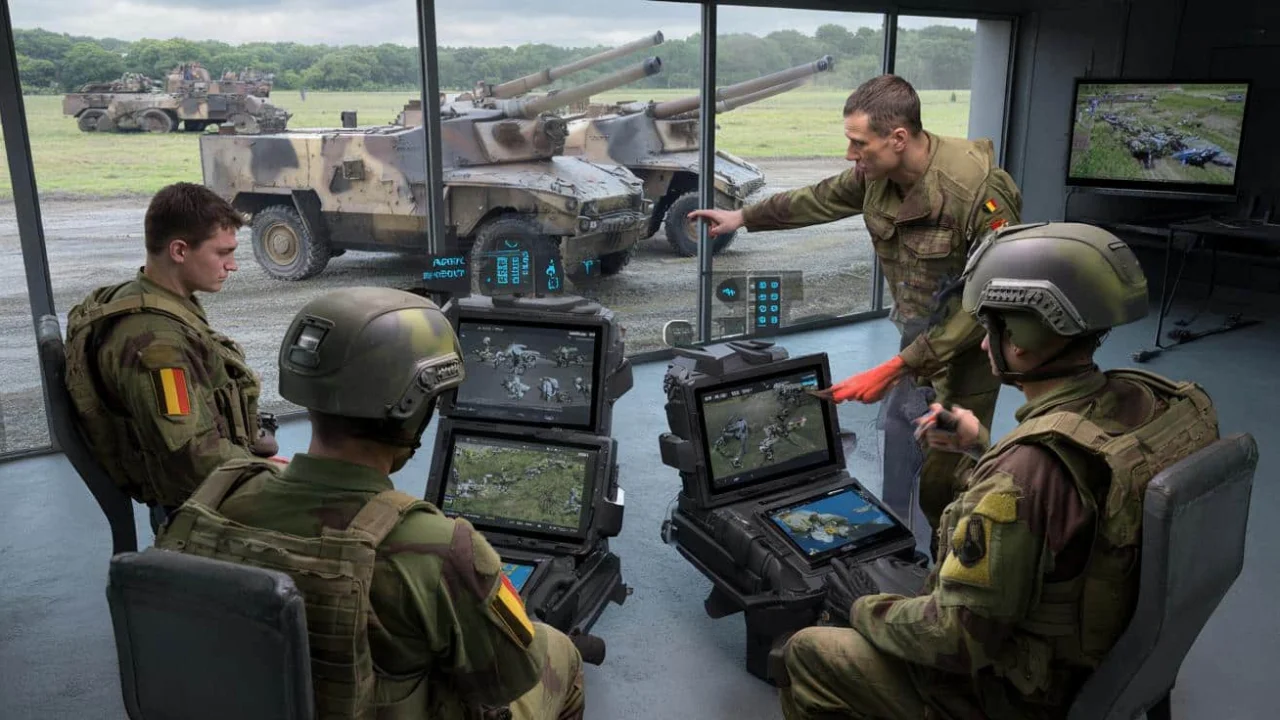
Captain Sarah Delacroix squints at the tactical display on her ruggedized tablet, watching red enemy icons move across a digital battlefield. Around her, Belgian soldiers practice coordinating attacks using nothing more than finger taps and data streams. “Five years ago, we’d be shouting coordinates over radio,” she says, adjusting her headset. “Now the system knows where everyone is before we do.”
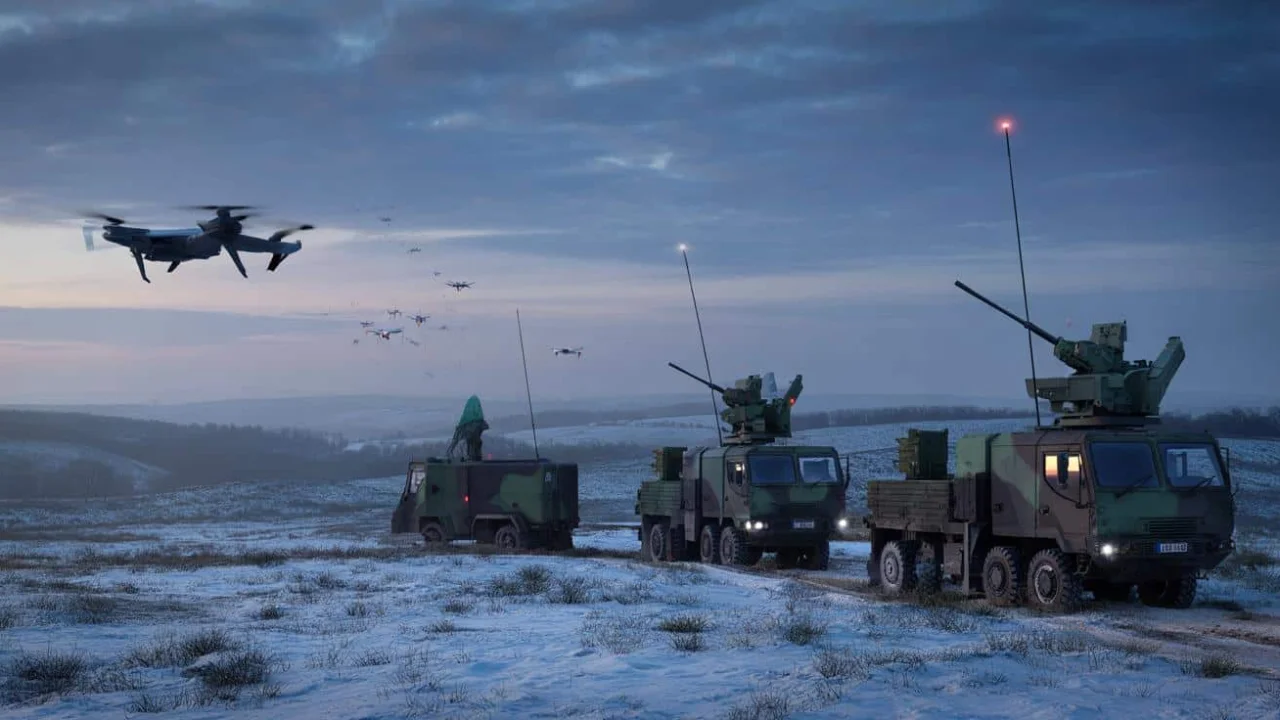
This scene plays out daily across Belgian training grounds as troops master the SCORPION combat information system. It’s not just another military upgrade – it’s reshaping how Belgium’s army thinks, fights, and connects with its closest allies.
The shift represents something bigger than new technology. Belgium is fundamentally changing how its soldiers operate in the field, moving from traditional radio-based coordination to a digital-first approach that promises faster decisions and tighter integration with French forces.
When Software Becomes as Important as Weapons
Belgium joined France’s SCORPION programme in 2018, but the real transformation is happening now. The SCORPION combat information system, known as SICS in military circles, turns individual armored vehicles into nodes in a constantly updating network.
“Think of it like having GPS, WhatsApp, and a tactical map all rolled into one system that works even when everything else fails,” explains Colonel Marc Dumont, who oversees Belgium’s digital transition.
The system connects everything from individual soldiers to command centers, creating what military strategists call “information superiority.” When a reconnaissance unit spots enemy movement, that intelligence instantly appears on screens throughout the network. No delays, no broken telephone chains – just immediate, actionable information.
Belgium ordered 382 Griffon multi-role armored vehicles and 60 Jaguar reconnaissance vehicles as part of the CaMo strategic partnership. But the vehicles are just the platform. The real game-changer is the software that makes them think together.
Breaking Down the Digital Revolution
The SCORPION combat information system delivers capabilities that would have seemed like science fiction just a decade ago. Here’s what Belgian troops are learning to master:
| Feature | Traditional Method | SCORPION System |
|---|---|---|
| Target Identification | Radio reports, manual plotting | Automatic sharing with GPS coordinates |
| Situational Awareness | Verbal updates every 15-30 minutes | Real-time position tracking |
| Command Coordination | Voice communications, paper maps | Digital orders with instant confirmation |
| Intelligence Sharing | Delayed reports up chain of command | Immediate network-wide distribution |
Training involves more than just learning new buttons and screens. Soldiers must adapt to fighting with constant information flow rather than periodic updates. The psychological shift can be dramatic.

- Instant position tracking of all friendly units
- Automatic threat detection and sharing
- Digital mission orders that update in real-time
- Encrypted communications that can’t be intercepted
- Integration with NATO command systems
- Battery life designed for 72-hour operations
“The hardest part isn’t the technology,” notes Staff Sergeant Lisa Van Der Berg, a trainer at Belgium’s main SCORPION facility. “It’s teaching soldiers to trust information they’re seeing on a screen instead of what they’re hearing on the radio.”
What This Means for Belgium’s Military Future
The adoption of the SCORPION combat information system signals Belgium’s commitment to staying relevant in modern warfare. Small armies like Belgium’s can’t compete on numbers, but they can excel through technological sophistication and seamless integration with allies.
French and Belgian units using the system can literally swap roles in joint operations. A Belgian reconnaissance team can feed intelligence directly to French artillery units, or French commanders can coordinate Belgian armored movements as if they were their own troops.
“We’re not just buying French equipment,” emphasizes General Philippe Renson, Belgium’s army modernization chief. “We’re joining a digital ecosystem that makes our small force exponentially more effective when combined with allies.”
The implications extend beyond military efficiency. Belgium’s defense industry gains access to one of Europe’s most advanced combat systems, potentially creating opportunities for local companies to contribute components or services.
Training timelines are aggressive. Belgium expects its first SCORPION-equipped units to reach initial operational capability by late 2024, with full integration across medium-armored forces by 2027.
Language presents an interesting challenge. While the system operates in French, Belgian units must coordinate in both French and Dutch depending on their composition. Custom interfaces are being developed to handle Belgium’s linguistic requirements without compromising interoperability.
The financial investment is substantial – estimated at over €1.5 billion including vehicles, systems, training, and maintenance contracts through 2035. But defense analysts view it as essential spending rather than optional modernization.
“Modern warfare isn’t about having the biggest army,” explains Dr. Elena Kovač, a defense technology specialist at the Royal Military Academy. “It’s about having the smartest army. SCORPION gives Belgium a genuine technological edge.”
Cybersecurity becomes paramount with such connected systems. Belgian cyber defense units are training alongside combat troops, ensuring the digital networks remain secure even under sophisticated electronic attack.
The system’s success could influence other European armies considering similar digital transformations. Several NATO partners are watching Belgium’s implementation closely, potentially creating opportunities for expanded cooperation beyond the French-Belgian partnership.
FAQs
What exactly is the SCORPION combat information system?
It’s a digital network that connects military vehicles, soldiers, and command centers in real-time, allowing instant sharing of tactical information and coordinated operations.
How does this change how Belgian soldiers fight?
Instead of relying mainly on radio communications and paper maps, soldiers now have constant digital awareness of friendly and enemy positions, with orders and intelligence updated automatically.
Will Belgian troops only work with French forces now?
No, the system is designed to integrate with NATO standards, but it does create especially tight interoperability with French units using the same platform.
How long does it take to train soldiers on this system?
Basic proficiency requires about six weeks of intensive training, but mastering advanced features and tactics can take several months of field exercises.
What happens if the digital system fails during combat?
Belgian troops maintain traditional radio and navigation skills as backup, and the system is designed with multiple redundancies to minimize failure risks.
Does this make Belgium’s military significantly more powerful?
The system doesn’t add firepower, but it dramatically improves coordination, decision-making speed, and the ability to operate effectively with allied forces in complex scenarios.
About the Author