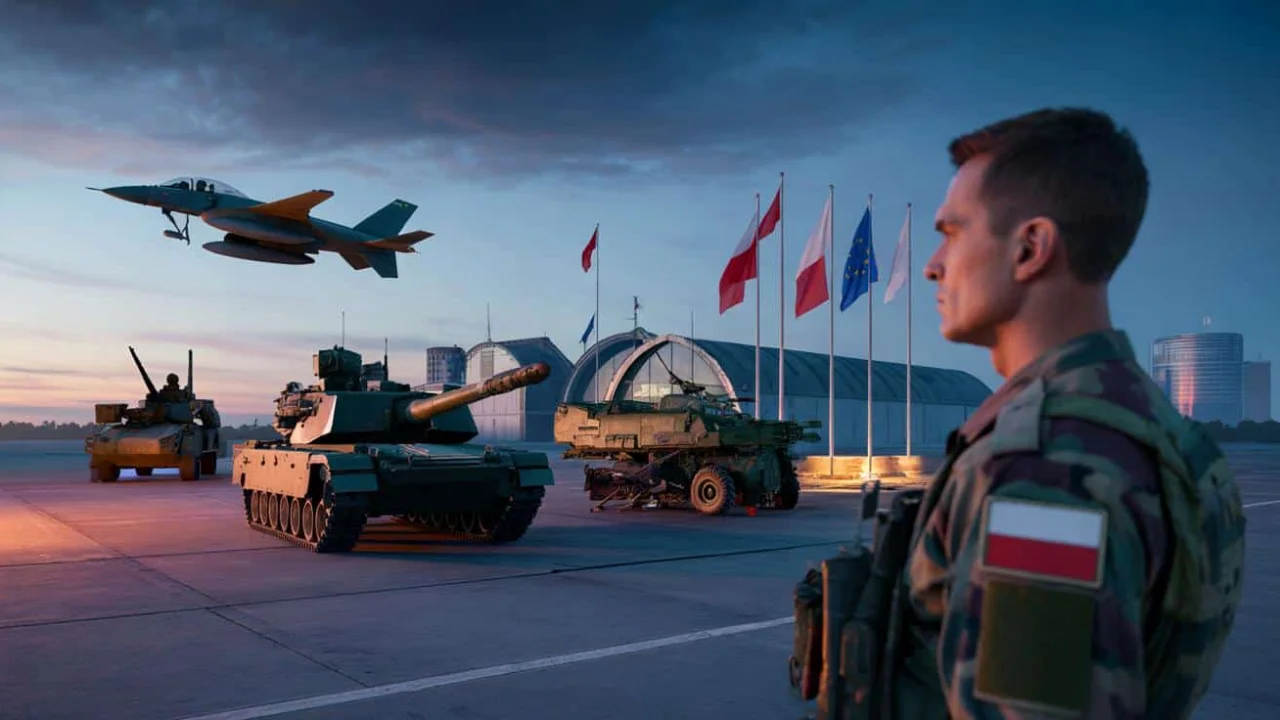
When Colonel Maria Kowalski walked into her Warsaw office last month, she found a stack of procurement reports that would make any defense official’s head spin. American-made Apache helicopters, German-built Leopard tanks, and French missile systems – all desperately needed, all sitting in years-long production queues. With Russian forces just hundreds of kilometers away, waiting wasn’t an option.

This is the reality facing Poland’s military planners today. They need weapons now, not in five years when European factories might finally catch up with demand.
That urgent need has sparked one of the most controversial debates in Brussels: should European taxpayers’ money fund American weapons? Poland thinks so, and they’re pushing hard to make it happen through the EU’s SAFE program.
The Bold Gamble Behind Poland’s Defense Strategy
Poland is quietly testing the limits of Europe’s defense rules, arguing that EU money should help bankroll a massive rearmament campaign built largely around US-made weapons. The stakes couldn’t be higher – or the implications more far-reaching.
Warsaw is lobbying for the EU’s SAFE instrument to be opened up to American defense manufacturers, so it can borrow tens of billions of euros to speed up its military build-up. SAFE funds were originally designed to strengthen European defense capabilities, but Poland wants the scheme flexible enough to fund big-ticket purchases from US giants like Lockheed Martin, Boeing, and General Dynamics.
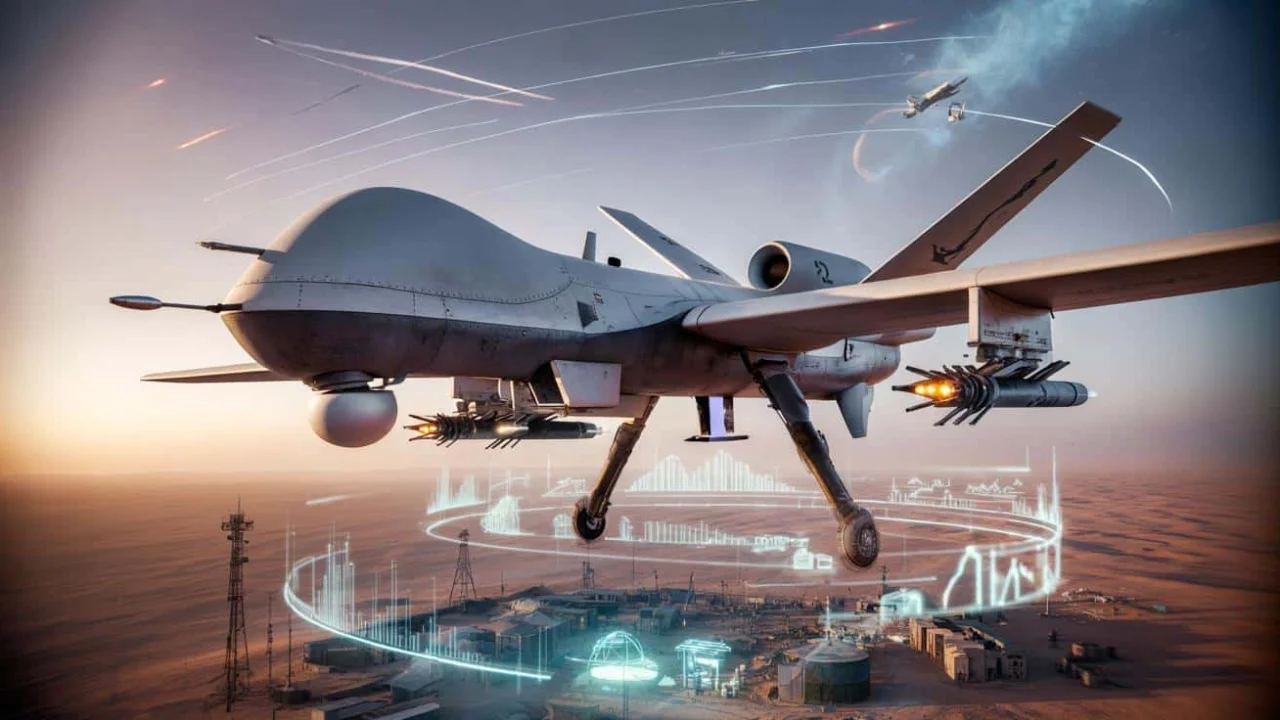
The Polish plan hinges on around €44 billion in SAFE-backed loans, paired with a national defense budget target of 4.7% of GDP as early as 2026. That would place Poland, a country of 38 million people, among NATO’s heaviest spenders, ahead of Germany and France as a share of economic output.
“Warsaw’s message to Brussels is blunt: security cannot wait for Europe’s arms industry to catch up,” explains defense analyst Dr. Henrik Larsen from the European Policy Centre.

Officials in Warsaw argue that European factories cannot currently deliver the “off-the-shelf” equipment Poland needs, at the right price and on the right timeline. Production lines are congested, order books are full, and many systems simply aren’t available for quick delivery.
What’s Actually at Stake with SAFE Funds
The numbers tell a compelling story about why Poland is pushing so hard for this change. Here’s what the country wants to buy and how SAFE funds could make it happen:

| Weapon System | Manufacturer | Estimated Cost | Delivery Timeline |
|---|---|---|---|
| Apache Helicopters (96 units) | Boeing (US) | €8.5 billion | 2027-2030 |
| HIMARS Rocket Systems (486 units) | Lockheed Martin (US) | €9.2 billion | 2026-2029 |
| Abrams Tanks (250 units) | General Dynamics (US) | €12.1 billion | 2028-2032 |
| Patriot Defense Systems (8 batteries) | Raytheon (US) | €6.8 billion | 2027-2031 |
The controversy isn’t just about money – it’s about the future direction of European defense. Key concerns include:
- Industrial sovereignty: Critics worry that SAFE funds should build European capabilities, not subsidize American competitors
- Long-term dependence: Buying American now could lock Europe into decades of costly maintenance and upgrade contracts
- Political precedent: If Poland succeeds, other countries might follow suit, potentially undermining Europe’s strategic autonomy goals
- Economic impact: Every euro spent on US weapons is a euro not invested in European jobs and innovation
“The Polish proposal essentially asks European taxpayers to fund American defense companies while our own industries struggle with capacity constraints,” notes Brussels-based policy expert Sarah Chen. “It’s understandable from a security perspective, but questionable from an industrial policy standpoint.”
How This Could Change Everything for European Defense
The real-world implications of Poland’s push extend far beyond Warsaw’s immediate security needs. If successful, this could fundamentally reshape how Europe approaches defense procurement and industrial policy.
For ordinary Europeans, the impact might not be immediately visible, but the consequences would ripple through the continent. Jobs that could have been created in French, German, or Italian defense factories might instead go to workers in Texas, Connecticut, or Alabama. Tax revenues that could have stayed in Europe would flow across the Atlantic.
Other EU countries are watching Poland’s moves carefully. The Baltic states, also concerned about Russian threats, are quietly supporting Warsaw’s position. Finland and Sweden, as NATO’s newest members, see merit in accessing proven American systems quickly rather than waiting for European alternatives.
But France and Germany are pushing back hard. Paris has invested heavily in building European defense champions like Airbus Defence and Space, while Berlin sees strengthening EU industrial capacity as essential for long-term security and economic competitiveness.
“We’re at a crossroads,” explains former NATO official General Patricia Williams. “Either Europe doubles down on building its own defense industrial base, or it accepts continued dependence on American suppliers for critical military capabilities.”
The timing adds another layer of complexity. With the war in Ukraine showing no signs of ending, and defense spending surging across Europe, the pressure to act quickly is intense. European defense companies are struggling to meet demand, with some production lines booked solid until 2030 or beyond.
Meanwhile, American manufacturers have excess capacity in some areas and proven track records of rapid production scale-up. For Poland, facing what it sees as an existential threat, the choice seems obvious.
The European Commission finds itself caught between competing priorities. Supporting Poland’s immediate security needs makes strategic sense, but potentially undermining long-term European industrial goals creates different risks.
Whatever happens with SAFE funds, Poland’s bold gamble has already changed the conversation about European defense. The question is no longer whether Europe needs more military capability – it’s how quickly that capability can be built, and who will build it.
FAQs
What exactly are SAFE funds and how do they work?
SAFE stands for “Support to Ammunition production for Europe” and provides EU-backed loans to help countries buy defense equipment. The funds were originally designed to boost European defense manufacturing capacity.
Why can’t Poland just buy American weapons with its own money?
Poland wants to spend €44 billion on defense modernization, which would strain its national budget. Using SAFE funds would allow them to spread costs over many years while accessing favorable EU-backed interest rates.
Which other countries support Poland’s position on this issue?
The Baltic states (Estonia, Latvia, Lithuania) and some Nordic countries quietly support Poland’s approach, as they also face immediate security concerns about Russia and want proven defense systems quickly.
What happens if the EU rejects Poland’s proposal?
Poland would likely proceed with some American purchases using national funds, but on a much smaller scale. This could slow their military modernization and potentially create security gaps.
How much money is Poland actually talking about spending?
Warsaw plans to reach 4.7% of GDP in defense spending by 2026, which would amount to roughly €37 billion annually. The €44 billion in SAFE funds would be spread over several years for major equipment purchases.
Could this decision affect European defense companies long-term?
Yes, if SAFE funds regularly go to American suppliers, it could weaken European defense manufacturers’ ability to compete and innovate, potentially creating lasting industrial disadvantages for EU countries.
About the Author