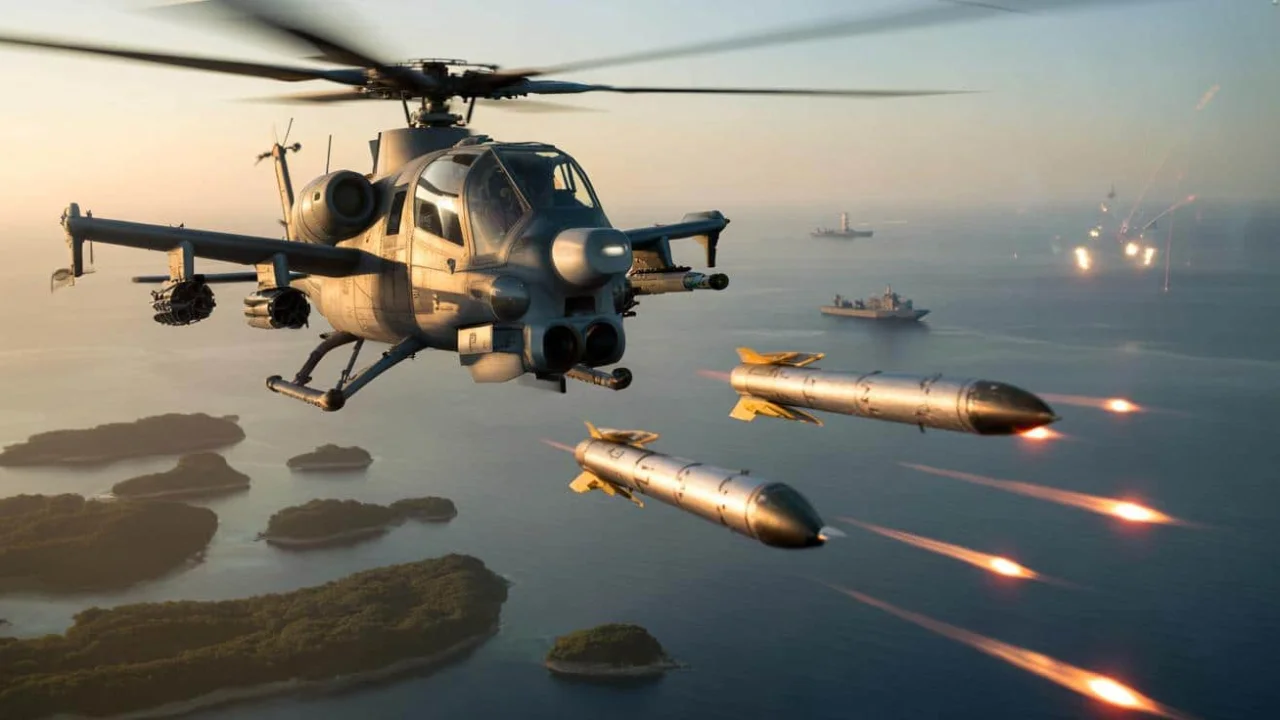
Captain Sarah Martinez remembers the exact moment everything changed. She was flying her AH-1Z Viper over a training exercise in California when her instructor pointed to a distant hilltop nearly 200 miles away. “See that target?” he asked through the headset. “Soon, you’ll be able to hit it from right here.” Martinez thought he was joking. Attack helicopters had always meant getting close to the enemy, often dangerously close. But that conversation last year wasn’t a joke – it was a glimpse into the future of Marine Corps aviation.
Today, that future is becoming reality. The Marines are revolutionizing their AH-1Z Viper helicopters with weapons that can strike targets 370 kilometers away, fundamentally changing how these aircraft fight and survive on modern battlefields.
While military experts debate whether attack helicopters have become too vulnerable in today’s drone-filled skies, the US Marine Corps is making a bold bet. Instead of retiring their Vipers, they’re turning them into long-range precision strike platforms that can hit enemies from unprecedented distances.
The Marines Are Rewriting the Helicopter Playbook
The transformation centers around an $86.2 million contract awarded to L3Harris in late January. This deal integrates a revolutionary weapon system called Red Wolf onto the AH-1Z Viper helicopters under the Precision Attack Strike Munition (PASM) program.
“We’re not just adding another missile to the Viper,” explains former Marine aviator Colonel James Thompson, now a defense analyst. “We’re completely changing what this helicopter can do and how Marines will use it in combat.”

The Red Wolf system represents a dramatic shift from traditional helicopter warfare. Instead of flying close to targets and engaging with rockets and cannons, AH-1Z Viper helicopters will soon launch precision munitions from hundreds of kilometers away, well beyond the range of most air defense systems.
This approach directly challenges the growing narrative that attack helicopters are obsolete in modern warfare. The conflict in Ukraine has shown how vulnerable helicopters can be to surface-to-air missiles and drone swarms, leading some military strategists to question their future role.
But the Marines see a different path forward. Rather than abandoning helicopters, they’re extending their reach and keeping crews out of harm’s way while maintaining devastating strike capabilities.
Breaking Down the Game-Changing Technology
Red Wolf isn’t your typical missile system. Military officials describe it as a “launched effect” – essentially a smart, long-range weapon that operates independently once fired. Here’s what makes this technology so revolutionary:

- Extended Range: The 370-kilometer range puts targets far beyond traditional helicopter operating distances
- Precision Guidance: Advanced navigation systems ensure accurate strikes on specific targets
- Launch and Leave: Pilots can fire and immediately retreat to safety
- Multi-Target Capability: Each helicopter can engage multiple targets simultaneously
- All-Weather Operation: The system works in conditions that would ground traditional close-support missions
The technical specifications showcase the weapon’s impressive capabilities:
| Feature | Specification |
|---|---|
| Maximum Range | 370 kilometers |
| Platform | AH-1Z Viper Helicopter |
| Guidance System | GPS/INS with terminal guidance |
| Launch Method | Air-to-surface from standoff distance |
| Target Types | Fixed and mobile ground targets |
| Weather Capability | All-weather, day/night operations |
“The beauty of this system is that it keeps our pilots alive while giving them unprecedented striking power,” notes defense technology expert Dr. Rachel Kim. “A Viper crew can now eliminate threats that would have required multiple aircraft and significant risk just a few years ago.”
The integration process involves extensive modifications to the AH-1Z Viper’s weapons systems, avionics, and targeting capabilities. Each helicopter will carry multiple Red Wolf munitions, dramatically multiplying their combat effectiveness.
What This Means for Military Strategy and Global Security
The implications of arming AH-1Z Viper helicopters with 370-kilometer range weapons extend far beyond Marine Corps operations. This development could reshape how military forces around the world think about helicopter warfare and force projection.
For the Marines, this technology solves a critical problem. Modern battlefields are increasingly dangerous for aircraft operating close to enemy forces. Dense air defense networks, shoulder-fired missiles, and swarms of attack drones have made traditional helicopter missions extremely risky.
The extended-range capability allows Marine units to provide close air support and conduct precision strikes while keeping their valuable helicopters and crews safely outside enemy engagement zones. This dramatically improves survival rates while maintaining mission effectiveness.
From a strategic perspective, the upgraded Vipers give Marine Expeditionary Units new options for rapid response and power projection. A small force of these helicopters operating from ships or remote bases can now influence events across vast areas previously requiring larger, more vulnerable force deployments.
“This changes the calculus for potential adversaries,” explains military strategist Colonel (Ret.) Michael Foster. “They now have to defend against precision strikes coming from directions and distances they never had to worry about before.”
The technology also addresses budget constraints facing military services worldwide. Rather than developing entirely new aircraft platforms, the Marines are maximizing the potential of existing helicopters through advanced weaponry.
International allies and partners are watching this development closely. Several NATO countries operate similar helicopter platforms and could potentially integrate comparable systems, creating a new category of long-range helicopter strike capabilities.
The program timeline calls for initial operational capability within the next two years, with full deployment across Marine Corps AH-1Z Viper squadrons by the late 2020s. Training programs are already being developed to teach pilots and weapons officers how to employ these extended-range capabilities effectively.
However, this technological leap also raises questions about arms control and escalation risks. The ability to conduct precision strikes from hundreds of kilometers away could complicate crisis situations and create new challenges for international stability.
Military analysts note that other nations will likely develop similar capabilities, potentially triggering an arms race in long-range helicopter weaponry. The technology could also proliferate to non-state actors, creating new security concerns.
Despite these challenges, the Marines remain committed to this revolutionary upgrade. They view it as essential for maintaining relevance and survivability in future conflicts where traditional helicopter tactics could prove suicidal.
FAQs
What is the range of the new weapons for AH-1Z Viper helicopters?
The Red Wolf munitions will give AH-1Z Viper helicopters a strike range of 370 kilometers, allowing them to hit targets from unprecedented distances.
When will these upgraded helicopters be ready for combat?
The Marine Corps plans to achieve initial operational capability within two years, with full deployment across all Viper squadrons by the late 2020s.
How much is this upgrade program costing?
The initial contract with L3Harris is worth $86.2 million, covering the integration of the Red Wolf weapon system onto the AH-1Z Viper platform.
Will this technology be shared with allied nations?
While details haven’t been announced, several NATO allies operate similar helicopter platforms and could potentially integrate comparable systems in the future.
How does this change helicopter combat tactics?
Instead of flying close to targets for direct engagement, pilots can now launch precision strikes from safe distances and immediately retreat, dramatically improving crew survival rates.
What types of targets can these weapons engage?
The Red Wolf system can strike both fixed and mobile ground targets with precision guidance, working in all weather conditions during day or night operations.
About the Author
