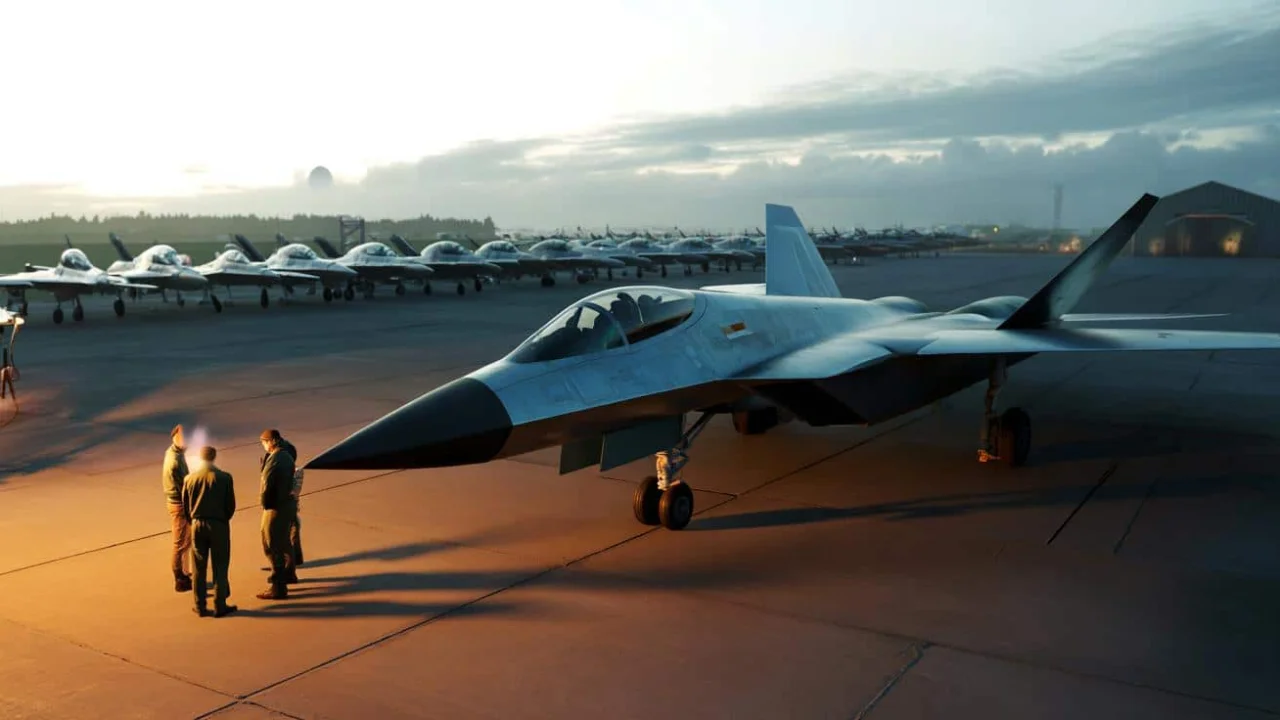
Last month, a military aviation enthusiast in Algeria scrolled through Russian defense contractor Rostec’s latest promotional materials, studying glossy photos of the Su-57 stealth fighter. The marketing promised cutting-edge technology, export availability, and competitive pricing against Western alternatives.
But when he cross-referenced those bold claims with actual production numbers, something didn’t add up. Only two new Su-57s had rolled off Russian assembly lines in 2025, while older fighter models dominated the output statistics.
His confusion mirrors a growing skepticism among defense analysts worldwide: if Russia can barely deliver its own stealth fighters, how realistic are those Su-57 export promises to international buyers?

The Numbers Don’t Match the Marketing
Russia’s aircraft production in 2025 painted a stark picture of priorities. Despite years of promoting the Su-57 as Moscow’s answer to America’s F-35, the actual manufacturing focus remained firmly planted in fourth-generation technology.
The production breakdown reveals where Russian aerospace really invested its resources. While Rostec executives toured international airshows promising Su-57 deliveries to foreign customers, their own factories were churning out proven designs that could immediately replace combat losses.
“When you see such a massive gap between production promises and actual output, it raises serious questions about industrial capacity,” notes aviation analyst Maria Volkov. “Two aircraft per year simply doesn’t support the export timeline Russia has been advertising.”
This disconnect becomes even more problematic when considering Russia’s own military needs. The country committed to fielding 76 Su-57s for domestic use by 2027, requiring a dramatic production acceleration that current evidence suggests may be unrealistic.

Breaking Down Russia’s 2025 Aircraft Output
The actual production numbers from Russian aerospace facilities tell a compelling story about national priorities and manufacturing capabilities.
| Aircraft Type | Units Delivered | Generation | Primary Role |
|---|---|---|---|
| Su-34 | 14 | 4th Gen+ | Strike Fighter |
| Su-35S | 12 | 4th Gen+ | Air Superiority |
| Su-57 | 2 | 5th Gen | Stealth Fighter |
| Other Models | 2 | Various | Support/Training |
Several factors likely contributed to this production pattern:
- Immediate battlefield replacement needs for Ukrainian operations
- Proven manufacturing processes for older aircraft designs
- Supply chain challenges affecting advanced Su-57 components
- Limited specialized facilities capable of stealth fighter assembly
- Resource allocation favoring quantity over cutting-edge technology
The emphasis on Su-34 and Su-35S production makes tactical sense for Russia’s current military situation. These aircraft can be manufactured faster, cost less per unit, and utilize existing supply chains that aren’t subject to the same international sanctions affecting advanced materials.
“Russia chose volume over innovation in 2025,” explains defense industry specialist James Chen. “They needed jets in the air, not prototypes in development hangars.”
What This Means for International Buyers
Countries considering Su-57 purchases now face uncomfortable questions about delivery timelines and Russian industrial capacity. The gap between marketing promises and production reality affects several key areas.
Potential customers who signed preliminary agreements or expressed interest in Su-57 exports must now recalculate their procurement strategies. If Russia struggles to build two units annually for a domestic program, how can they fulfill international orders alongside their own military requirements?
The credibility gap extends beyond simple numbers. Defense acquisitions represent multi-year commitments involving training programs, maintenance infrastructure, and spare parts supply chains. Buyers need confidence that their chosen supplier can deliver not just initial aircraft, but sustained support over decades of operation.
Algeria, India, and Turkey have all shown varying degrees of interest in Su-57 acquisitions, but 2025’s production reality may force reassessment of Russian capabilities versus alternatives like Chinese J-20s or upgraded Western fourth-generation fighters.
“When you’re spending hundreds of millions on fighter aircraft, production track record matters more than promotional videos,” observes military procurement expert Sarah Rodriguez. “Two jets per year doesn’t inspire confidence in meeting delivery schedules.”
The situation creates a cascade effect across Russia’s defense export strategy. Countries may begin questioning other advanced Russian military systems if the flagship Su-57 program shows such limited manufacturing progress.
Economic factors also play a role. Nations investing in Su-57s expect competitive pricing partly because they’re helping subsidize Russian development costs through export sales. But if export volumes remain minimal due to production constraints, that economic model breaks down.
Regional geopolitical considerations add another layer of complexity. Countries seeking alternatives to Western military suppliers may find Chinese options more attractive if Russian delivery promises prove unreliable.
The timing couldn’t be worse for Russian defense exports. Global military modernization programs are accelerating, creating opportunities for suppliers who can demonstrate reliable production and delivery capabilities.
“Russia’s window for Su-57 export success may be closing faster than they anticipated,” warns international defense analyst Dr. Michael Thompson. “Other suppliers are moving quickly to fill gaps in the global fighter market.”
FAQs
Why did Russia only produce 2 Su-57s in 2025?
Production priorities shifted toward proven aircraft models needed for immediate battlefield replacements, while the Su-57 requires more complex manufacturing processes and specialized components.
Can Russia realistically deliver 76 Su-57s by 2027?
At current production rates of 2 aircraft per year, reaching 76 units would require a dramatic manufacturing acceleration that available evidence suggests may be challenging to achieve.
Which countries are interested in buying Su-57s?
Algeria, India, and Turkey have expressed varying levels of interest, though recent production numbers may cause them to reassess Russian delivery capabilities.
How does Su-57 production compare to competitors?
The F-35 program delivers over 150 aircraft annually across multiple production lines, while China’s J-20 production rates remain classified but appear significantly higher than Su-57 output.
What alternatives exist for countries wanting non-Western fighters?
Options include Chinese J-20 stealth fighters, upgraded versions of proven aircraft like F-16s or Gripen, or continuing with fourth-generation Russian models like Su-35S.
Will production delays affect Su-57 export pricing?
Lower production volumes typically increase per-unit costs, potentially making Su-57 exports less competitive compared to higher-volume alternatives from other suppliers.
About the Author
