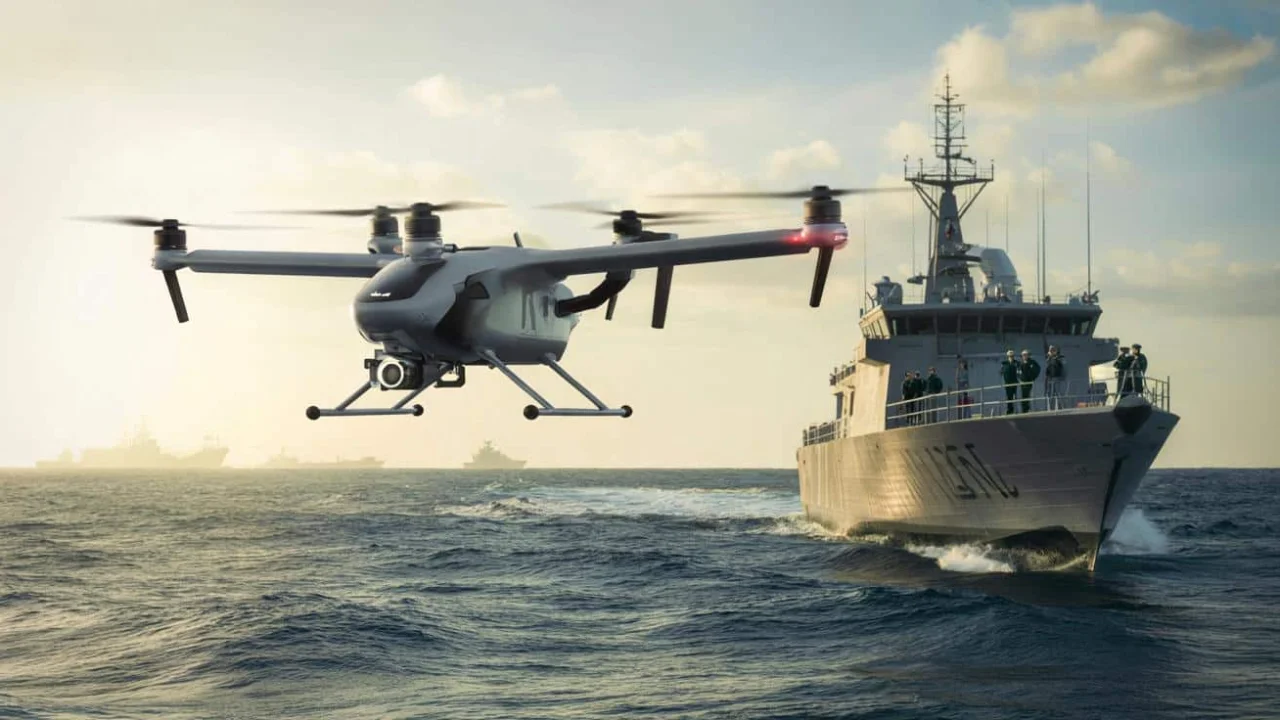
Captain Marie Dubois still remembers the moment everything changed. Standing on the bridge of her patrol frigate last summer, she watched helplessly as hostile vessels appeared just beyond radar range in the Mediterranean. By the time her crew spotted the threat, precious minutes had already slipped away. “If only we had eyes further out there,” she thought, gripping the rail as alarms sounded across the ship.

That frustrating experience isn’t unique among naval officers. Modern threats move fast, and seeing beyond the horizon can mean the difference between mission success and disaster. For years, warships have struggled with this fundamental challenge – until small flying robots started changing the game entirely.
Now, France is taking a bold step forward. The country’s defense procurement agency, known as the DGA, has just ordered a revolutionary upgrade to the French Navy’s mini drone system. Instead of catapult-launched aircraft, they’re moving to vertical take-off and landing models that promise to transform how ships see and respond to threats.
Why This Upgrade Matters for Naval Operations
Since 2021, the French Navy mini drone system has been quietly revolutionizing maritime surveillance. The current setup, called SMDM (Système de mini-drones de la Marine), uses compact Aliaca drones that crews launch via catapult from offshore patrol vessels and frigates.
These electric-powered scouts can fly for up to three hours and extend a ship’s vision out to 27 nautical miles. That’s like having a watchtower that moves wherever you need it most. The drones stream live video back to the ship, revealing everything from suspicious fishing boats to potential military threats.

“The current system gives our surface ships a discreet surveillance bubble that stretches far beyond their own sensors,” explains naval technology analyst Pierre Laurent. “But the catapult launch system has limitations that VTOL technology can solve.”
The new vertical take-off version promises several game-changing improvements. Unlike catapult systems that need specific deck space and weather conditions, VTOL drones can launch from almost any flat surface on a ship. They work in rougher seas, require less crew training, and can be deployed much faster when threats emerge.

Key Features and Capabilities of the New System
The upgraded French Navy mini drone system brings impressive technical specifications that matter in real-world operations:
- Vertical Launch Capability: No catapult required – launches straight up from compact deck space
- Enhanced Weather Performance: Operates in sea states up to 4, compared to calmer conditions needed for catapult launch
- Rapid Deployment: Ready for mission in under 10 minutes versus 15 minutes for current system
- Multi-Ship Compatibility: Can operate from smaller vessels that lack catapult infrastructure
- Advanced Sensors: Upgraded GX5 electro-optical camera with improved infrared capabilities
- Extended Range: Maintains 27+ nautical mile operational radius with enhanced endurance
| Specification | Current Aliaca | New VTOL Version |
|---|---|---|
| Launch Method | Catapult | Vertical Take-off |
| Setup Time | 15 minutes | Under 10 minutes |
| Sea State Limit | 3 | 4+ |
| Deck Space Required | Large catapult area | Small landing pad |
| Recovery Method | Net capture | Precision landing |
| Crew Training | Specialized | Simplified |
The VTOL upgrade also includes enhanced communication systems that maintain reliable data links even in challenging electromagnetic environments. This ensures that crucial intelligence flows smoothly from drone to ship, even when electronic warfare systems are active nearby.
“What excites me most is the operational flexibility,” notes defense contractor spokesperson Jean-Luc Moreau. “A VTOL system means more ships can carry these eyes in the sky, and crews can use them in situations where catapult launch simply isn’t possible.”
Real-World Impact on Maritime Security
This technological leap affects far more than just French naval operations. The upgrade reflects a broader shift in how modern navies think about surveillance and threat detection in an increasingly complex maritime environment.
Commercial shipping companies are watching these developments closely. Better naval surveillance means safer shipping lanes and more effective responses to piracy or smuggling operations. When naval vessels can see further and respond faster, everyone benefits from improved maritime security.
The timing is particularly significant given current global tensions. Nations worldwide are investing heavily in drone technology, and naval applications represent one of the fastest-growing segments. France’s move to VTOL mini drones keeps their fleet competitive while providing real operational advantages.
Port authorities and coast guard services are also taking notice. The same technology that helps warships could revolutionize civilian maritime patrol operations, border security, and environmental monitoring.
“We’re entering an era where every major surface vessel will carry some form of unmanned aircraft,” predicts maritime security expert Dr. Sophie Martin. “The question isn’t whether to adopt drone technology, but which systems offer the best combination of capability and practical usability.”
For naval crews, the upgrade means less time spent on complex launch procedures and more focus on analyzing the intelligence their flying scouts provide. Simplified operations reduce training requirements and allow more personnel to effectively operate these systems.
The economic implications extend beyond defense budgets. France’s aerospace industry gains valuable experience with VTOL technology that could translate into civilian applications, from cargo delivery to emergency services support.
As threats evolve and maritime domains become more contested, having reliable eyes in the sky isn’t just helpful – it’s essential. The French Navy’s move to VTOL mini drones represents a practical response to modern challenges, combining proven surveillance capabilities with the operational flexibility that complex missions demand.
FAQs
What is the French Navy mini drone system?
It’s a compact surveillance package called SMDM that includes control stations and small drones used for extending a ship’s vision beyond the horizon, currently operating since 2021.
Why is France switching to VTOL drones?
VTOL (Vertical Take-Off and Landing) drones can operate from more ships, in rougher weather conditions, and require less specialized deck space compared to catapult-launched systems.
How far can these mini drones fly?
The current and upgraded systems can operate out to approximately 27 nautical miles from the launching vessel while maintaining reliable communication links.
Which ships can use the new VTOL system?
The VTOL upgrade allows the system to operate from a wider range of vessels, including smaller ships that lack the deck space or infrastructure for catapult launch systems.
How long do these drones stay in the air?
The electric-powered drones provide 2-3 hours of flight endurance, giving crews extended surveillance capability for maritime patrol and threat detection missions.
What can the drones see and detect?
They carry advanced electro-optical and infrared cameras, plus AIS receivers for ship identification, allowing them to track vessels and monitor maritime activity in real-time.
About the Author
