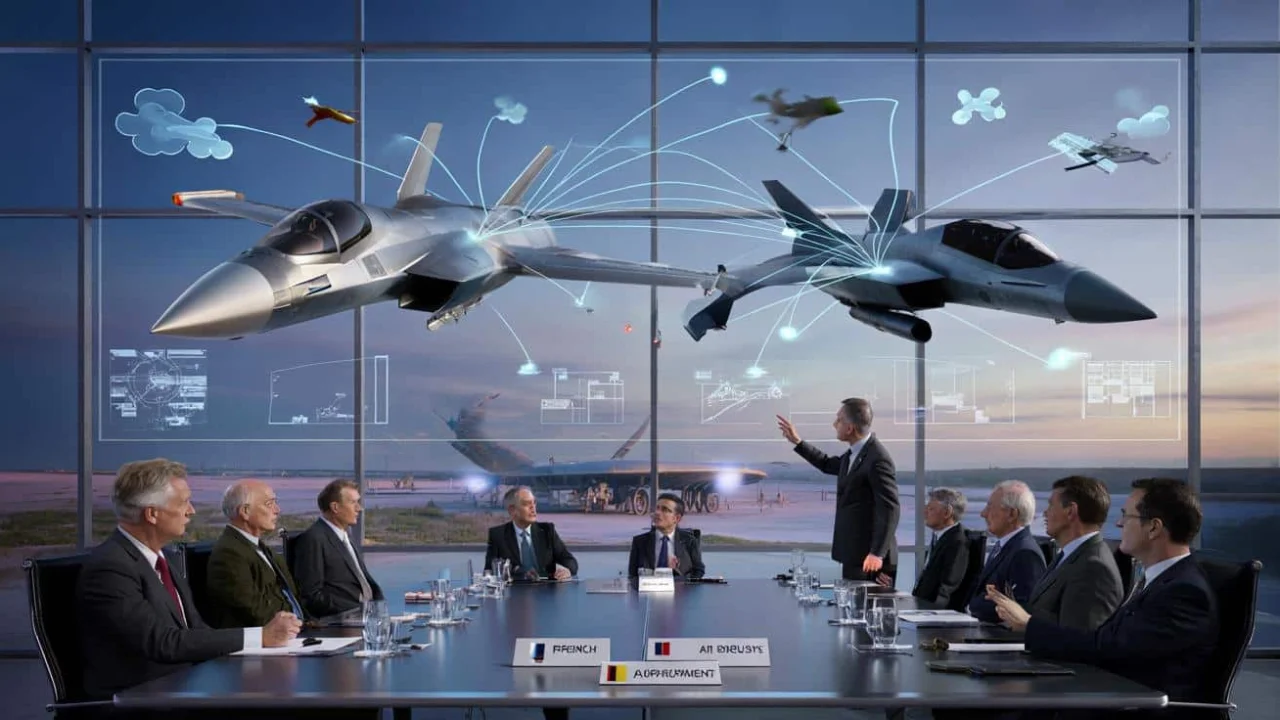
When Hans Mueller arrived at his Airbus factory in Hamburg last December, he found his colleagues huddled around their phones, reading something that would change everything. A joint letter from their union and company bosses was making waves across Europe’s defense circles. For Hans, a skilled technician who’s spent fifteen years building aircraft components, the message was personal: his job, his expertise, and Germany’s role in building the next generation of fighter jets hung in the balance.

That letter wasn’t just corporate politics. It was a cry from workers and managers who felt sidelined in Europe’s most expensive military project ever.
The Future Combat Air System represents Europe’s boldest attempt to build a world-class fighter jet that can compete with American and Chinese aircraft. But behind the technical jargon and diplomatic language, real people are fighting for their livelihoods and their nations’ technological future.
When Labor Unions Meet Military Strategy
The NGF Airbus splitting controversy started with an unlikely alliance. IG Metall, Germany’s most powerful industrial union, joined forces with Airbus executives to challenge how Europe builds its next fighter jet. Their December letter called for developing two separate New Generation Fighters within the same program framework.
This wasn’t just about engineering preferences. German workers watched as France’s Dassault Aviation took the lead role in designing the NGF, potentially leaving German facilities with assembly work rather than the high-skilled design jobs that pay the bills.

“We’re not talking about just any manufacturing jobs here,” explains defense analyst Maria Schneider. “These are the positions that require decades of expertise and command premium wages. Lose them, and you lose an entire generation of aerospace knowledge.”
The timing tells the story. After years of quiet frustration, German stakeholders decided to go public. The letter reaffirmed commitment to FCAS while essentially demanding a fundamental restructure of how the program works.
Behind closed doors, German industry leaders were asking hard questions: Why should their workers accept secondary roles when Germany contributes billions to the program? Why should critical technologies be developed exclusively in France?
Breaking Down the Stakes
The NGF splitting proposal involves more than just building two planes instead of one. Here’s what’s really at stake:

- Jobs and Skills: Thousands of high-tech manufacturing positions across Germany, France, and Spain
- Technology Transfer: Access to cutting-edge aerospace innovations worth billions
- Industrial Sovereignty: Each nation’s ability to maintain independent defense capabilities
- Economic Impact: Regional aerospace clusters that support entire communities
- Political Leverage: Influence over Europe’s future military strategy
The numbers paint a clear picture of why this matters:
| Country | Investment Commitment | Expected Jobs | Key Companies |
|---|---|---|---|
| Germany | €8.5 billion | 25,000+ | Airbus Defence, MTU |
| France | €9.2 billion | 30,000+ | Dassault, Thales |
| Spain | €2.1 billion | 8,000+ | Indra, ITP Aero |
“The traditional model of one country leading while others follow simply doesn’t work anymore,” notes aerospace economist Dr. James Wright. “Modern defense programs are too complex and expensive for that approach.”
But the IG Metall and Airbus letter hints at something bigger. They mention a “programme of programmes” concept without fully exploring its revolutionary potential. This approach would treat FCAS not as a single project but as multiple interconnected systems developed simultaneously across different locations.
What This Means for Europe’s Military Future
The NGF Airbus splitting debate extends far beyond factory floors and corporate boardrooms. The outcome will determine whether Europe can build military equipment that rivals American F-35s or Chinese J-20s.
For workers like Hans Mueller, the stakes are immediate. If Germany gets relegated to secondary roles, his advanced manufacturing skills might become obsolete. His factory could shift from designing critical flight systems to assembling components designed elsewhere.
The ripple effects spread through entire communities. Aerospace hubs in Hamburg, Toulouse, and Seville depend on these high-tech programs to attract talent and investment. Lose the expertise, and these regions risk economic decline.
“This isn’t just about building planes,” explains former defense minister Klaus Weber. “It’s about maintaining technological sovereignty in an increasingly dangerous world.”
European leaders face a delicate balancing act. They need to keep all three nations committed to FCAS while ensuring each gets meaningful work and technology access. The traditional approach of having one prime contractor might no longer be viable.
The “programme of programmes” model offers a potential solution. Instead of building one fighter jet under French leadership, Europe could develop multiple specialized variants simultaneously. Germany might lead development of electronic warfare systems, Spain could focus on naval variants, while France handles air superiority models.
This approach would distribute both risks and rewards more evenly. Each country would maintain critical capabilities while contributing to a larger European defense ecosystem.
Military experts see broader implications. If successful, this model could reshape how Europe approaches future defense projects, from naval vessels to space systems.
The clock is ticking. Other nations aren’t waiting for Europe to resolve its internal debates. American defense contractors continue advancing their next-generation systems, while Chinese military technology rapidly improves.
For Hans and his colleagues, the answer will determine whether they’re building Europe’s technological future or watching it slip away to other continents. The NGF Airbus splitting proposal represents more than just another defense industry reorganization – it’s a test of whether European cooperation can evolve beyond old models of national competition.
FAQs
What exactly is the NGF Airbus splitting proposal about?
IG Metall and Airbus want to develop two separate New Generation Fighter variants within the same FCAS program, rather than having one French-led design.
Why are German unions involved in military aircraft decisions?
IG Metall represents thousands of aerospace workers whose jobs depend on Germany getting meaningful work in the FCAS program, not just assembly roles.
What is the “programme of programmes” concept mentioned?
This approach would treat FCAS as multiple interconnected projects developed simultaneously across different European locations, rather than one centralized program.
How much money is involved in this controversy?
The three FCAS partner nations have committed over €19 billion total, with tens of thousands of high-skilled jobs at stake across Europe.
Could this split actually improve the final aircraft?
Some experts believe parallel development could accelerate innovation and create specialized variants better suited to different military needs.
What happens if the partners can’t agree on splitting the NGF?
The entire FCAS program could face delays or potential collapse, leaving Europe dependent on American or other foreign military aircraft technology.
About the Author
