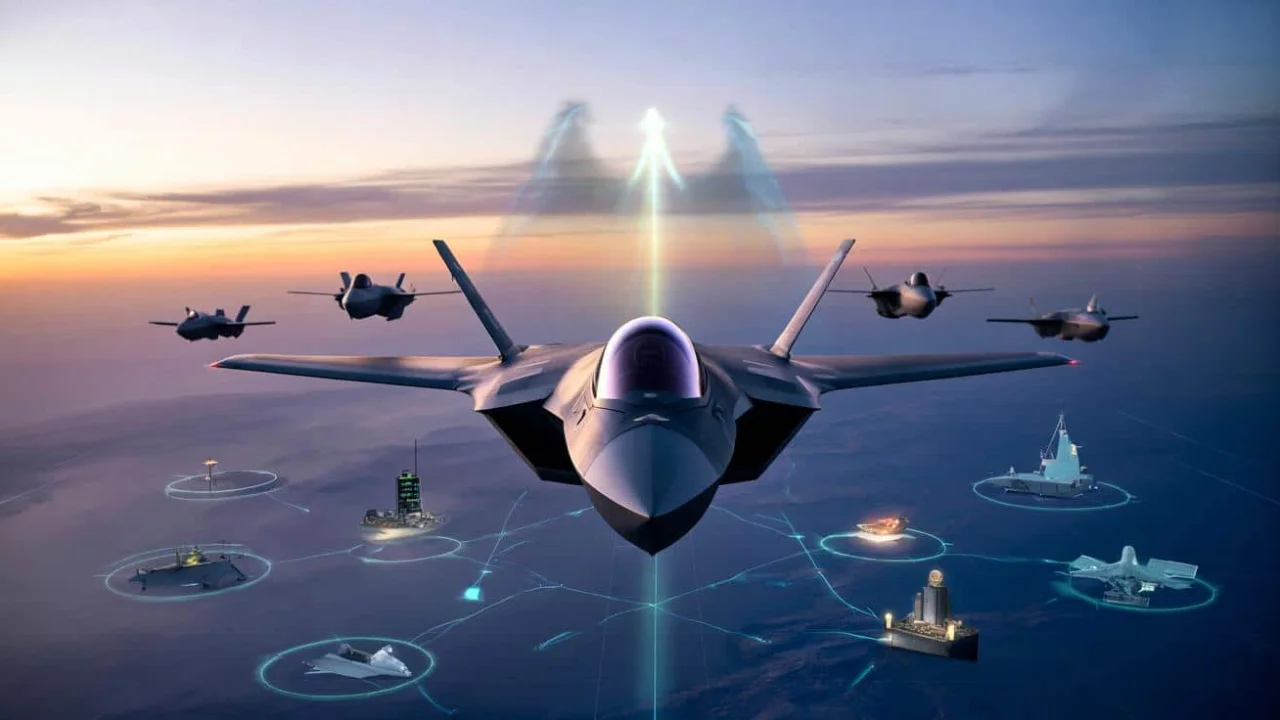
Picture this: You’re sitting in a boardroom where three different people are trying to design the same car. One wants a Ferrari, another insists on a tank, and the third keeps changing the blueprint every few minutes. Now multiply that chaos by billions of euros and the future of European air defense.

That’s essentially what’s happening right now with Europe’s most ambitious military project. Engineers, politicians, and defense contractors from France, Germany, and Spain are staring at calendars, watching a critical deadline approach like an approaching storm.
The next seven days could determine whether Europe builds the fighter jet of the future together, or whether three proud nations go their separate ways, each convinced they know best.
What FCAS Really Means for Europe’s Defense Future
The Future Combat Air System isn’t just another fighter jet project. Think of it as Europe’s attempt to stay relevant in a world where American F-35s dominate the skies and China’s J-20 stealth fighters are reshaping air power dynamics across Asia.
Launched back in 2017, FCAS was supposed to be revolutionary. Not just one plane, but an entire ecosystem of warfare technology. A next-generation fighter working alongside autonomous drones, all connected through a combat cloud that would make battlefield decisions faster than any human pilot could react.

“We’re not just building an aircraft,” explains a senior defense analyst familiar with the negotiations. “We’re essentially creating the nervous system for future European air operations.”
But here’s where things get messy. Eight years later, the project has ballooned to an estimated €100 billion price tag. That’s more than some countries’ entire annual budgets. Meanwhile, the three partner nations can’t seem to agree on who’s in charge, who gets which contracts, and how to protect their national industrial secrets while still cooperating.

The current FCAS future options are starting to crystallize into some hard choices that nobody really wants to make.
The High-Stakes Decisions on the Table
Right now, defense ministers and industry leaders are wrestling with three main scenarios for the FCAS future options:

- Full steam ahead: Keep the trilateral partnership intact, compromise on the tough issues, and push toward the 2040 deployment target
- Bilateral pivot: France and Germany continue together while Spain either joins later or pursues its own path
- National solutions: Each country develops its own next-generation fighter, effectively ending the collaborative dream
The industrial partnerships are equally complex. Here’s how the major players currently stack up:
| Company | Country | Primary Role | Key Concerns |
|---|---|---|---|
| Dassault Aviation | France | Lead contractor for New Generation Fighter | Maintaining design leadership and IP rights |
| Airbus Defence | Germany/Spain | Systems integration and drone development | Equal partnership status and workshare |
| Thales | France | Combat cloud and sensors | Technology transfer restrictions |
| Indra | Spain | Mission systems and electronics | Guaranteed participation in core technologies |
“The technical challenges are actually solvable,” notes a former NATO official who has worked on multinational defense projects. “The real problem is that everyone wants to be the senior partner while nobody wants to be the junior one.”
Each nation brings different priorities to the table. France sees FCAS as a natural evolution of its Rafale success story. Germany views it as a chance to rebuild its aerospace capabilities. Spain wants to ensure its growing defense industry gets a fair slice of the action.
What This Means for You and Global Security
You might wonder why any of this matters to ordinary people. The answer is simpler than you’d think: the FCAS future options will determine how safe Europe feels for the next 50 years.
If the project succeeds, European nations will have a cutting-edge fighter that can compete with anything the US or China produces. This means Europe won’t have to depend entirely on American defense technology, giving it more diplomatic flexibility and industrial independence.
If FCAS fails, several concerning scenarios emerge. European air forces might end up buying more American F-35s, essentially outsourcing their defense to Washington. Alternatively, they might develop separate national solutions, which would be more expensive and less capable than a unified approach.
“A fragmented approach would set European air power back by at least a decade,” warns a defense industry executive who requested anonymity due to the sensitive nature of ongoing negotiations. “That’s time we don’t have with global tensions rising.”
The economic implications are huge too. FCAS represents thousands of high-tech jobs across Europe, from software engineers in Toulouse to assembly line workers in Bavaria. The project could either strengthen Europe’s defense industrial base or scatter it into competing fragments.
For taxpayers, the stakes are equally clear. Successful collaboration could deliver better capabilities at lower per-unit costs. Failure means either paying more for national solutions or accepting reduced military capabilities.
The geopolitical ripple effects extend beyond Europe. A successful FCAS would give European nations more credibility in NATO discussions and more bargaining power with allies. It would also send a strong signal to potential adversaries that Europe is serious about defending itself.
“This isn’t just about building planes,” emphasizes a Brussels-based defense policy expert. “It’s about whether Europe can still do big, complicated things together when it really matters.”
The next week’s meetings will likely focus on workshare agreements, technology transfer protocols, and governance structures. These might sound like bureaucratic details, but they’re actually the building blocks that will determine whether FCAS future options include genuine European strategic autonomy or continued dependence on others.
As defense ministers gather for these crucial discussions, they’re not just deciding the fate of one weapons program. They’re choosing between a future where Europe shapes its own destiny in the skies, or one where it remains a junior partner in someone else’s vision of air power.
The clock is ticking, and the stakes couldn’t be higher.
FAQs
What exactly is FCAS and why is it so important?
FCAS is Europe’s €100 billion project to build a next-generation fighter jet system that would include advanced aircraft, drones, and connecting technology to keep Europe competitive with US and Chinese air power.
Why are France, Germany, and Spain having trouble agreeing?
Each country wants to protect its national defense industry while gaining access to partners’ technology, creating conflicts over who leads what aspects of the project and how profits are shared.
What happens if FCAS fails completely?
European air forces would likely have to buy more American F-35s or develop separate national fighter programs, both of which would be more expensive and potentially less capable than a unified European solution.
When is FCAS supposed to be ready for actual use?
The current timeline aims for FCAS to enter service around 2040, replacing current European fighters like the Rafale, Eurofighter Typhoon, and F/A-18 Hornet.
How does this affect ordinary European citizens?
FCAS success would mean stronger European defense independence, thousands of high-tech jobs, and potentially lower costs through shared development, while failure could mean higher defense spending and continued dependence on non-European military technology.
Are there any backup plans if the three-nation partnership falls apart?
France and Germany could potentially continue as a bilateral project, while Spain might join other European initiatives or develop its own national solution, though all alternatives would be more expensive and complex than the current trilateral approach.
About the Author
