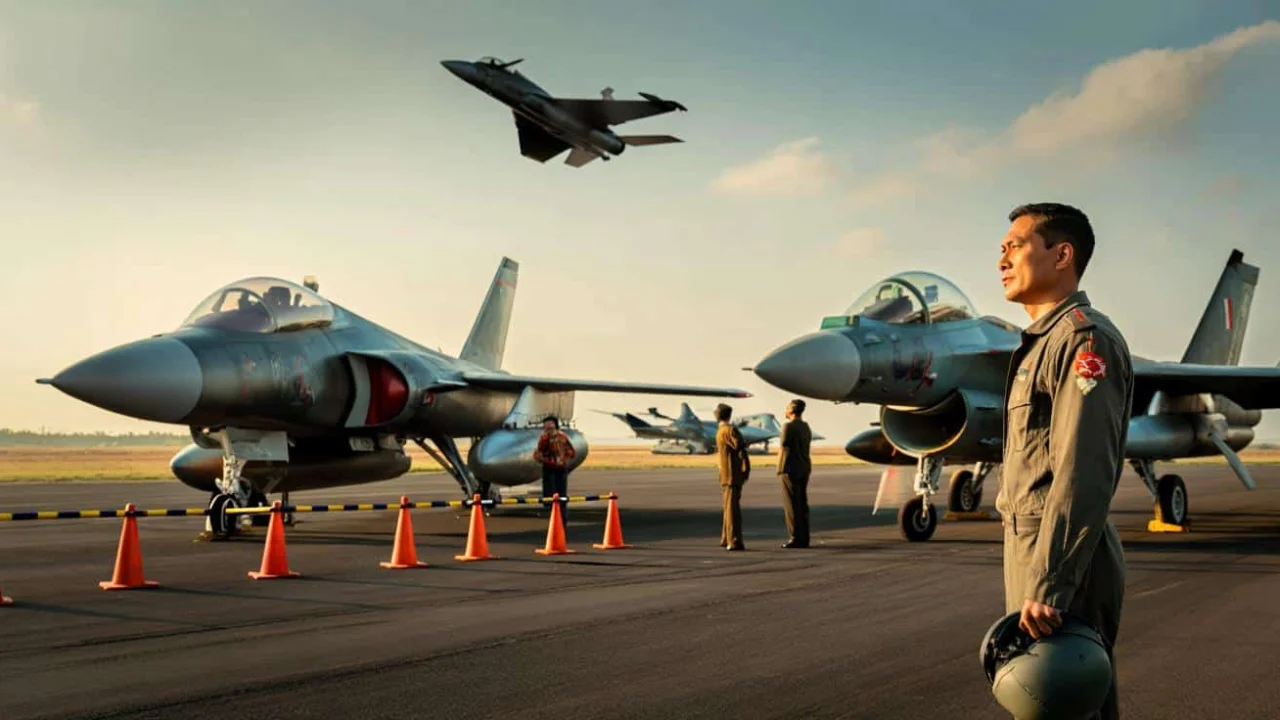
When Indonesian Air Force Colonel Rizki Utama walked through the quiet hangar at Halim Perdanakusuma Air Base last month, he counted just twelve operational F-16 fighters out of thirty on paper. The rest sat grounded, waiting for spare parts that might never come or struggling with maintenance issues that had plagued the fleet for years.

“We can’t defend our islands with aircraft that spend more time in hangars than in the sky,” he told his maintenance chief, echoing a frustration felt across Indonesia’s military leadership. This reality has pushed Jakarta into an ambitious modernization drive, but one potential partnership has hit an unexpected roadblock that reveals deeper tensions about military independence.
Turkey’s Kaan fighter program, once seen as a promising collaboration opportunity, now faces Indonesian demands that could reshape the entire deal. Jakarta wants absolute assurance: zero American components in any aircraft they might eventually purchase.
Why Indonesia Is Drawing Hard Lines on the Kaan Fighter
Indonesia’s relationship with American military hardware has been complicated for decades. The country still operates F-16 fighters, but access to upgrades and spare parts has often depended on Washington’s mood regarding Indonesian politics and human rights issues.
The Kaan fighter represents Turkey’s most ambitious aerospace project – a fifth-generation stealth fighter designed to compete with American F-35s and European alternatives. But like most modern fighter programs, the Kaan relies on international suppliers for critical components, including some American-made parts.

“Indonesia learned painful lessons from past arms embargoes,” explains Jakarta-based defense analyst Dr. Connie Rahakundini Bakrie. “They want military capabilities that can’t be switched off by foreign governments during political disagreements.”
Indonesian officials have reportedly told Turkish counterparts that any Kaan fighter variant destined for Indonesian service must be completely free of U.S. components before serious negotiations can begin. This demand stems from concerns that American export controls could potentially ground Indonesian aircraft during future diplomatic tensions.
Breaking Down Indonesia’s Fighter Requirements
Indonesia’s air force modernization plans reveal the scale of their challenge and why the Kaan fighter initially attracted interest:
- Current Fleet Status: Only 60 of 100 fighters regularly operational
- Geographic Challenge: Defending 17,000 islands across three time zones
- Aging Aircraft: Many platforms date from the 1980s and 1990s
- Maintenance Issues: Spare parts often restricted by political considerations

| Aircraft Type | Quantity | Origin | Operational Status |
|---|---|---|---|
| F-16C/D | 30 | United States | 40% available |
| Su-27/Su-30 | 16 | Russia | 70% available |
| BAE Hawk 200 | 20 | United Kingdom | 60% available |
| Rafale (ordered) | 42 | France | Delivery 2026-2030 |
The Rafale order from France represents Indonesia’s current solution – a Western fighter with fewer political restrictions. But Indonesian planners have expressed interest in diversifying suppliers even further, which made Turkey’s Kaan program initially attractive.
“Turkey promised a partnership model, not just a buyer-seller relationship,” notes former Indonesian Defense Ministry official Andi Widjajanto. “But partnership means nothing if the aircraft can be disabled by third-party component restrictions.”
What This Means for Turkey’s Kaan Program
Indonesia’s demands put Turkish aerospace company TUSAŞ in a difficult position. Removing all American components from the Kaan fighter would require significant redesign and alternative sourcing that could add years to development timelines and billions to costs.
Current Kaan prototypes incorporate various international components, including some American-made systems for engines, avionics, and materials. Replacing these elements with Turkish or third-country alternatives would essentially create a different aircraft variant specifically for markets concerned about U.S. export controls.
Turkey has experience navigating American export restrictions – they were kicked out of the F-35 program after purchasing Russian S-400 air defense systems. This experience may actually help them understand Indonesian concerns, but finding technical solutions remains challenging.
“Turkey could potentially source alternative components from European suppliers or develop indigenous replacements,” explains aerospace industry consultant James Hardy. “But this would significantly increase program complexity and costs.”
Other potential Kaan customers might share Indonesia’s concerns. Countries like Malaysia, Pakistan, or various African nations often face similar challenges with American export controls affecting their military equipment.
For Indonesia, the Kaan fighter represents just one option among several. Beyond the already-ordered Rafales, Jakarta has considered Korean KF-21 Boramae fighters, additional Russian aircraft, or even joint development programs with other nations.
The Indonesian approach reflects a broader trend among middle powers seeking military capabilities without political dependencies. Countries want weapons systems they can operate, maintain, and upgrade regardless of shifting diplomatic relationships.
“Modern air forces need reliable access to spare parts, upgrades, and technical support for 30-40 years,” explains retired Indonesian Air Force General Chappy Hakim. “Any supplier that can’t guarantee this isn’t really offering partnership.”
Turkey’s response to Indonesian demands could influence the entire Kaan program’s export potential. Success in creating a truly “sanction-proof” fighter variant might open doors to customers worldwide who share similar concerns about American export controls.
Meanwhile, Indonesia continues expanding its defense industrial partnerships with multiple countries, seeking technology transfers and local production capabilities that reduce foreign dependencies. Whether the Kaan fighter eventually fits into this strategy depends largely on Turkey’s willingness to meet Jakarta’s stringent component requirements.
FAQs
What is the Kaan fighter program?
Turkey’s Kaan is a fifth-generation stealth fighter aircraft designed to replace aging F-16s in Turkish service and compete in international markets.
Why does Indonesia want zero American components?
Indonesia has experienced military equipment restrictions during past political tensions with the United States and wants aircraft that can’t be affected by future export controls.
How many fighters does Indonesia currently operate?
Indonesia has about 100 fighters on paper, but only around 60 are regularly available for operations due to maintenance and spare parts issues.
What other fighter options is Indonesia considering?
Besides the already-ordered French Rafales, Indonesia has looked at Korean KF-21 fighters, additional Russian aircraft, and various partnership arrangements.
Could Turkey remove all American components from the Kaan?
Technically possible but would require significant redesign, alternative sourcing, and likely years of additional development time and costs.
How does this affect Turkey’s export plans for the Kaan?
Other countries might share Indonesia’s concerns about American components, so addressing this issue could actually expand the Kaan’s export potential globally.
About the Author
