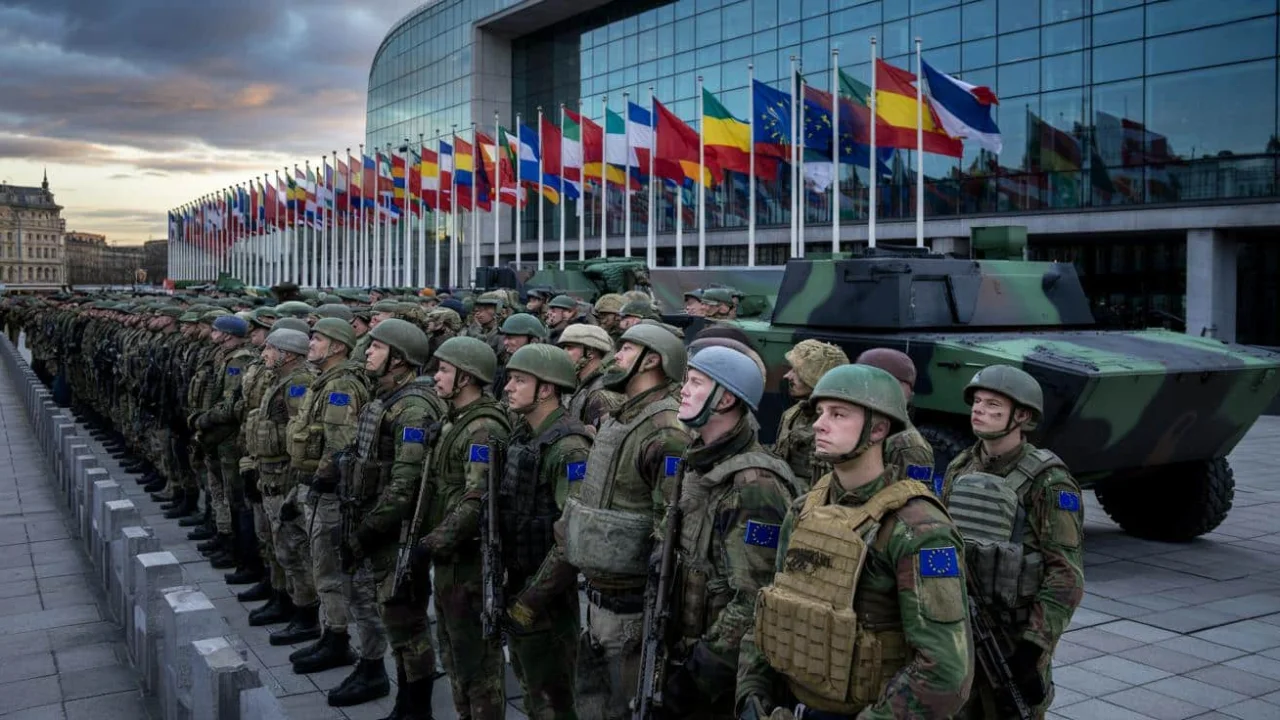
Maria Andersson was serving coffee to delegates at a security conference in the Swedish mountains when she overheard a conversation that made her pause. The European commissioner was talking about 100,000 soldiers – European soldiers – stationed across the continent. As a mother of two teenagers in Stockholm, Maria suddenly felt the weight of what was being discussed. This wasn’t just political theater. This was about her children’s future security.
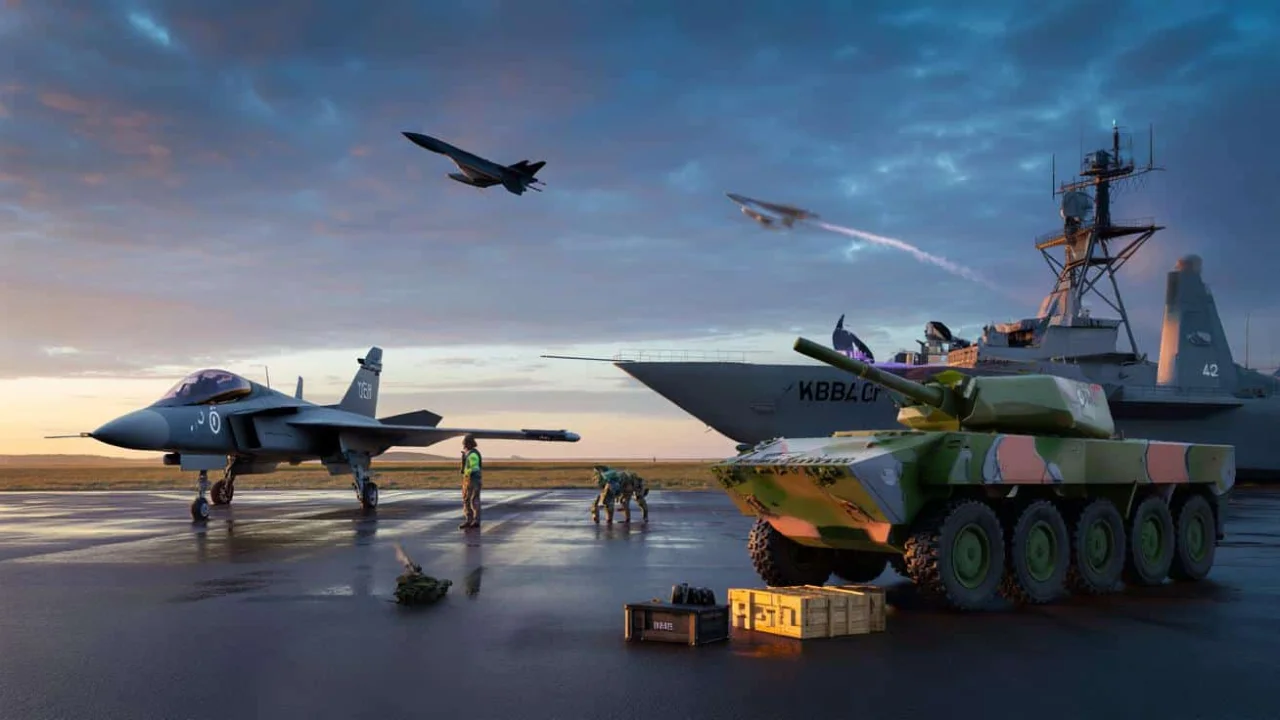
The coffee grew cold as delegates debated something that seemed both inevitable and impossible: a massive European armed force that could stand on its own if America ever looked away.
Commissioner Andrius Kubilius had just dropped a bombshell proposal that’s sending ripples through European capitals and military headquarters. His vision? A 100,000-strong European armed force that could match America’s current military presence on the continent.

Why Europe’s Defense Chief Thinks Big Numbers Matter Now
The timing of Kubilius’s announcement wasn’t coincidental. Speaking at the annual security conference in Sälen, Sweden, the EU’s defense commissioner painted a picture that many Europeans recognize but few want to face directly.
Russia continues grinding through its war in Ukraine with no signs of backing down. Meanwhile, American politicians from both parties are increasingly vocal about shifting military resources toward the Pacific to counter China. That leaves Europe in a potentially vulnerable position.
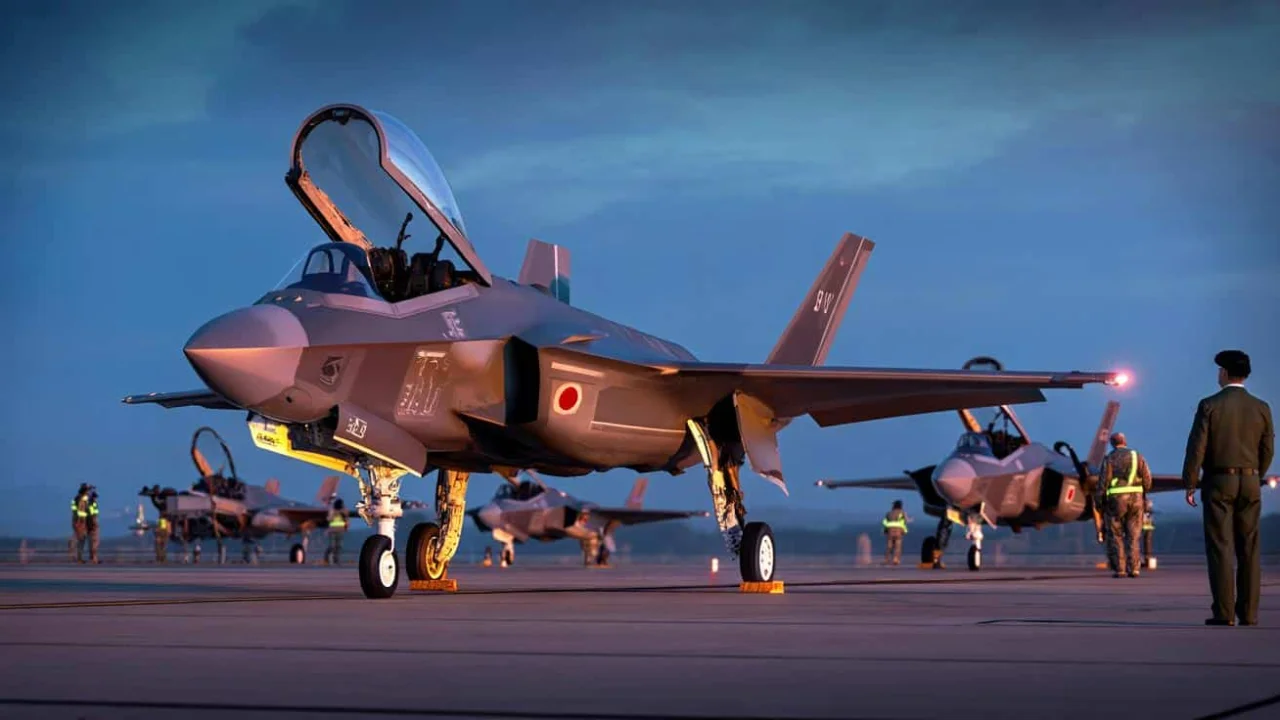
“We need to be honest about what we’re facing,” said a senior NATO official who requested anonymity. “The Americans have been carrying the heavy lifting for decades, but their strategic focus is changing.”
The proposed European armed force would essentially mirror the roughly 100,000 US troops currently stationed across European bases. Kubilius argues this isn’t about replacing American forces, but about creating a backup plan if Washington’s attention shifts eastward.

The logic is straightforward, even if the execution would be anything but simple. Europe has the population, economy, and industrial capacity to field such a force. What it lacks is the political framework and unified command structure.
Breaking Down the 100,000-Soldier Vision
Kubilius’s proposal isn’t just a round number thrown out for headlines. Military analysts have been quietly discussing similar figures for months, and the math reveals some interesting possibilities:
| Force Component | Proposed Size | Primary Role |
|---|---|---|
| Rapid Response Units | 25,000 | Crisis intervention, first response |
| Air Defense Systems | 20,000 | Protecting European airspace |
| Logistics & Support | 30,000 | Supply chains, medical, communications |
| Specialized Forces | 15,000 | Cyber warfare, intelligence, special ops |
| Training & Command | 10,000 | Leadership, coordination, development |
The proposed force structure would draw from existing national militaries rather than creating entirely new units. Countries would contribute personnel, equipment, and funding based on their economic capacity and strategic needs.
Key features of the European armed force proposal include:
- Unified command structure separate from NATO but complementary to it
- Rotating deployment across European borders and strategic locations
- Shared intelligence networks and communication systems
- Joint procurement of weapons and equipment to reduce costs
- Cross-training programs to ensure interoperability between national forces
- Rapid deployment capability within 72 hours of activation
“The beauty of this approach is that it builds on what we already have,” explained a former EU military planner. “We’re not starting from scratch – we’re creating better coordination and filling specific gaps.”
Funding represents the biggest immediate challenge. Preliminary estimates suggest the European armed force would require approximately €15-20 billion annually in additional defense spending across member states.
What This Means for Ordinary Europeans
For families like Maria’s in Stockholm, the implications stretch far beyond military strategy. A European armed force could fundamentally change how the continent thinks about security and sovereignty.
The most immediate impact would likely be economic. Defense spending would need to increase significantly across EU member states, potentially affecting other government priorities. However, supporters argue that increased European military production could create jobs and reduce dependence on American weapons systems.
Border security would also shift dramatically. Rather than relying primarily on national forces backed by American guarantees, European countries would have a dedicated continental force specifically designed for European threats and challenges.
“This isn’t about militarizing Europe,” stressed a diplomatic source in Brussels. “It’s about Europeans taking responsibility for European security.”
The proposal faces significant political obstacles. Several EU member states maintain strict neutrality policies, while others worry about the cost and complexity of such an undertaking. France has traditionally supported European military independence, while countries closer to Russia tend to prefer stronger NATO ties.
Perhaps most importantly, the European armed force would need to address the question that keeps military planners awake at night: what happens if America really does pivot to Asia and reduces its European commitment?
Current US military presence in Europe includes major bases in Germany, Italy, and the UK, with smaller facilities scattered across the continent. These forces provide not just military capability, but also a visible guarantee of American commitment to European security.
A European armed force would need to fill that psychological role as much as the military one. Citizens need to believe their security is guaranteed, and potential adversaries need to believe that crossing European borders would trigger a massive, unified response.
“The credibility factor is huge,” noted a security expert at the European Council on Foreign Relations. “A European force needs to be visibly capable and demonstrably ready to act.”
The proposal also raises questions about democracy and accountability. Who would control such a force? How would deployment decisions be made? What happens when member states disagree about threats or responses?
These aren’t just technical questions – they go to the heart of European identity and governance. The European armed force proposal essentially asks whether Europeans are ready to think of themselves as citizens of a continent rather than just individual countries.
The Road Ahead for European Defense
Kubilius’s proposal won’t become reality overnight, but it’s already shifting conversations in defense ministries across Europe. The war in Ukraine has demonstrated both Europe’s military limitations and its capacity for unity when faced with clear threats.
Several smaller steps could pave the way for a larger European armed force. Joint procurement programs are already expanding. Military exercises involving multiple European countries are becoming more frequent and sophisticated. Intelligence sharing has improved dramatically since 2022.
“We’re seeing the building blocks fall into place,” observed a defense analyst in Berlin. “The question is whether political leaders have the will to put them together.”
The proposal also represents a generational shift in European thinking. Younger political leaders, who didn’t live through the Cold War, are more willing to consider alternatives to traditional security arrangements.
For now, the European armed force remains an ambitious vision rather than operational reality. But in a world where security assumptions are rapidly changing, ambitious visions have a way of becoming urgent necessities.
FAQs
Would a European armed force replace NATO?
No, the proposal is designed to complement NATO, not replace it. The European force would handle European-specific threats and provide backup capability if US attention shifts to other regions.
How much would this cost European taxpayers?
Estimates suggest €15-20 billion annually across all EU member states, roughly equivalent to a 0.1-0.15% increase in GDP spending on defense for most countries.
Which countries would contribute the most troops?
Contributions would likely be proportional to population and economic capacity, meaning Germany, France, Italy, and Spain would provide the largest contingents.
Could neutral countries like Ireland or Austria participate?
The proposal would need to accommodate different levels of participation, allowing neutral countries to contribute in non-combat roles like logistics, medical support, or peacekeeping.
When could such a force become operational?
Military experts estimate it would take 5-7 years to fully establish and train a 100,000-strong European armed force, assuming political agreement could be reached within the next 2-3 years.
How would command decisions be made?
This remains one of the biggest unresolved questions. Options include rotating command among major powers, qualified majority voting in the EU Council, or creating a new European defense authority.
About the Author