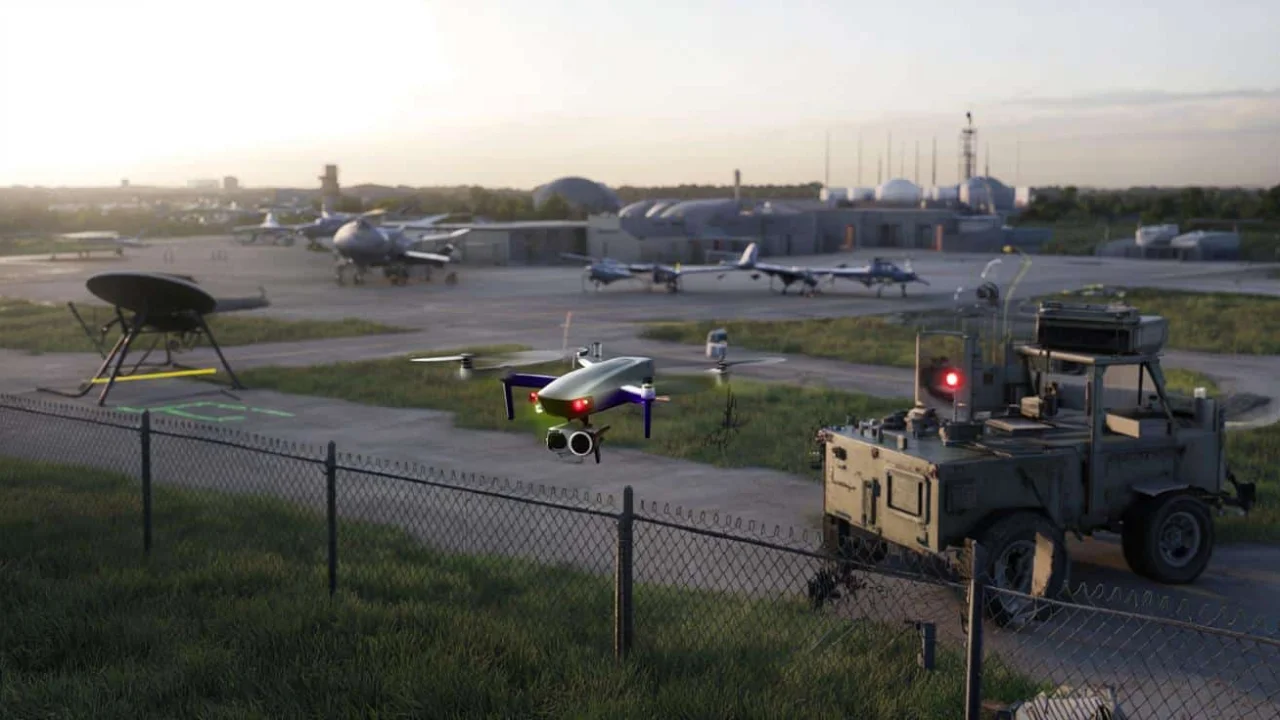
Last Tuesday morning, a jogger at Joint Base Lewis-McChord noticed something odd hovering above the tree line near the base perimeter. What looked like a small recreational drone was circling the installation’s communications tower, its camera clearly visible even from a distance. Within minutes, the aircraft vanished—not because its operator flew it away, but because base security had quietly taken it down before it could gather any sensitive information.
This scenario is becoming increasingly common across America’s military installations, but what’s changing isn’t just the frequency of drone encounters. It’s how our military commanders are now authorized to respond to them.
The Pentagon has quietly expanded counter-drone authorities for base commanders across the United States, giving them unprecedented power to neutralize suspicious aircraft before they even cross traditional security boundaries. This shift represents one of the most significant changes to domestic military security protocols in recent years.

What These New Pentagon Counter-Drone Powers Actually Mean
The updated guidance from Defense Secretary Pete Hegseth fundamentally rewrites how military installations protect themselves from aerial threats. Previously, base commanders were largely handcuffed by a “fence line” rule—they could only take action against drones once they physically crossed onto base property.
Now, Pentagon counter-drone authorities extend well beyond those traditional boundaries. Commanders can track, intercept, and disable suspicious aircraft while they’re still in civilian airspace, provided they coordinate with appropriate agencies and follow strict protocols.

“We’re no longer waiting for a potential threat to land in our backyard before we can act,” explains a senior defense official familiar with the new policies. “The expanded authorities give us the tools to be proactive rather than reactive.”
The Army-led Joint Interagency Task Force 401 (JIATF-401) has confirmed these sweeping changes, which reflect growing concern about small, commercially available drones being used for surveillance or more sinister purposes near sensitive military sites.

Breaking Down the New Counter-Drone Capabilities
The expanded Pentagon counter-drone authorities come with a comprehensive toolkit that base commanders can now deploy. Here’s what’s changed and what capabilities they now have access to:
- Extended Detection Zones: Radar and sensor systems can now actively monitor airspace extending several miles beyond base perimeters
- Preemptive Tracking: Suspicious aircraft can be electronically tagged and followed before they reach restricted zones
- Electronic Warfare Options: Signal jamming and GPS disruption can be deployed against threatening drones in civilian airspace
- Kinetic Interception: Physical takedown methods, including nets and projectiles, can be used outside base boundaries under specific circumstances
- Coordinated Response Protocols: Real-time communication with FAA, local law enforcement, and other agencies during counter-drone operations

| Authority Level | Previous Rules | New Guidelines |
|---|---|---|
| Detection Range | Base perimeter only | Up to 5 miles radius |
| Intervention Zone | Inside fence line | Extended restricted airspace |
| Response Methods | Limited defensive measures | Full counter-drone toolkit |
| Coordination Required | Internal only | Multi-agency approval process |
“The technology exists to identify and neutralize drone threats at much greater distances than we were previously authorized to use,” notes a former Air Force security specialist. “These new rules finally align our response capabilities with the actual threat landscape.”
The changes also redefine what constitutes a threat. Under the previous system, a drone had to exhibit clearly hostile behavior or carry obvious weapons to trigger a response. The new Pentagon counter-drone authorities allow commanders to treat persistent surveillance, unusual flight patterns, or proximity to sensitive areas as sufficient justification for intervention.
Who’s Really Affected by These Security Changes
The expansion of Pentagon counter-drone authorities will have far-reaching effects on multiple groups of people, many of whom may not even realize they’re now subject to enhanced military security measures.
Recreational drone operators represent the largest affected population. Anyone flying drones near military installations—even several miles away—now faces potential electronic interference or physical interception of their aircraft. The new rules mean that hobbyist pilots who previously operated legally in civilian airspace might suddenly find their drones disabled or confiscated.
Commercial operators, including photographers, real estate agents, and delivery services, must now navigate a more complex regulatory environment. Flight patterns that were routine six months ago might now trigger military response protocols.
“We’re seeing a significant shift in how close civilian operators can get to military facilities,” explains an aviation attorney specializing in drone regulations. “The legal landscape has essentially moved the ‘no-fly zone’ several miles outward from base boundaries.”
Local communities surrounding military installations will likely experience more visible security activities. Residents might notice increased helicopter patrols, electronic interference with civilian devices, or unexplained restrictions on previously accessible airspace.
Emergency responders and news media face new coordination requirements when operating near military bases. Police helicopters, medical aircraft, and news drones must now navigate additional approval processes and real-time communication protocols to avoid being mistaken for threats.
The changes also affect the broader aviation industry. Airports near military installations must coordinate more closely with base commanders, and civilian air traffic controllers need updated protocols for handling potential drone incidents that cross military security zones.
“The ripple effects extend well beyond just military security,” observes a former FAA administrator. “We’re essentially creating overlapping jurisdictions where civilian aviation rules intersect with expanded military authority.”
Privacy advocates worry about the surveillance implications. The enhanced detection capabilities mean military sensors are now actively monitoring civilian airspace on a much broader scale, potentially capturing data on lawful activities far from military installations.
For military families and personnel, the changes represent both increased protection and additional restrictions. While base security is enhanced, service members and their families may find their own recreational drone use more limited in areas where they live and work.
FAQs
Can the military now shoot down any drone near a base?
Not exactly. The Pentagon counter-drone authorities require coordination with other agencies and specific threat assessments before taking kinetic action against civilian aircraft.
How far from a military base is now considered a restricted zone?
The exact distances vary by installation, but the new authorities can extend several miles beyond traditional base boundaries depending on the security classification and operational requirements.
Will civilian drone operators be notified if their aircraft is disabled?
Military protocols include coordination with local law enforcement and FAA, but immediate notification to operators isn’t guaranteed during active security responses.
Do these rules apply to all military installations in the US?
The expanded Pentagon counter-drone authorities are being implemented across all major military installations, though specific capabilities may vary based on location and security requirements.
What happens if a civilian drone is accidentally intercepted?
The new protocols include post-incident review processes and coordination with civilian authorities to address cases where lawful drone operations are mistakenly targeted.
Are there any appeal processes for affected drone operators?
Operators whose aircraft are confiscated or damaged can work through military liaison offices and civilian legal channels, though the process may be complex and time-consuming.
About the Author