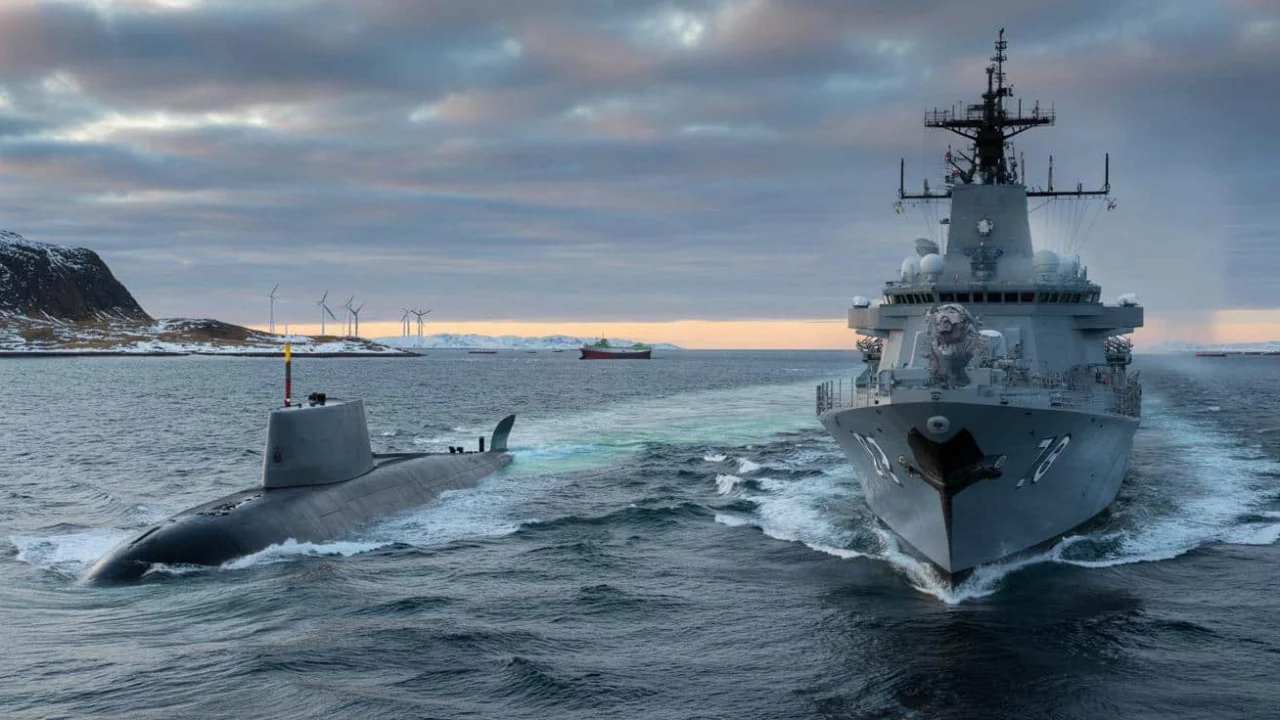
Admiral Erik Kristoffersen stood in his Oslo office last month, staring at two budget proposals spread across his mahogany desk. One showed Norway’s original plan for six gleaming Type 26 frigates patrolling Arctic waters. The other showed a more modest fleet of four ships—still formidable, but a clear step back from initial ambitions.
The numbers didn’t lie. Every additional frigate meant fewer resources for other critical defense projects, and Norway’s military planners were facing an uncomfortable truth about the limits of even an oil-rich nation’s defense budget.
This quiet drama playing out in government offices across Oslo reflects a broader challenge facing NATO allies: balancing ambitious military modernization plans with financial reality, especially when threats from Russia demand urgent attention on multiple fronts.
The £8 billion deal that’s shrinking before it starts
When Norway announced its selection of BAE Systems’ Type 26 frigates in August, defense officials spoke confidently about ordering five to six of these advanced warships. The deal, worth approximately €8.5 billion, represented one of Britain’s largest-ever naval export contracts.
“We were looking at a flagship partnership that would strengthen both our navies and NATO’s northern defenses,” said a senior Norwegian defense official who requested anonymity. “The Type 26 frigates offered exactly the anti-submarine capabilities we need to counter Russian naval activity in our waters.”
Yet barely six months later, that enthusiasm is being tempered by budget realities. Norway’s defense spending, while substantial, faces competing demands from multiple urgent modernization programs. The country is simultaneously investing billions in new German submarines, updating its air defense systems, and strengthening Arctic infrastructure.
Behind closed doors, Norwegian naval planners are now seriously discussing whether they can afford more than four Type 26 frigates without compromising other essential military capabilities. Some defense analysts suggest the final order could drop as low as three ships if budget pressures intensify.
What’s driving Norway’s second thoughts
The pressure to scale back Norway’s Type 26 frigate order stems from several converging factors that highlight the complex balancing act facing modern defense planning:
- Submarine priority: Norway’s commitment to new German U-boats is consuming a larger portion of the naval budget than initially projected
- Arctic infrastructure: Increased Russian activity has forced Norway to accelerate investments in northern radar systems and ports
- Personnel constraints: Operating six advanced frigates would require significant crew expansion that Norway struggles to achieve
- Maintenance costs: Long-term operational expenses for Type 26 frigates are proving higher than early estimates suggested
The financial picture becomes clearer when examining Norway’s current defense commitments:
| Defense Program | Estimated Cost | Timeline |
|---|---|---|
| Type 26 Frigates (5-6 ships) | €8.5 billion | 2030-2035 |
| German Submarines (4 ships) | €4.2 billion | 2029-2032 |
| Arctic Infrastructure | €2.1 billion | 2025-2030 |
| Air Defense Systems | €1.8 billion | 2026-2029 |
“When you add up all these programs, something has to give,” explains Dr. Sarah Mitchell, a naval procurement specialist at the International Institute for Strategic Studies. “Norway’s defense budget is substantial, but it’s not unlimited.”
The timing couldn’t be more challenging for BAE Systems, which has positioned the Type 26 frigate as a cornerstone of its international expansion strategy. The company has already secured orders from Australia and Canada, with Norway representing a crucial third customer that would help establish the design as a global standard.
Real consequences for NATO’s northern strategy
A reduced Norwegian order for Type 26 frigates carries implications far beyond corporate balance sheets or national procurement programs. The ships were intended to play a vital role in NATO’s strategy for defending the Arctic and North Atlantic against Russian submarine threats.
Norway’s frigates patrol some of the world’s most strategically important waters, including the gap between Greenland, Iceland, and the UK that Russian submarines must traverse to reach the Atlantic. Fewer Norwegian frigates could mean reduced coverage of these critical sea lanes.
“Every Type 26 frigate Norway doesn’t buy is one less platform available for tracking Russian submarines,” warns Admiral James Patterson, former head of NATO’s submarine warfare division. “In a region where underwater threats are growing, that’s a significant capability gap.”
The potential reduction also affects Britain’s broader defense industrial strategy. The UK government has invested heavily in promoting the Type 26 design internationally, viewing export success as essential for maintaining domestic shipbuilding capabilities and reducing per-unit costs for the Royal Navy.
For Norwegian taxpayers, the debate reflects familiar tensions between security needs and fiscal responsibility. Opinion polls show strong public support for robust defense spending, but also skepticism about large military contracts that don’t deliver immediate, visible benefits.
Norwegian officials stress that no final decisions have been made, and the country remains committed to acquiring Type 26 frigates. However, the exact number will depend on ongoing budget negotiations and parliamentary approval processes that extend well into 2025.
“We’re still very much partners with BAE Systems on this project,” said Defense Minister Bjørn Arild Gram during a recent parliamentary hearing. “But we have a responsibility to ensure every defense investment serves Norway’s long-term security interests within sustainable financial limits.”
The resolution of Norway’s Type 26 frigate order will likely set important precedents for how middle-power NATO allies balance ambitious military modernization plans with budget constraints in an era of heightened security threats.
FAQs
Why is Norway considering cutting its Type 26 frigate order?
Budget pressures from competing defense programs, particularly new German submarines and Arctic infrastructure investments, are forcing Norway to reassess how many frigates it can afford.
What are Type 26 frigates designed to do?
These advanced warships specialize in anti-submarine warfare and are designed to track and counter underwater threats, particularly Russian submarines operating in Arctic and North Atlantic waters.
How much was Norway’s original frigate deal worth?
The initial agreement with BAE Systems was valued at approximately €8.5 billion for five to six Type 26 frigates, representing one of Britain’s largest naval export contracts.
When would Norway receive its new frigates?
Deliveries were scheduled to begin around 2030 and continue through 2035, depending on the final order size and production schedule.
Which other countries have ordered Type 26 frigates?
Australia and Canada have both placed orders for Type 26 frigates, with Australia ordering nine ships and Canada planning up to 15 vessels based on the British design.
Could Norway cancel the entire frigate program?
While officials stress they remain committed to acquiring Type 26 frigates, the final number could potentially drop to as few as three or four ships depending on budget constraints.
About the Author