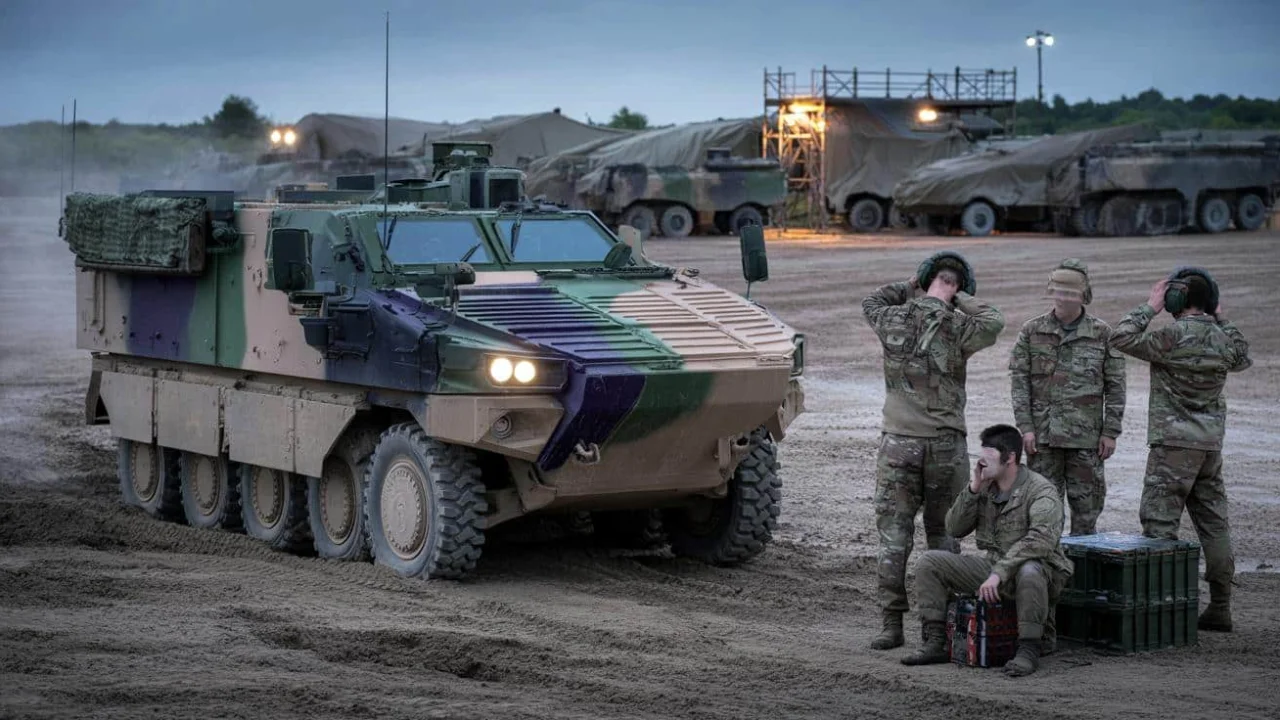
Lieutenant Sarah Mitchell still remembers the exact moment she knew something was seriously wrong. The Ajax armoured vehicle she was testing lurched forward during routine maneuvers, and suddenly her vision blurred. Her head pounded. The vibrations from the 42-tonne machine were so severe that she couldn’t focus on her instruments.

That was three years ago. Sarah now suffers from chronic headaches and hearing problems. She’s one of dozens of British soldiers whose health has been damaged by what military insiders call the army’s greatest shame—a €7 billion disaster that shows no signs of ending.
The Ajax programme was supposed to be Britain’s answer to modern warfare. Instead, it’s become a cautionary tale of military procurement gone spectacularly wrong, leaving taxpayers with a massive bill and soldiers with a vehicle they literally cannot use safely.

When cutting-edge technology becomes a nightmare
Back in 2010, the British Army’s vision seemed perfectly reasonable. Replace aging Cold War-era reconnaissance vehicles with something modern, connected, and deadly. The Ajax family of armoured vehicles would drag British cavalry units into the digital age with advanced sensors, networked communications, and enough firepower to handle any threat.
General Dynamics won the contract with their ASCOD platform—a proven design that had worked well for other armies. But then the problems started. The Ministry of Defence kept adding requirements. More armor. Better protection. Heavier weapons. Digital systems that hadn’t been properly tested.

“What we did was take a 19-tonne chassis and ask it to carry 43 tonnes of equipment,” explains former military engineer David Thompson. “Anyone with basic engineering knowledge could have predicted the disaster that followed.”
The weight increases created a cascade of problems. The suspension couldn’t handle the load. The engine struggled. Most critically, the vehicle began producing vibrations so severe they could injure the crew inside.

By 2021, dozens of soldiers were reporting health issues after Ajax trials. Hearing damage, headaches, nausea, and back injuries became common. The programme was suspended while investigations began, but the damage—both physical and financial—was already done.
The staggering cost of military failure
The numbers behind this British Army shame story are eye-watering. Here’s how the costs have spiraled:

| Year | Cost (Billions) | Status |
|---|---|---|
| 2010 | €3.2 | Original contract signed |
| 2015 | €4.8 | First major cost increase |
| 2020 | €6.1 | Development delays emerge |
| 2024 | €7.2 | Current estimated cost |
But the financial damage tells only part of the story. Consider what else has gone wrong:
- Over 300 Ajax vehicles built but only a handful can be used safely
- British cavalry units still relying on 1970s equipment
- Dozens of soldiers suffering long-term health problems
- Multiple parliamentary inquiries launched
- General Dynamics facing legal action from the MoD
- Britain’s reputation as a reliable defense partner damaged
“This isn’t just about wasted money,” says former Defense Secretary Michael Harper. “We’ve compromised our military readiness and hurt our own people. That’s unforgivable.”
The technical problems run deep. Independent testing revealed that Ajax produces vibrations exceeding safe limits by up to 40%. The gun can’t fire accurately while moving. Electronic systems fail regularly. The air conditioning can’t cope with the heat generated by all the equipment crammed inside.
Real consequences for soldiers and taxpayers
The human cost of this military procurement disaster extends far beyond injured test crews. British Army units that should have been equipped with modern Ajax vehicles are still using Scimitar reconnaissance tanks—machines designed in the 1960s and increasingly obsolete on modern battlefields.
This capability gap has real strategic implications. While other NATO allies field advanced reconnaissance platforms, British units struggle with equipment that lacks modern sensors, digital communications, and adequate protection against current threats.
“Our soldiers are being asked to do 21st-century jobs with 20th-century tools,” warns military analyst Dr. Emma Roberts. “That puts lives at risk and undermines our effectiveness as an ally.”
For taxpayers, the Ajax programme represents everything wrong with defense procurement. The original €3.2 billion contract has more than doubled, with no clear timeline for delivering working vehicles. Some estimates suggest the final bill could reach €10 billion if current problems aren’t resolved soon.
Meanwhile, soldiers continue to suffer health consequences. Legal claims are mounting from personnel who were exposed to excessive vibrations during testing. The long-term medical costs alone could run into hundreds of millions.
The political fallout has been severe. Multiple defense ministers have faced parliamentary grilling. The National Audit Office has launched detailed investigations. Some MPs are calling for criminal charges against officials who allegedly ignored safety warnings.
“Someone needs to be held accountable for this mess,” argues Conservative MP James Wilson. “Seven billion euros of taxpayer money has been wasted, and our soldiers have been used as guinea pigs.”
General Dynamics maintains that the vehicle can be fixed with modifications, but skeptics question whether the fundamental design flaws can be overcome without starting from scratch. That would mean writing off the entire €7 billion investment and beginning again—a politically impossible decision that would represent the final chapter in this British Army shame saga.
For now, the programme limps forward with no clear resolution in sight. Soldiers wait for equipment they can actually use. Taxpayers watch their money disappear into an engineering black hole. And military planners grapple with capability gaps that grow more dangerous every year.
FAQs
What exactly is the Ajax vehicle supposed to do?
Ajax is designed to be a modern reconnaissance vehicle that can scout enemy positions, gather intelligence, and provide fire support to infantry units.
Why can’t soldiers use the Ajax vehicles that have been built?
The vehicles produce dangerous vibrations that can cause hearing damage, headaches, and other health problems for crew members inside.
How much has the Ajax programme cost so far?
The current cost is estimated at €7.2 billion, more than double the original €3.2 billion contract price from 2010.
Are other countries having similar problems with Ajax?
The underlying ASCOD platform works fine for other armies, but Britain’s version has been heavily modified with additional weight and systems that created the problems.
Could the entire programme be cancelled?
Cancellation would mean losing the entire €7 billion investment, which makes it politically very difficult despite the ongoing problems.
When might Ajax actually be ready for service?
There’s no clear timeline, as fundamental engineering problems still need to be solved before the vehicles can be used safely by British troops.
About the Author