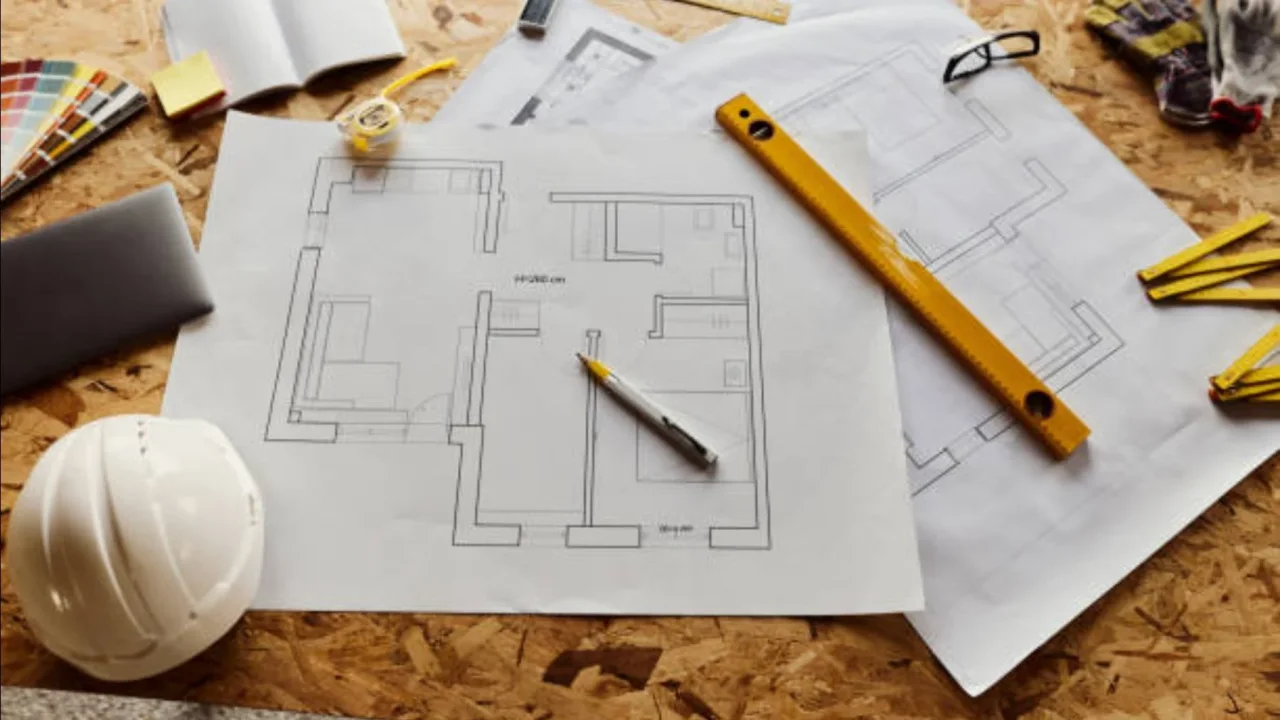
Picture this: you’re sitting in a cramped Parisian apartment in 1944, surrounded by the chaos of a city just emerging from Nazi occupation. Outside, American trucks rumble past while French citizens slowly rebuild their lives. But inside, an elderly engineer named Victor-Barthélemy Jacquet hunches over his drawing board, sketching something that would make even the wildest military minds pause.
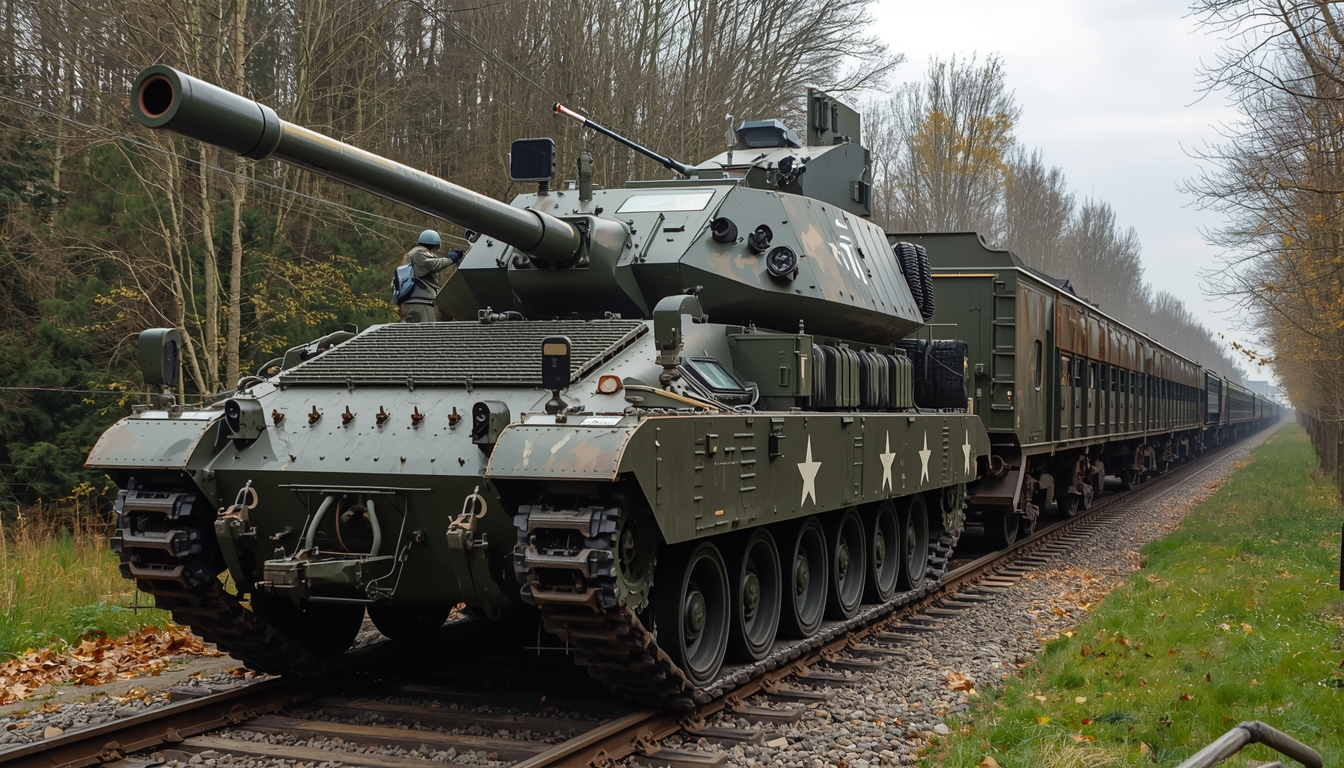
While his neighbors worry about finding their next meal, Jacquet is designing a 60-ton monster that defies every rule of warfare. His creation isn’t just another tank or armoured vehicle. It’s something far stranger—an armoured assault train that could theoretically crawl over mountains, split apart to flank enemies, and rain destruction from multiple angles simultaneously.
Most people would call it impossible. Jacquet called it the future of combat, and in July 1944, he quietly filed a patent that would become one of history’s most audacious military fantasies.
The Mind Behind History’s Strangest War Machine
Victor-Barthélemy Jacquet wasn’t your typical weapons designer. Born in 1883 in the small town of Montbrison, he lived through both world wars and witnessed the dramatic evolution of military technology. By the time he conceived his armoured assault train, he was 61 years old—an age when most engineers settle into comfortable retirement.
But Jacquet’s mind was anything but settled. Patent records reveal a man obsessed with innovation, filing multiple technical patents throughout the 1920s and 1930s. His background suggests he understood both mechanical engineering and military needs, having served during World War I when trench warfare demanded creative solutions.
“Jacquet represented that generation of inventors who saw technology as the answer to warfare’s deadliest problems,” explains military historian Dr. Sarah Mitchell. “He lived through the horror of static trench warfare and wanted to create something that could break through any defensive line.”
The armoured assault train emerged from this mindset. Jacquet envisioned a segmented combat system that combined the firepower of multiple tanks with the flexibility of a railway convoy. His patent, FR992901, describes a machine that could operate as one cohesive unit or split into independent fighting vehicles as battlefield conditions demanded.
Breaking Down the Beast: What Made This Design So Revolutionary
Jacquet’s armoured assault train wasn’t just big—it was brilliantly complex. The patent reveals a modular system that challenged every assumption about how armoured vehicles should work.
| Component | Weight | Primary Function | Special Features |
|---|---|---|---|
| Command Module | 15 tons | Communications & Control | 360-degree observation deck |
| Main Gun Car | 20 tons | Heavy Artillery | Rotating turret with 75mm cannon |
| Support Cars (x2) | 12 tons each | Secondary weapons & supplies | Machine gun mounts, ammunition storage |
| Reconnaissance Car | 8 tons | Scouting & flanking | High speed, minimal armor |
The genius lay in the connection system. Each car could detach and operate independently, allowing the armoured assault train to surround enemies, scout multiple routes simultaneously, or adapt to terrain that would trap conventional tanks.
Key innovations included:
- Flexible coupling systems that maintained communication between separated cars
- Independent track systems designed to handle steep grades and rough terrain
- Modular armor plating that could be adjusted based on mission requirements
- Multi-directional firing capabilities allowing simultaneous engagement of multiple targets
- Self-sufficient logistics with integrated fuel and ammunition supply
“What Jacquet proposed was essentially a mobile fortress that could transform into a coordinated attack squadron,” notes weapons analyst Robert Chen. “The concept was decades ahead of its time, anticipating ideas that wouldn’t appear in mainstream military thinking until the 1960s.”
Why This Revolutionary Weapon Never Made It to Battle
Despite its innovative design, Jacquet’s armoured assault train faced insurmountable obstacles that doomed it to remain forever on paper. The timing couldn’t have been worse—or perhaps more telling about the gap between visionary thinking and practical reality.
France in 1944 was in no position to build experimental super-weapons. The country’s industrial capacity had been devastated by four years of occupation, and existing resources were desperately needed for reconstruction. Even if the French military had embraced Jacquet’s vision, the engineering challenges were staggering.
The technical hurdles alone were enough to kill the project:
- The coupling system required precision engineering beyond 1940s capabilities
- Communication between separated cars would have relied on vulnerable radio links
- The 60-ton total weight exceeded the capacity of most European bridges and roads
- Maintenance and repair would have required specialized equipment and training
- Fuel consumption would have been enormous, limiting operational range
More fundamentally, military doctrine was moving away from heavy, complex systems toward faster, more flexible approaches. While Jacquet dreamed of unstoppable assault trains, actual battlefields were proving that speed and adaptability mattered more than raw firepower and armor.
“The armoured assault train represents the last gasp of the ‘bigger is better’ mentality in weapons design,” observes military technology expert Dr. Michael Torres. “By 1944, successful armies were learning that multiple smaller, coordinated units often outperformed single large systems.”
There were also practical considerations that Jacquet’s patent didn’t fully address. How would the train navigate urban environments? What happened if one car broke down in enemy territory? How would crews communicate effectively during the chaos of combat? These questions suggest that even if built, the armoured assault train might have been more liability than asset.
Perhaps most tellingly, no military organization showed serious interest in the concept. Despite filing his patent in multiple countries, Jacquet never found backers willing to invest in turning his vision into reality. The post-war world was moving toward jet aircraft, guided missiles, and eventually nuclear weapons—technologies that made even the most impressive ground vehicles seem obsolete.
Jacquet died in Paris in 1947, just three years after filing his most ambitious patent. His armoured assault train remains a fascinating glimpse into an alternative history of warfare—one where battles might have been fought by mechanical monsters crawling across landscapes like something from a science fiction novel.
Today, military historians study Jacquet’s design not as a missed opportunity, but as a perfect example of how individual brilliance can outpace technological and practical limitations. His armoured assault train stands as proof that the craziest ideas in military history often come from the most unexpected places—and that sometimes, being too far ahead of your time means never being built at all.
FAQs
How big was Jacquet’s armoured assault train supposed to be?
The complete system would have weighed about 60 tons and stretched roughly 80 feet when all cars were connected, making it one of the largest armoured vehicles ever proposed.
Could the train actually separate into independent vehicles during combat?
According to the patent, yes—each car was designed with its own tracks and could operate independently while maintaining radio communication with other sections.
Why didn’t any military build this weapon?
The technical challenges were enormous, manufacturing costs would have been prohibitive, and by 1944 military doctrine was moving toward smaller, faster, more flexible fighting vehicles.
Did Victor-Barthélemy Jacquet invent anything else?
Patent records show he filed several other technical patents between the 1920s and 1940s, though none as ambitious or well-documented as his armoured assault train.
Are there any modern weapons similar to Jacquet’s concept?
Some modern military systems use modular designs, but nothing quite matches the scale and ambition of the armoured assault train—most current doctrine favors networked smaller units over single massive platforms.
What happened to Jacquet’s original patent documents?
Patent FR992901 is preserved in French national archives and remains one of the most unusual military patents ever filed, offering detailed technical drawings of this remarkable weapon that never was.
About the Author