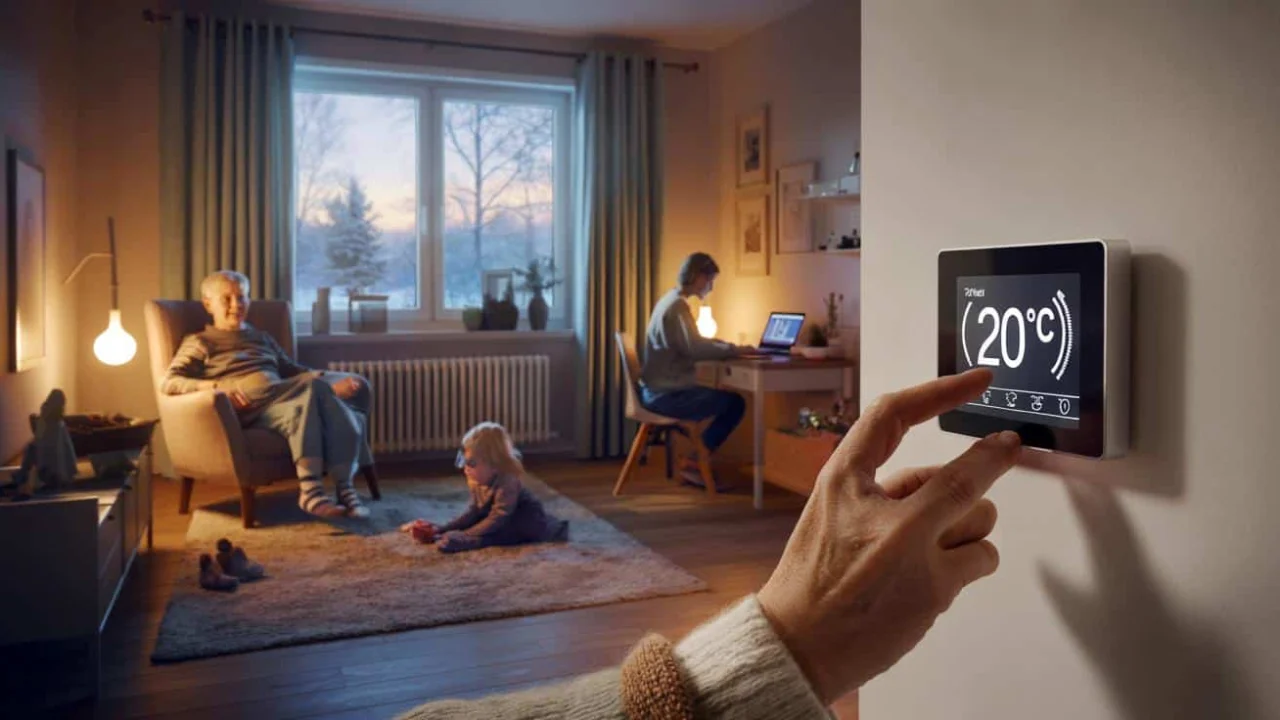
Sarah stares at the thermostat display showing 19°C, her fingers still numb from typing emails all morning. Her toddler has been cranky and clingy, refusing to leave her side on the cold kitchen tiles. Her husband works from the dining table wrapped in a thick hoodie, occasionally blowing on his hands between video calls.

The heating bill from last month sits unopened on the counter, but the cold creeping through the windows feels more urgent than any number on paper. She touches the thermostat again, hesitating. Everyone says 19°C is the responsible choice – for the planet, for their wallet, for being a good citizen.
But when did being responsible start feeling so uncomfortable? When did following the rules begin to feel like punishment for simply wanting to feel warm in your own home?

The 19°C rule was born from crisis, not comfort
That magic number didn’t come from scientists studying human comfort or health researchers analyzing what our bodies actually need. It emerged during the 1970s oil crisis when governments desperately needed to cut energy consumption fast.
Back then, most people lived differently. Houses leaked heat through single-pane windows and uninsulated walls. Everyone owned thick wool jumpers and expected to layer up indoors during winter. Working from home meant the occasional sick day, not months of Zoom calls from your kitchen table.

“The 19°C recommendation was essentially emergency rationing made permanent,” explains thermal comfort researcher Dr. James Mitchell. “We’re still following crisis-era advice fifty years later, even though our homes, lifestyles, and understanding of health have completely transformed.”
Modern heating temperature recommendations need to account for how we actually live now. Remote workers spend eight hours sitting still at desks. Young families have barefoot toddlers crawling on floors. Elderly residents may struggle to regulate their body temperature as effectively as they once did.

What heating experts actually recommend today
Current research shows that optimal indoor temperatures vary much more than that old blanket rule suggested. Your ideal heating temperature depends on your activity level, age, health, and even the specific room you’re in.
Here’s what thermal comfort specialists recommend for different situations:

| Situation | Recommended Temperature | Why This Range |
|---|---|---|
| Office/study work | 20-22°C | Sedentary activity requires warmer air to maintain comfort |
| Living areas (active) | 19-21°C | Movement helps maintain body warmth |
| Bedrooms | 16-19°C | Lower temperatures promote better sleep quality |
| Bathrooms | 22-24°C | High humidity and exposed skin need extra warmth |
| Homes with elderly residents | 21-23°C | Age-related changes affect temperature regulation |
The key insight from recent heating temperature recommendations isn’t just about the numbers – it’s about flexibility. “We’ve learned that thermal comfort is highly personal,” says building performance consultant Emma Rodriguez. “What matters is finding the temperature where people feel comfortable and healthy, not hitting an arbitrary target.”
Smart heating systems now allow room-by-room control, meaning you can heat your home office to 22°C while keeping unused bedrooms at 16°C. This targeted approach often uses less energy overall than maintaining 19°C everywhere.
- Zone heating based on room usage patterns
- Higher temperatures for sedentary activities like desk work
- Lower temperatures in bedrooms for better sleep
- Adjustments for household members’ ages and health needs
- Considering insulation quality and air circulation
How the cold affects your family’s daily life
Living in an inadequately heated home doesn’t just mean reaching for extra sweaters. The effects ripple through every aspect of daily life in ways we’re only beginning to understand.
Children struggle to concentrate on homework when they’re shivering. Adults working from home report decreased productivity, more sick days, and higher stress levels when indoor temperatures drop below their comfort zone. Elderly family members face genuine health risks when homes stay too cold for extended periods.
“I see families where everyone has retreated to one warm room because they can’t afford to heat the whole house properly,” reports social worker Michael Chen. “Kids doing homework in parents’ bedrooms, entire families sleeping in the living room. The 19°C rule sounds reasonable until you see how people actually live with it.”
The mental health impact often gets overlooked. Constant cold creates low-level stress that builds over months. People report feeling trapped, irritable, and disconnected from parts of their own homes. Relationships suffer when every conversation about comfort becomes a negotiation about money and responsibility.
Modern heating temperature recommendations acknowledge these realities. They recognize that a few degrees can mean the difference between a home that nurtures and one that merely shelters.
The financial argument for flexible heating often surprises people. Many households spend similar amounts on energy while achieving much better comfort by heating strategically rather than uniformly. A warm office and cold unused bedrooms can cost less than keeping everything at a mediocre 19°C.
“The most efficient heating system is one people actually want to use,” notes energy consultant Lisa Park. “When families feel comfortable at home, they’re less likely to waste energy on quick fixes like space heaters or leaving systems running inefficiently.”
FAQs
Is it expensive to heat above 19°C?
Not necessarily. Strategic heating that focuses on occupied rooms often costs the same or less than uniform heating at 19°C throughout the house.
What temperature is too cold for children?
Most pediatric guidelines suggest keeping children’s living spaces at 20-22°C, as kids have higher metabolic rates and lose body heat faster than adults.
Can I heat different rooms to different temperatures?
Yes, and it’s often more efficient. Modern thermostats and zoning systems let you customize temperatures room by room based on usage and needs.
How do I know if my home is too cold for health?
Signs include persistent muscle tension, frequent colds, poor sleep, difficulty concentrating, and feeling unable to warm up even with extra clothing.
What’s the best temperature for working from home?
Most productivity research suggests 20-22°C for office work, since sedentary activities require warmer air temperatures for comfort and concentration.
Are there health risks from keeping homes at 19°C?
For healthy adults, 19°C is generally safe but may not be optimal for comfort or productivity. Vulnerable populations like elderly or very young family members may need warmer temperatures.
About the Author