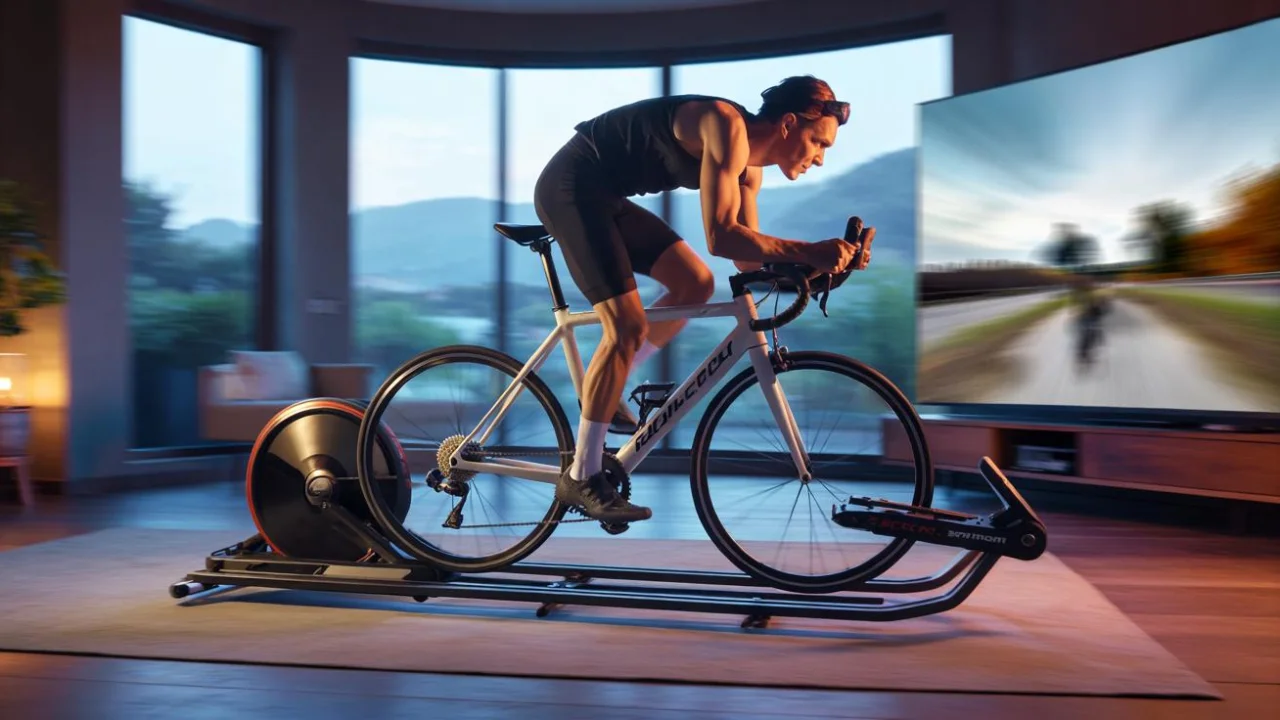
Sarah’s legs were burning 45 minutes into her indoor training session when something strange happened. Her bike started swaying slightly to the left, then right, mimicking the natural movement she’d feel climbing a real hill. For a moment, she forgot she was in her spare bedroom.

This wasn’t her old static trainer that left her feeling like a caged hamster. This was her new sliding trainer – a €1600 investment that promised to revolutionize indoor cycling. As someone who’d suffered through countless rigid turbo sessions, watching Netflix while her knees screamed in protest, Sarah was skeptical.
But three months later, she’s convinced this weird, expensive contraption might be the future of home fitness. And she’s not alone.

The indoor cycling revolution is getting weird
Indoor cycling used to be simple: clamp your bike to a trainer, pedal hard, and suffer in silence. The bike stayed perfectly still while you sweated buckets and counted down the minutes until freedom.
Now, the latest sliding trainer systems are flipping that script entirely. Instead of keeping your bike locked in place, these premium platforms let it move, sway, and slide naturally as you ride. The result? An indoor experience that feels surprisingly close to actual road cycling.

“The traditional trainer setup creates artificial stress points in your body,” explains biomechanics expert Dr. Michael Chen. “When you can’t move naturally, you develop compensations that can lead to discomfort and injury over time.”
These new sliding systems typically cost between €1200 and €1800, putting them in premium territory. But for serious cyclists who log hundreds of indoor hours each winter, the investment might make sense.

Breaking down the sliding trainer technology
What exactly are you getting for €1600? Most sliding trainer systems combine several key technologies:
- Lateral movement platforms – Allow side-to-side swaying up to 10-15 degrees
- Fore-aft sliding rails – Enable forward and backward movement during sprints and climbs
- Smart resistance units – Maintain all the power measurement and virtual world compatibility of premium trainers
- Adjustable dampening systems – Let you control how much movement feels natural vs. distracting
- Safety mechanisms – Prevent excessive movement that could cause crashes

The top models also integrate with popular cycling apps like Zwift and TrainerRoad, automatically adjusting movement patterns based on virtual terrain. Climbing a steep mountain pass triggers more lateral sway, while sprint intervals allow aggressive rocking motion.
| Feature | Traditional Trainer | Sliding Trainer |
|---|---|---|
| Side-to-side movement | None | Up to 15 degrees |
| Forward/back sliding | None | 2-6 inches |
| Price range | €300-800 | €1200-1800 |
| Setup complexity | Simple | Moderate to complex |
| Noise level | Low | Moderate |
“The first time you ride one of these, it feels almost unsettling,” admits professional cycling coach Emma Rodriguez. “Your brain expects the bike to be locked down, so when it starts moving naturally, there’s a brief moment of panic. Then it clicks, and you wonder how you ever trained without it.”
Who’s actually buying these expensive contraptions?
The sliding trainer market isn’t targeting casual cyclists who hop on a bike once a week. These systems appeal to three main groups:
Serious winter trainers represent the biggest market segment. These are cyclists who log 8-12 hours per week indoors during cold months. For them, the comfort and biomechanical benefits justify the premium price.
Injury-prone riders make up another key demographic. Traditional trainers can exacerbate knee, hip, and lower back issues by forcing unnatural body positions. The natural movement of sliding systems often reduces these problems.
Professional and semi-professional athletes are early adopters who need the most realistic training possible. When your livelihood depends on cycling performance, €1600 for better indoor training becomes a business expense.
Mark Thompson, a 42-year-old software engineer from Manchester, represents the typical buyer: “I was doing 10-15 hours per week on my old trainer during lockdown and developed serious knee pain. My physio suggested the locked position was creating problems. Three months on a sliding trainer, and the pain’s gone.”
But the technology isn’t without skeptics. Some cycling purists argue that no indoor setup can truly replicate outdoor riding, regardless of how much it moves.
“At some point, you’re just creating expensive solutions to problems that going outside would solve for free,” notes cycling journalist Peter Walsh. “But I understand the appeal for people in harsh climates or urban areas without safe riding options.”
The sliding trainer trend also raises practical questions. These systems require more floor space than traditional trainers, generate more noise, and need careful calibration to prevent motion sickness or crashes.
Safety concerns aren’t theoretical. Several users have reported falling when the sliding motion felt too aggressive or unpredictable. Most manufacturers now include detailed setup guides and recommend starting with minimal movement settings.
Despite these challenges, sales of sliding trainer systems have grown 340% in the past two years, according to industry data. The technology is clearly resonating with indoor cycling enthusiasts willing to pay premium prices for a better experience.
As the technology matures, prices may come down and features could expand. Some manufacturers are already experimenting with virtual reality integration and AI-powered movement algorithms that adapt to individual riding styles.
For now, though, sliding trainers remain an expensive luxury that promises to make indoor cycling feel less like indoor cycling – and for many riders dealing with long, cold winters, that promise might be worth €1600.
FAQs
Are sliding trainers safe to use?
Most modern sliding trainers include safety features like movement limiters and stability controls, but proper setup and gradual adaptation are essential to prevent accidents.
Do sliding trainers work with existing smart trainer apps?
Yes, premium sliding trainer systems typically integrate with popular apps like Zwift, TrainerRoad, and Sufferfest without losing smart trainer functionality.
How much space do sliding trainers require?
You’ll need roughly 50% more floor space than a traditional trainer setup, plus clearance for the bike to move side-to-side safely.
Can sliding trainers help with knee and back pain from indoor cycling?
Many users report reduced joint pain because the natural movement patterns reduce artificial stress points, but individual results vary and consulting a medical professional is recommended.
Are sliding trainers significantly louder than regular trainers?
Yes, the moving components and platform mechanisms typically generate more noise than static trainers, which could be an issue for apartment dwellers.
Is the €1600 price tag justified for casual cyclists?
For riders who only train indoors occasionally, traditional trainers offer better value, but serious indoor cyclists who log many weekly hours may find the comfort and biomechanical benefits worth the premium cost.
About the Author