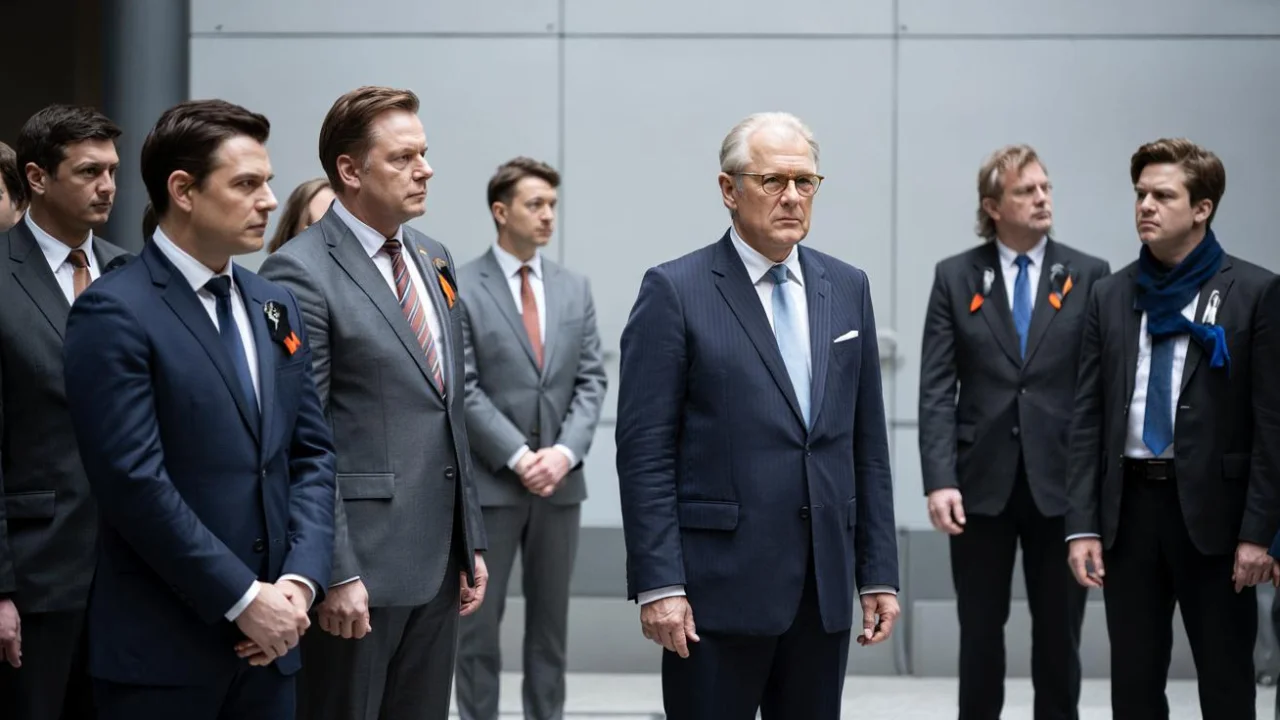
Picture this: you’re sitting in a small-town beer hall in Thuringia, eastern Germany. The conversation at every table revolves around the same heated topic – should the conservative CDU party work with the far-right AfD to form a government, or would they rather shake hands with their old communist rivals, the Left party?
It sounds like political fiction, but this exact dilemma is tearing apart Germany’s oldest political party right now. The stakes couldn’t be higher, and the man sounding the alarm is someone who knows a thing or two about tough political choices.
Former Hamburg mayor Ole von Beust just dropped a political bombshell that’s sending shockwaves through German politics. According to him, regular CDU members in eastern Germany would actually prefer their party to work with the Left party – yes, the descendants of East Germany’s communist rulers – rather than form any eastern CDU coalition with the far-right Alternative for Germany (AfD).

When Old Enemies Become Strange Bedfellows
Von Beust, who ran Hamburg as mayor from 2001 to 2010, isn’t just throwing around wild theories. He’s watching his party face an impossible choice as the AfD continues gaining ground in eastern German states like Saxony, Thuringia, and Brandenburg.
The former mayor told Spiegel magazine that any eastern CDU coalition with the AfD would “tear the whole thing apart” and drive out massive numbers of party members. His prediction? At least 30% of CDU members nationwide would quit if regional leaders started working with the AfD.

“The grassroots members I know in the east would rather see a coalition with the Left party than watch their party sell its soul to the AfD,” von Beust explained. “That tells you everything about how toxic this choice has become.”
Think about that for a moment. We’re talking about conservative politicians who spent decades fighting communism, now saying they’d rather work with former communists than with the far-right. That’s how deep the AfD divide runs.

The Numbers That Tell the Real Story
To understand why this matters so much, you need to see what’s actually happening in eastern Germany’s political landscape:
| State | AfD Support (%) | CDU Support (%) | Left Party Support (%) | Coalition Math |
|---|---|---|---|---|
| Thuringia | 32-35 | 22-25 | 12-15 | No clear majority without AfD |
| Saxony | 30-33 | 28-31 | 8-11 | CDU barely ahead |
| Brandenburg | 25-28 | 18-21 | 10-13 | Complex three-way split |
The brutal reality? In some eastern states, the AfD is now the strongest party. Traditional coalition math just doesn’t work anymore.

Here’s what von Beust sees happening inside the CDU:
- Older members remembering the party’s anti-extremist traditions
- Younger politicians frustrated by electoral mathematics
- Regional leaders feeling pressured to “get things done”
- National party leadership trying to hold everything together
- Ordinary members questioning what their party actually stands for
“We’re not just talking about political strategy here,” one longtime CDU member from Dresden told reporters. “This is about the soul of our party. Some lines you just don’t cross, no matter how tempting the power might be.”
What This Means for Real People
If you’re wondering why any of this matters to your daily life, here’s the reality: Germany is Europe’s economic powerhouse and its most influential democracy. When German politics gets unstable, it affects everything from European Union policy to trade relationships worldwide.
An eastern CDU coalition with the AfD wouldn’t just be a German problem. It would signal that mainstream European conservatives are willing to work with far-right parties to stay in power. That precedent would ripple across the continent.
“What happens in Thuringia doesn’t stay in Thuringia,” warned a senior EU diplomat who requested anonymity. “If the CDU breaks this taboo, other conservative parties across Europe will feel pressure to do the same thing.”
For ordinary Germans, the consequences are more immediate:
- Government instability in eastern states
- Potential policy swings on immigration and EU relations
- Growing polarization between east and west Germany
- Questions about democratic norms and coalition building
Von Beust argues that the eastern CDU coalition question represents something bigger than just electoral tactics. “We’re talking about whether the CDU remains a democratic, pro-European party or becomes something entirely different,” he said.
The irony isn’t lost on anyone: the same eastern German voters who once lived under communist rule are now forcing conservatives to choose between working with former communists or far-right populists. History has a sense of humor, but it’s not always funny.
Some CDU members are already making their choice. In Saxony, several longtime party activists have quietly indicated they’ll quit if their state party works with the AfD. Meanwhile, younger politicians argue that refusing all cooperation with the AfD simply hands them more power by making them the permanent opposition.
“You can’t govern effectively when the largest opposition party represents 30% of voters and you won’t talk to them,” argued one CDU state legislator. “But you also can’t betray everything your party stands for just to hold onto power.”
That tension is exactly what von Beust fears will tear his party apart. The eastern CDU coalition debate isn’t just about forming governments – it’s about defining what German conservatism means in the 21st century.
FAQs
What exactly is the CDU’s current policy on working with the AfD?
The CDU officially refuses any coalitions or formal cooperation with the AfD at all levels of government, treating them as beyond the democratic pale.
Why would CDU members prefer the Left party over the AfD?
Many CDU members see the Left as misguided but democratic, while viewing the AfD as a fundamental threat to Germany’s democratic and European values.
How strong is the AfD in eastern Germany compared to western states?
The AfD typically polls 25-35% in eastern states but only 8-12% in most western German regions, creating different political dynamics.
Could the CDU actually split over this issue?
Von Beust believes 30% of members would quit if the party works with the AfD, which could effectively destroy the CDU as Germany’s main conservative party.
What would happen if no stable government can be formed in eastern states?
Extended political instability, repeat elections, or minority governments that struggle to pass legislation and govern effectively.
Has any major German party ever worked with the AfD before?
No major established party has formed a formal coalition with the AfD, though there have been occasional tactical voting alignments on specific issues.
About the Author