Klaus Schmidt stared at his January payslip, shaking his head in disbelief. The 42-year-old factory worker from Stuttgart had just watched his health insurance premium jump again – the third increase in two years. “They keep taking more money from us,” he muttered to his wife over breakfast, “but every time I need a doctor’s appointment, I wait weeks.”
Klaus isn’t alone in his frustration. Across Germany, millions of workers are paying record amounts into their statutory health insurance, only to watch those same insurers cry poverty and demand even more money.
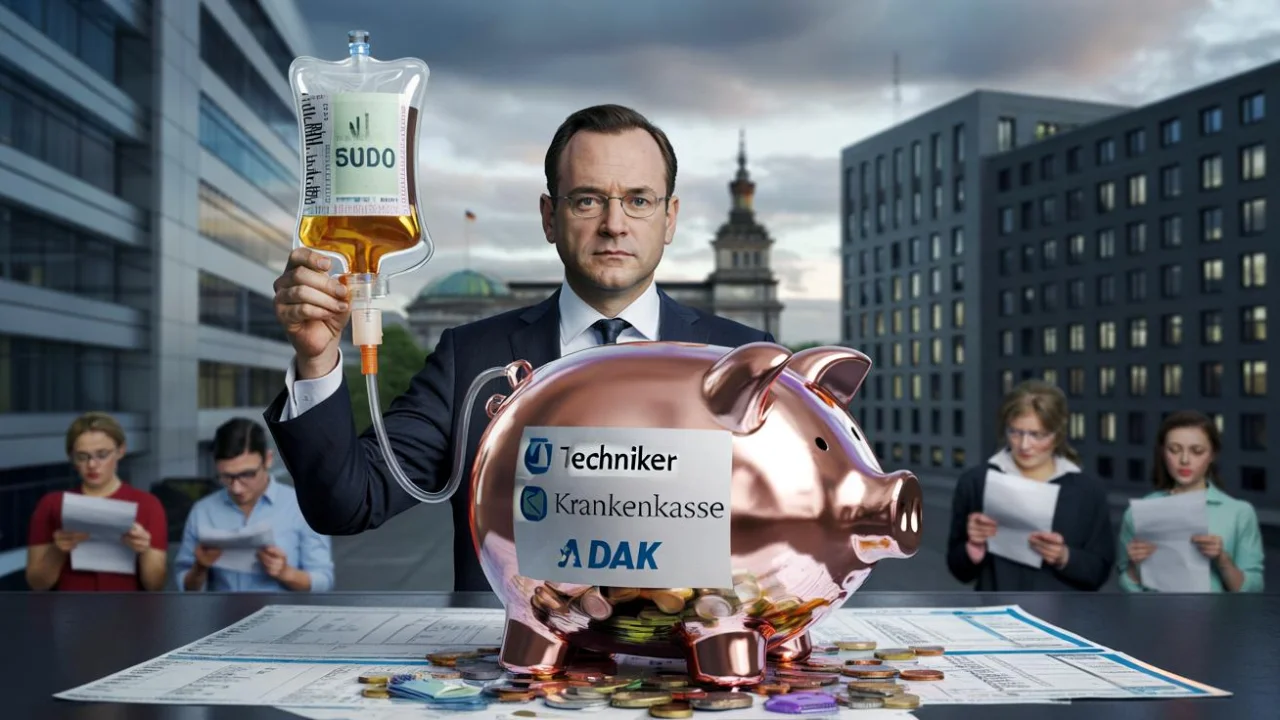
This financial paradox has sparked a fierce political debate, with former Health Minister Jens Spahn squarely in the crosshairs. Critics accuse him of systematically draining German health insurers dry during his tenure, creating today’s crisis of sky-high premiums alongside empty coffers.

When Record Income Meets Record Deficits
German health insurers are living through an impossible contradiction. They’re collecting more money than ever before from workers and employers, yet reporting massive financial shortfalls that threaten the entire system.
In 2026, almost half of all statutory health insurers raised their additional premium rates. Major players like Techniker Krankenkasse, DAK-Gesundheit, and several regional AOK funds all hiked their rates despite earlier promises to keep contributions stable.

“The higher the premiums go, the more obvious the contradiction becomes,” explains healthcare economist Dr. Maria Hoffmann from the University of Cologne. “We have record income flowing into the system, but insurers still report chronic deficits.”
The numbers paint a stark picture. The additional contribution rate – paid on top of the standard 14.6% health insurance rate – now averages around 2.9%, the highest level in German history. For a worker earning €4,000 monthly, this translates to nearly €700 in total monthly health insurance costs.

Yet despite this record income, Germany’s Federal Audit Office reports that statutory insurers accumulated a deficit of roughly €6.6 billion in 2024 alone. Consultancy firm Deloitte projects the situation will only worsen, with a cumulative funding gap approaching €90 billion by 2030 and over €300 billion by 2050 under current policies.
The Financial Breakdown: Where the Money Goes
Understanding how German health insurers burn through record premium income requires looking at the explosive growth in healthcare spending across multiple categories.

| Expense Category | 2020 Spending | 2025 Spending | Increase |
|---|---|---|---|
| Hospital treatments | €78 billion | €94 billion | +20.5% |
| Prescription drugs | €42 billion | €56 billion | +33.3% |
| Outpatient care | €45 billion | €52 billion | +15.6% |
| Long-term care | €16 billion | €23 billion | +43.8% |
| Administrative costs | €12 billion | €15 billion | +25% |
Several factors drive these escalating costs:
- An aging population requiring more expensive treatments and chronic care management
- Rising pharmaceutical costs, particularly for new cancer drugs and specialized therapies
- Increased demand for mental health services following the pandemic
- Higher wages for healthcare workers amid severe staffing shortages
- Expanded coverage mandates introduced during Spahn’s tenure
“We’re seeing a perfect storm of demographic pressure and political decisions that expanded benefits without securing sustainable funding,” notes insurance industry analyst Thomas Weber from the Berlin Institute for Health Economics.
Spahn’s Controversial Legacy: Expanding Benefits, Emptying Reserves
Industry leaders increasingly point fingers at Jens Spahn when explaining their current financial predicament. During his time as Health Minister from 2018 to 2021, Spahn championed numerous benefit expansions that critics say pushed insurers toward today’s crisis.
Under Spahn’s leadership, German health insurers were required to cover:
- Extended dental care benefits for low-income patients
- Improved mental health coverage including faster therapy access
- Enhanced fertility treatments and expanded age limits
- Better rehabilitation services for chronic conditions
- Increased home care benefits for elderly patients
“Spahn treated health insurance funds like they were bottomless piggy banks,” argues Dr. Andreas Mueller, CEO of a major regional insurer. “Every popular health policy got funded by raiding our reserves rather than finding sustainable financing.”
The former minister’s approach reflected a broader political philosophy that health insurers shouldn’t hoard money. “Health funds are not savings banks,” Spahn famously declared in 2019, defending policies that required insurers to spend down their financial reserves.
This philosophy had immediate consequences. Health insurers that had built up reserves during economically favorable years were forced to use those funds to finance benefit expansions. When the pandemic hit in 2020, many insurers found themselves with dangerously low reserve levels just as healthcare costs exploded.
“The timing couldn’t have been worse,” explains healthcare policy expert Dr. Petra Kaufmann from the German Institute for Economic Research. “Insurers entered the pandemic financially weakened, then faced unprecedented cost increases for testing, treatment, and prevention measures.”
Real-World Impact: Who Pays the Price
The financial squeeze on German health insurers creates ripple effects that touch every corner of the healthcare system, with ordinary patients bearing the brunt of the consequences.
Workers like Klaus Schmidt face the immediate burden of rising premiums that eat into their take-home pay. A typical middle-class family now pays over €800 monthly for health insurance – money that would otherwise go toward housing, education, or savings.
But higher premiums are just the beginning. Cash-strapped insurers are finding creative ways to limit costs:
- Longer waiting times for specialist appointments as insurers negotiate lower reimbursement rates
- Stricter approval processes for expensive treatments and diagnostic procedures
- Reduced coverage for optional services like premium hospital rooms or experimental therapies
- Higher co-payments for prescription drugs and medical devices
“My patients are feeling it on both ends,” says Dr. Sarah Richter, a general practitioner in Munich. “They pay more in premiums but get less convenient access to care. It’s creating a two-tier system by stealth.”
The crisis also threatens Germany’s broader economic competitiveness. Rising health insurance contributions function as a hidden tax on employment, making German workers more expensive for companies and potentially driving business to lower-cost countries.
“When health insurance costs approach 20% of gross wages, we’re talking about a serious drag on economic growth,” warns labor economist Professor Hans Zimmermann from the Max Planck Institute for Social Law.
Small businesses face particular pressure. Unlike large corporations that can absorb rising labor costs, small employers often struggle with the escalating expense of providing health benefits to their workers.
Political Solutions: Too Little, Too Late?
Germany’s current government recognizes the crisis but struggles to find politically viable solutions that don’t anger voters or special interest groups.
Health Minister Karl Lauterbach has proposed several reform measures, including greater use of generic drugs and more efficient hospital management. However, critics argue these incremental changes won’t address the fundamental mismatch between expanding benefits and available funding.
“We need either significantly higher taxes to fund healthcare properly, or we need to scale back benefits to match available resources,” argues fiscal policy expert Dr. Christine Wagner from the German Taxpayers Association. “Politicians don’t want to admit this trade-off exists.”
The debate over Spahn’s legacy continues to influence current policy discussions. Supporters argue his benefit expansions addressed real healthcare gaps and improved access for vulnerable populations. Critics contend he created unsustainable expectations without providing matching revenue sources.
FAQs
Why are German health insurance premiums rising despite record contributions?
Healthcare costs are growing faster than premium income due to an aging population, expensive new treatments, and expanded benefits introduced without sustainable funding mechanisms.
How much do Germans typically pay for health insurance now?
The total rate averages around 17.5% of gross wages, split between employers and employees, with middle-class families often paying over €800 monthly.
What did Jens Spahn do that critics find problematic?
During his tenure as Health Minister, Spahn expanded healthcare benefits while forcing insurers to spend down their financial reserves, leaving them vulnerable when costs exploded during the pandemic.
Could German health insurers actually go bankrupt?
While outright bankruptcy is unlikely due to government backing, insurers may need bailouts or forced mergers if deficits continue growing at current rates.
How does Germany’s health insurance crisis compare internationally?
Many developed countries face similar pressures from aging populations and rising healthcare costs, but Germany’s reliance on employer-employee contributions makes the system particularly vulnerable to economic shocks.
What solutions are being proposed to fix the funding crisis?
Options include higher taxes, reduced benefits, greater use of generic drugs, hospital efficiency improvements, and potentially moving toward more tax-funded healthcare rather than payroll contributions.
About the Author
