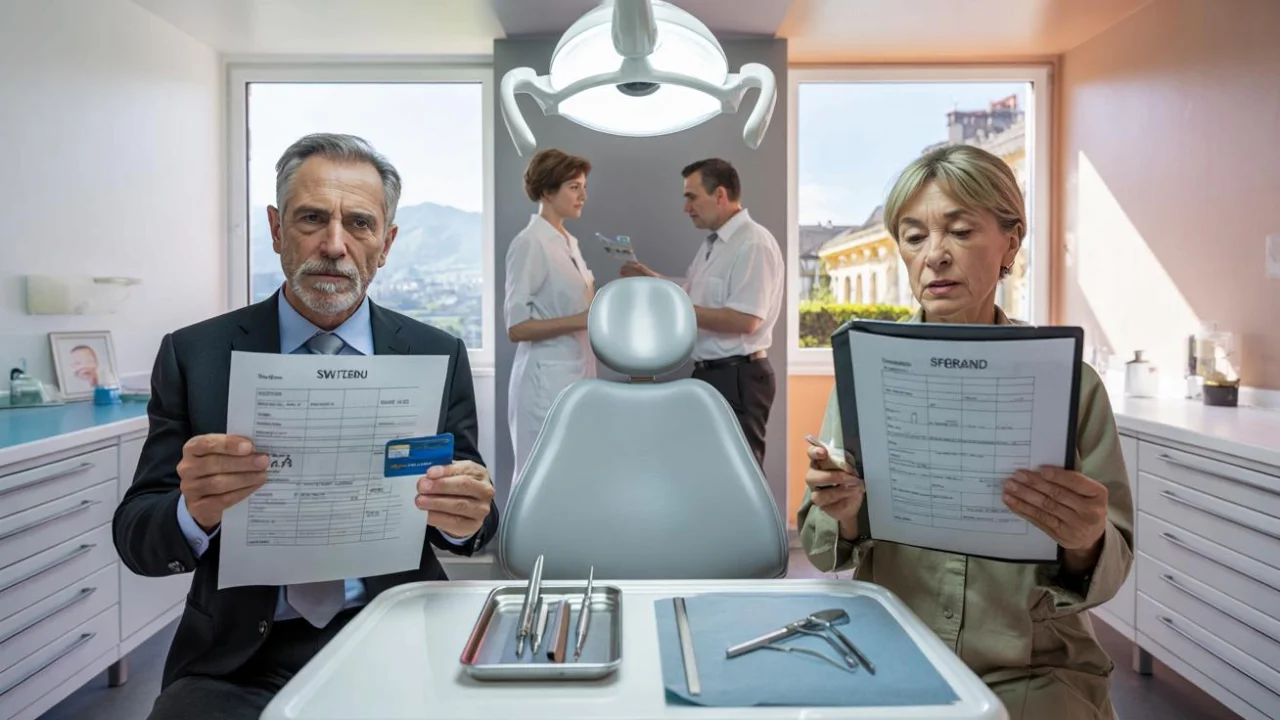
Maria stared at the dental estimate in her hands, feeling her stomach drop. The root canal and crown would cost €2,400 – nearly half her monthly salary. Her insurance would cover just €300. As she sat in that sterile waiting room in Frankfurt, she couldn’t help wondering why her cousin in Barcelona paid so much less for the same treatment, while her friend in Zurich somehow seemed to get better care despite paying even more out of pocket.

She’s not alone in this confusion. Across Europe, millions face the same bewildering reality: dentist costs vary wildly from country to country, and the role of government in covering these expenses is becoming a heated political debate.
Right now, Germany finds itself caught between two very different approaches to dental care funding, and politicians are looking to Switzerland and Spain as potential models to either embrace or avoid entirely.

The Growing Political Battle Over Your Smile
Dental care has quietly become one of the most divisive health policy issues in Europe. While most people assume their government will help with medical bills, teeth seem to occupy a strange gray area between healthcare and cosmetic choice.
In Germany, the current system covers basic dental treatments through statutory health insurance, but patients face increasingly steep co-payments for anything beyond the most basic care. A simple filling might be mostly covered, but crowns, implants, or high-quality materials can leave patients with bills running into thousands of euros.

“We’re seeing families delay essential dental treatment because they simply can’t afford the out-of-pocket costs,” says Dr. Klaus Weber, a Munich-based dentist with 20 years of experience. “The system is creating a two-tier approach where your income determines the quality of care you receive.”
This has politicians scrambling to find solutions, and they’re looking at two very different European models for inspiration. Switzerland and Spain represent opposite ends of the spectrum when it comes to government involvement in dentist costs.

The Tale of Two Systems: Switzerland vs Spain
The differences between how these countries handle dental expenses couldn’t be more stark, yet both are being studied as potential solutions to Germany’s growing dental cost crisis.
| Country | Government Coverage | Average Cost (Crown) | Patient Payment |
|---|---|---|---|
| Switzerland | Minimal (emergencies only) | €1,200-2,000 | Nearly 100% |
| Spain | Basic treatments covered | €400-800 | 50-70% |
| Germany (current) | Partial coverage | €600-1,200 | 60-80% |
Switzerland takes the pure market approach. Adults pay the full cost of routine dental care, from check-ups to complex procedures. The mandatory health insurance that every Swiss resident must purchase doesn’t cover standard dental work – only emergency treatments or accidents.

Spain follows a mixed model. The public health system covers basic dental treatments like extractions and some fillings, but patients pay privately for crowns, implants, and cosmetic procedures. Many Spaniards supplement this with private dental insurance.
Here’s what each system means in practice:
- Switzerland: High-quality care, but expensive. Patients often delay treatment or seek cheaper options abroad
- Spain: More affordable basic care, but longer waiting times for public treatments
- Germany: Caught in the middle, with complex co-payment rules that confuse patients
“The Swiss model works if you can afford it,” explains healthcare economist Dr. Anna Rodriguez from the Barcelona Health Economics Institute. “But it essentially makes dental care a luxury good, which creates obvious equity issues.”
Who Really Wins and Loses?
The real-world impact of these different approaches becomes clear when you look at who can actually access care and what they pay for it.
In Switzerland, the average household spends about €800 annually on dental care – one of the highest rates in Europe. Quality is excellent, waiting times are minimal, and dental technology is cutting-edge. But this comes at a price that pushes many lower-income residents to delay treatment or cross borders for cheaper care.
Spanish patients face a different trade-off. Basic care is accessible and affordable, but anyone needing complex work like implants or orthodontics often waits months for public treatment or pays premium prices in private clinics.
The debate has practical consequences that extend far beyond policy circles:
- Families choosing between dental care and other expenses
- Dental tourism becoming a major industry as patients cross borders
- Preventive care declining when patients can’t afford regular check-ups
- Emergency rooms dealing with dental problems that could have been prevented
“I’ve seen patients come in with severe infections because they couldn’t afford a €200 filling six months earlier,” says Dr. Carmen Flores, who works in both public and private clinics in Madrid. “False economy doesn’t begin to describe it.”
The ripple effects are particularly visible in dental tourism. Germans increasingly travel to Hungary or Czech Republic for major work, while Swiss patients cross into France or Germany. This suggests that no current system is fully satisfying patient needs.
Meanwhile, dental professionals find themselves caught between wanting to provide quality care and dealing with patients who simply can’t afford recommended treatments. Many dentists report feeling pressured to either provide substandard care or watch patients go without treatment entirely.
The insurance industry is watching these debates closely too. Private dental insurance has grown rapidly in countries where public coverage is limited, but premiums are rising faster than many middle-class families can manage.
As Germany wrestles with these competing models, one thing becomes clear: there’s no perfect solution. Each approach involves trade-offs between cost, access, and quality that affect millions of people’s daily lives.
The Switzerland model offers excellent care for those who can afford it, but risks creating a system where your postal code and paycheck determine your dental health. The Spanish approach provides more equitable access to basic care, but can leave patients waiting or paying premium prices for complex treatments.
What remains certain is that as healthcare costs continue rising across Europe, the debate over who should pay for your smile is only going to intensify.
FAQs
Why don’t European health systems fully cover dental care?
Many systems classify dental work as less urgent than other medical treatments, viewing it more as maintenance than emergency healthcare.
Which European country has the lowest dentist costs?
Eastern European countries like Hungary and Poland generally offer the most affordable dental care, which has fueled the dental tourism industry.
Do Swiss people really pay full price for dental work?
Yes, adults in Switzerland typically pay 100% of routine dental costs, though some have private insurance and children receive more coverage.
How much do Germans currently pay out-of-pocket for dental work?
German patients typically pay 60-80% of costs for crowns and implants, with the exact amount depending on their insurance plan and the treatment chosen.
Is dental tourism from Germany increasing?
Yes, thousands of Germans travel to neighboring countries annually for dental work, primarily to Hungary, Czech Republic, and Poland for cost savings.
Could Germany adopt the Swiss system completely?
While possible, it would likely face significant political resistance due to concerns about making dental care unaffordable for lower-income citizens.
About the Author