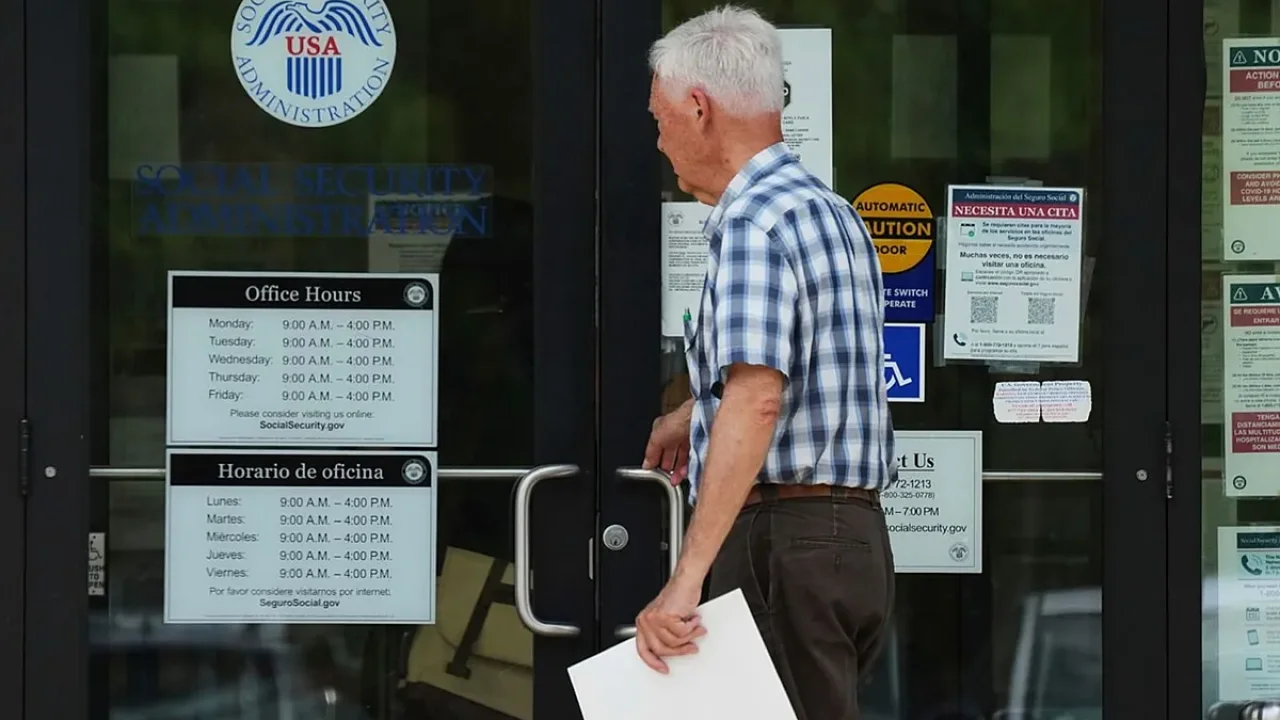
Sarah Martinez was checking her credit report last Tuesday when she noticed something that made her heart skip a beat. An unfamiliar account had appeared under her name, and suddenly the news about potential Social Security data breaches didn’t feel like distant government drama anymore. It felt personal, scary, and very real.

Like millions of Americans right now, Sarah found herself wondering: “Could my Social Security number be compromised? Will I need to get a new one?” These aren’t abstract concerns when your financial identity feels vulnerable.
The anxiety is understandable. Recent allegations about the Department of Government Efficiency (DOGE) potentially mishandling Social Security Administration data have left many people questioning the security of their most sensitive personal information.

What Really Happened With the DOGE Data Controversy
The storm began when Chuck Borges, a former data director at the Social Security Administration, made some explosive allegations. According to Borges, DOGE staff allegedly copied the master Social Security database to external cloud servers without proper oversight.
Here’s what makes this particularly concerning: the alleged data transfer supposedly bypassed normal security measures like access logs and authentication protocols. Even more troubling, it allegedly ignored existing court orders that limit access to this sensitive information.

“What we’re talking about here isn’t just a minor data hiccup,” explained a cybersecurity expert familiar with government databases. “If these allegations are true, we’re looking at the potential exposure of over 300 million Americans’ most sensitive personal data.”
The Numident database contains the master records for every Social Security number ever issued. It’s essentially the digital DNA of American identity documentation.
The Truth About Getting New Social Security Numbers
So will you wake up one morning to find out you need a new Social Security number? The short answer is: almost certainly not. But let’s break down why this question even came up and what the reality looks like.
Borges himself suggested that if the database was “irreversibly compromised,” the government might need to issue new social security numbers to protect citizens from “perpetual identity fraud.” It’s a dramatic scenario that understandably caught public attention.

However, here are the key facts about the current situation:
- SSA Commissioner Frank Bisignano has assured Congress that the main database remains secure
- No evidence of a massive data breach or hack has been confirmed
- Only about 1,000 individuals’ data has been confirmed as mishandled, not millions
- The agency maintains uncertainty about what information may have passed through external systems
| Claim | Current Status | Impact on New Numbers |
|---|---|---|
| 300+ million records exposed | Unconfirmed by SSA | Would require mass reissuance |
| Database fully compromised | Denied by Commissioner | Unlikely to trigger changes |
| 1,000 individuals affected | Confirmed by agency | Individual case reviews only |
“The logistical nightmare of replacing everyone’s Social Security number would be unprecedented,” noted a former SSA administrator. “We’re talking about updating every bank account, credit report, tax record, and government database in America simultaneously.”
What This Means for Your Personal Security
While mass reissuance of social security numbers appears highly unlikely, the controversy does highlight important realities about your personal data security.
If you’re among the estimated 1,000 individuals whose data was confirmed as mishandled, you might be eligible for a new Social Security number through the SSA’s existing processes. The agency already has procedures for issuing new numbers in cases of identity theft or when continued use of your current number would cause ongoing problems.
For everyone else, this situation serves as a reminder to stay vigilant about identity protection:
- Monitor your credit reports regularly for unusual activity
- Set up fraud alerts with credit bureaus if you’re concerned
- Keep track of any unusual mail or communications claiming to be from government agencies
- Be skeptical of any contact asking you to “verify” or “update” your Social Security information
“Most Americans don’t need to panic about getting new social security numbers right now,” emphasized a privacy advocate who works with identity theft victims. “But this is definitely a wake-up call about how our most sensitive data gets handled.”
The controversy also raises broader questions about government data management practices. When federal agencies work with outside contractors or use cloud services, who’s watching to make sure proper security protocols are followed?
What’s particularly frustrating for many people is the uncertainty. The SSA acknowledges they’re not entirely sure what information may have been accessed through external systems, even as they maintain that no major breach occurred.
For now, the best approach is to stay informed without panicking. Keep an eye on official SSA communications, monitor your financial accounts, and remember that getting a new Social Security number—if it ever became necessary—would be a coordinated government effort, not something you’d need to figure out on your own.
The reality is that replacing hundreds of millions of social security numbers would create far more problems than it would solve, which is probably why it’s never been seriously considered even in major data breach situations.
FAQs
Will I automatically get a new Social Security number because of the DOGE controversy?
No, there are currently no plans for mass reissuance of Social Security numbers, and the SSA maintains that the main database is secure.
How do I know if my Social Security data was part of the alleged mishandling?
The SSA has confirmed that only about 1,000 individuals were affected by confirmed data mishandling, and they would be contacted directly by the agency.
Can I request a new Social Security number if I’m worried about security?
You can apply for a new number through the SSA’s existing process, but you must prove that continued use of your current number would cause ongoing problems due to identity theft or harassment.
What should I do to protect myself right now?
Monitor your credit reports, set up fraud alerts if you’re concerned, and be cautious about any communications asking you to verify Social Security information.
Has this type of mass Social Security number replacement ever happened before?
No, the United States has never undertaken a mass reissuance of Social Security numbers, and experts say it would be logistically nearly impossible.
How long would it take to get a new Social Security number if I qualified for one?
Individual Social Security number replacements typically take several weeks to process through the SSA’s standard procedures.
About the Author