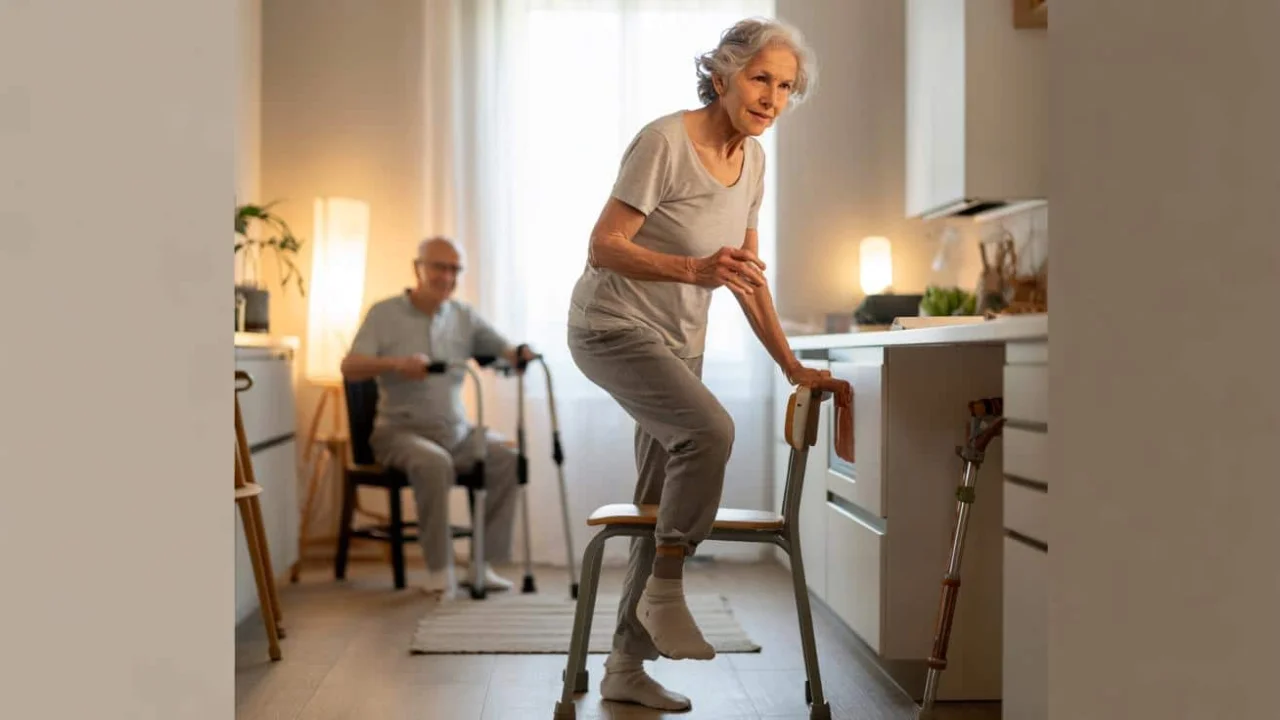
When Ruth stepped out of the shower last Tuesday morning, the world tilted sideways for just a split second. Her hand shot out to the wall, heart hammering as she steadied herself on the bathroom tiles. “Just tired,” she whispered, but deep down she knew something had shifted.
That afternoon, she called her daughter. “I think I need to do something about my balance,” she said quietly. It wasn’t the first wobble, just the first one that scared her enough to admit it out loud.
Ruth isn’t alone in this moment of recognition. Across the country, millions of adults over 65 are having similar conversations with themselves, their families, and their doctors about feeling less steady on their feet than they used to.

Why our bodies whisper “careful now” as we age
Balance isn’t just about standing on one foot like a flamingo. It’s an intricate dance between your inner ear, your vision, your muscles, and your brain. Think of it as your body’s GPS system constantly recalibrating where you are in space.
As we age, each part of this system starts working a little less efficiently. The tiny crystals in your inner ear that help detect movement can shift. Your eyesight might not be as sharp. Muscles in your legs and core lose strength if we don’t challenge them regularly.

“Most people don’t realize that balance is like any other skill—use it or lose it,” explains Dr. Sarah Chen, a geriatric physical therapist with 15 years of experience. “The good news is that targeted exercises can rebuild that confidence and stability, often quite quickly.”
The statistics tell a sobering story. Falls are the leading cause of injury-related death among adults 65 and older, with one in four seniors experiencing a fall each year. But here’s what the numbers don’t capture: the gradual loss of confidence that happens long before any actual fall occurs.

Eleven balance exercises that can change everything
Balance exercises for seniors don’t require expensive equipment or gym memberships. Most can be done in your living room while watching the morning news. The key is starting slowly and building consistency.
| Exercise | Difficulty Level | Duration | Key Benefit |
|---|---|---|---|
| Single Leg Stand | Beginner | 10-30 seconds | Core stability |
| Heel-to-Toe Walk | Beginner | 10-20 steps | Dynamic balance |
| Chair Stand | Beginner | 5-10 reps | Leg strength |
| Wall Push-Ups | Intermediate | 5-15 reps | Upper body stability |
| Side Leg Lifts | Intermediate | 10-15 reps | Hip stability |
| Back Leg Lifts | Intermediate | 10-15 reps | Posterior strength |
| Tree Pose (Modified) | Intermediate | 15-30 seconds | Focus and stability |
| Marching in Place | Beginner | 30 seconds | Coordination |
| Clock Reach | Advanced | 8-12 reps | Multi-directional stability |
| Tightrope Walk | Intermediate | 10-20 steps | Linear balance |
| Standing Weight Shifts | Beginner | 10-15 reps | Weight distribution |
Here’s how to approach these exercises safely:

- Start with support: Keep a chair or wall within arm’s reach during your first few weeks
- Progress gradually: Begin with 5-10 repetitions and slowly increase as you feel stronger
- Focus on form: Quality over quantity—better to do fewer exercises correctly than many poorly
- Listen to your body: Some muscle fatigue is normal, but sharp pain means stop immediately
- Be consistent: Aim for 10-15 minutes of balance work three to four times per week
“I tell my patients that balance training is like compound interest,” notes Dr. Michael Torres, a specialist in fall prevention. “The benefits build slowly at first, then accelerate as your body adapts to the new challenges.”
What changes when you commit to better balance
Six months after that wobbly morning in her bathroom, Ruth tells a different story. She still holds the handrail going downstairs, but now it’s habit rather than necessity. Last weekend, she played in the backyard with her grandkids without a second thought about her footing.
The physical changes are measurable: stronger leg muscles, better reaction times, improved posture. But the psychological shift might be even more profound. Fear of falling often leads to reduced activity, which creates a dangerous cycle of weakening muscles and growing anxiety.
Regular balance exercises break this cycle. People who practice these movements consistently report:
- Increased confidence during daily activities
- Better sleep quality (less worry about nighttime bathroom trips)
- More willingness to participate in social activities
- Improved overall mood and energy levels
- Greater independence in household tasks
“The exercises themselves are simple, but the impact on quality of life can be transformative,” observes Dr. Lisa Park, who runs a community-based fall prevention program. “People rediscover activities they’d given up and start planning adventures they thought were behind them.”
Beyond the individual benefits, there’s a broader public health impact. Communities with active balance exercise programs see reduced emergency room visits, lower healthcare costs, and seniors who remain independent longer in their own homes.
The key is starting before you think you need to. Balance exercises for seniors work best as prevention rather than rehabilitation. That slight unsteadiness you might be noticing? That’s your body’s early warning system, not a sign that it’s too late to make changes.
Margaret, the woman who first grabbed her grocery cart for support, now teaches a weekly balance class at her local community center. “I wish I’d started sooner,” she often tells new participants. “But the second-best time to start is right now.”
FAQs
How often should seniors do balance exercises?
Most experts recommend 10-15 minutes of balance work three to four times per week, with daily practice being even better for maximum benefit.
Can balance exercises prevent all falls?
While these exercises significantly reduce fall risk, they can’t prevent every fall. They do, however, improve your body’s ability to recover from stumbles and maintain stability.
Is it safe to do balance exercises alone?
Beginners should always have support nearby, like a chair or wall. As you improve, you can gradually reduce reliance on support, but never feel embarrassed about using it when needed.
How quickly will I see improvements?
Many people notice small improvements in confidence within 2-3 weeks, with more significant physical changes typically appearing after 6-8 weeks of consistent practice.
What if I have other health conditions?
Always consult your doctor before starting any new exercise program, especially if you have heart conditions, joint problems, or take medications that affect balance.
Do I need special equipment?
No expensive equipment is required. A sturdy chair and some open floor space are sufficient for most balance exercises for seniors.
About the Author