Marie-Claire worked nights at the Dassault Aviation factory in Mérignac for twelve years, her hands carefully assembling the intricate electronics that would one day guide Rafale fighter jets across foreign skies. Last Tuesday, she noticed something different in the supervisor’s voice during the morning briefing. The usual confidence was gone, replaced by careful words about “market uncertainties” and “adjusting production schedules.”
By Thursday, whispers filled the factory floor. The big overseas contract everyone had been counting on—worth €3.2 billion and hundreds of jobs—suddenly felt less certain. Marie-Claire’s overtime shifts might disappear. Her daughter’s university plans hung in the balance.
Thousands of miles away, in the corridors of power where suits cost more than Marie-Claire’s monthly salary, a political miscalculation had just turned a sure thing into a diplomatic nightmare.

When Political Games Destroy Business Dreams
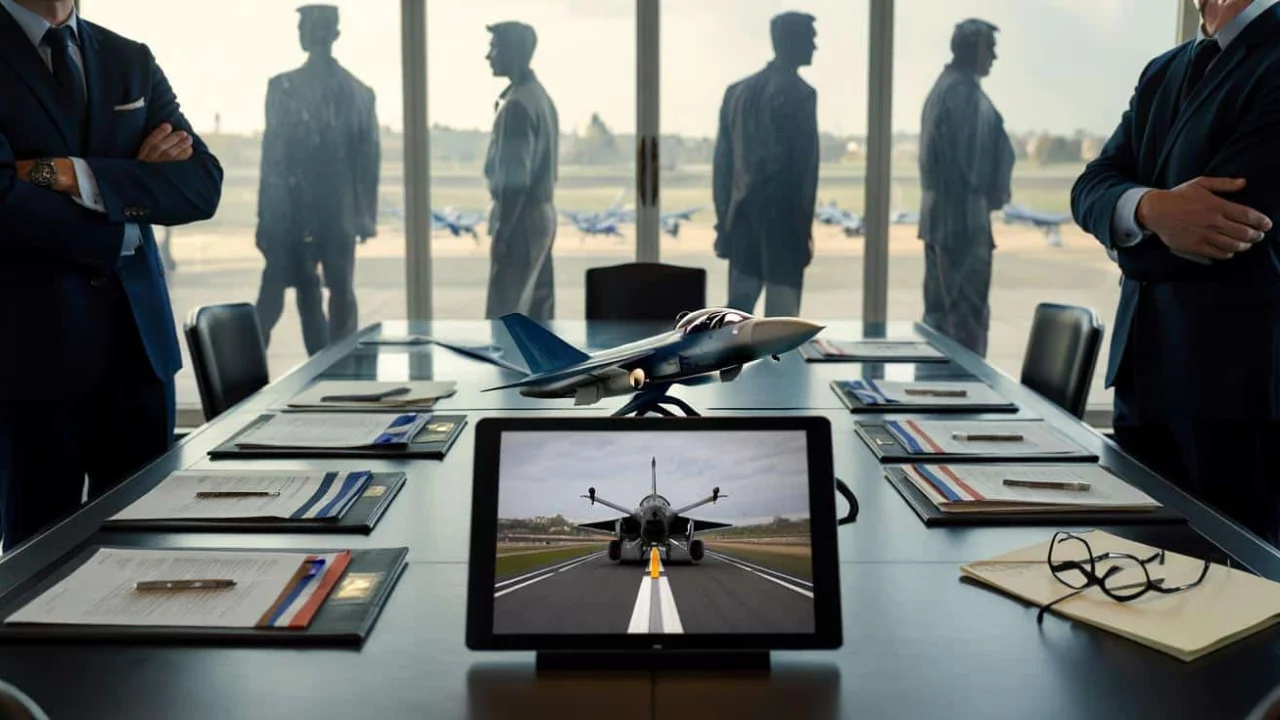
The Rafale fighter jet deal that should have been France’s latest export triumph has become a cautionary tale about mixing politics with multi-billion dollar defense contracts. What started as months of careful relationship-building between French officials and a foreign air force has collapsed into recriminations and bruised egos.
The €3.2 billion package wasn’t just another arms sale. For Dassault Aviation and its network of suppliers, this represented years of stable production, thousands of jobs, and validation of France’s position as a major defense exporter. The Rafale program supports approximately 7,000 direct jobs and countless more in the supply chain across French industrial regions.

“You spend months building trust, explaining technical capabilities, negotiating offset packages,” explains a former French defense attaché who worked on similar deals. “Then someone in Paris makes a last-minute political decision that shows complete disregard for all that relationship-building. The buyer feels insulted, and rightfully so.”
The current crisis echoes France’s painful 2021 experience with the AUKUS submarine deal, when Australia abruptly canceled a €56 billion contract to join a new strategic partnership with the United States and United Kingdom. French officials promised they’d learned from that diplomatic disaster, but the Rafale situation suggests old habits die hard.
The Anatomy of a Deal Gone Wrong
Defense contracts operate on a completely different timeline than normal business deals. Countries evaluate fighter jets for years, considering everything from technical capabilities to maintenance costs to geopolitical implications. The French team had invested heavily in this particular Rafale fighter jet deal, with technical experts spending months overseas demonstrating the aircraft’s capabilities.
Here’s what we know about how the deal unraveled:

| Timeline | Event | Impact |
|---|---|---|
| Months 1-6 | Technical evaluations and preliminary negotiations | Strong French position established |
| Month 7-10 | Final price negotiations and offset agreements | Deal reaches 95% completion |
| Week of signing | Last-minute French political intervention | Buyer postpones ceremony |
| Following weeks | Diplomatic cooling, reduced communication | Deal effectively suspended |
Industry sources describe the French political decision as a attempt to balance competing domestic and international pressures. The government apparently worried about criticism from European partners and wanted to avoid offending a rival regional power with strategic interests in the same area.
- Domestic political considerations about arms export policies
- Pressure from EU partners concerned about regional stability
- Desire to maintain relationships with competing regional powers
- Last-minute legal or regulatory concerns about the deal structure
“The problem is that defense buyers have long memories and short patience,” notes a defense industry analyst who has tracked Rafale sales globally. “When you signal uncertainty at the final moment, you’re essentially telling them they can’t count on you as a reliable partner.”
The buying country responded predictably. A planned ministerial visit was quietly downgraded. Key military officials became “unavailable” for follow-up meetings. While the contract technically remains on the table, diplomatic sources describe the relationship as “frozen” with little prospect of near-term resolution.
Ripple Effects Across the Defense Industry
The failed Rafale fighter jet deal sends shockwaves far beyond the immediate participants. France’s defense export strategy depends on building a reputation for reliability and political backing. When high-profile deals collapse due to political interference, it damages that carefully cultivated image.
For workers like Marie-Claire, the immediate concern is job security. The Rafale program employs people across multiple French regions, from final assembly in Bordeaux to engine production in the Paris area to electronics manufacturing in the south. A €3.2 billion order represents years of steady work for these communities.
“These aren’t just numbers on a spreadsheet,” emphasizes a union representative from the Dassault plant. “Every major export contract supports families and keeps our industrial skills sharp. When politicians play games with these deals, real people pay the price.”
The broader implications extend to France’s position in the global arms market. Countries considering major defense purchases look carefully at suppliers’ track records. Will the French government support deals through completion, or might political considerations derail contracts at the last minute?
Competitors haven’t missed the opportunity. American defense contractors, already dominant in many markets, can now point to French political unreliability as a selling point for their own systems. “The F-35 program has many flaws, but at least the U.S. government backs its deals consistently,” notes one industry observer.
The timing couldn’t be worse for French defense exports. Global military spending is rising, driven by geopolitical tensions and modernization needs. The Rafale had been gaining momentum in international markets, with successful sales to countries like Egypt, Qatar, and India proving the aircraft’s capabilities.
“We were finally breaking through American and Russian dominance in some key markets,” explains a French defense ministry official speaking on background. “These kinds of political own-goals make that much harder.”
The failed deal also raises questions about France’s decision-making processes for major defense exports. Should political considerations override commercial and strategic logic? How can France balance competing diplomatic priorities without undermining its defense industrial base?
For Marie-Claire and thousands of other defense industry workers, the answers can’t come soon enough. Their livelihoods depend on France’s ability to compete effectively in global markets, backed by consistent political support. The Rafale fighter jet deal that got away serves as an expensive reminder that in the defense business, trust and reliability matter more than technical superiority.
FAQs
What was the value of the canceled Rafale deal?
The contract was worth €3.2 billion and would have provided significant employment for French defense workers.
Why did the deal collapse?
A last-minute political decision by France apparently offended the buying country, leading them to suspend negotiations.
How does this compare to the AUKUS submarine controversy?
While smaller in value, the pattern is similar—French deals being disrupted by political considerations and diplomatic miscalculations.
What jobs are at risk?
The Rafale program supports approximately 7,000 direct jobs plus thousands more in the supply chain across French industrial regions.
Can the deal be revived?
While technically still possible, diplomatic sources describe the relationship as “frozen” with little prospect of near-term resolution.
How does this affect France’s defense export strategy?
It damages France’s reputation for reliability, potentially making future export deals more difficult to secure in competitive markets.
About the Author