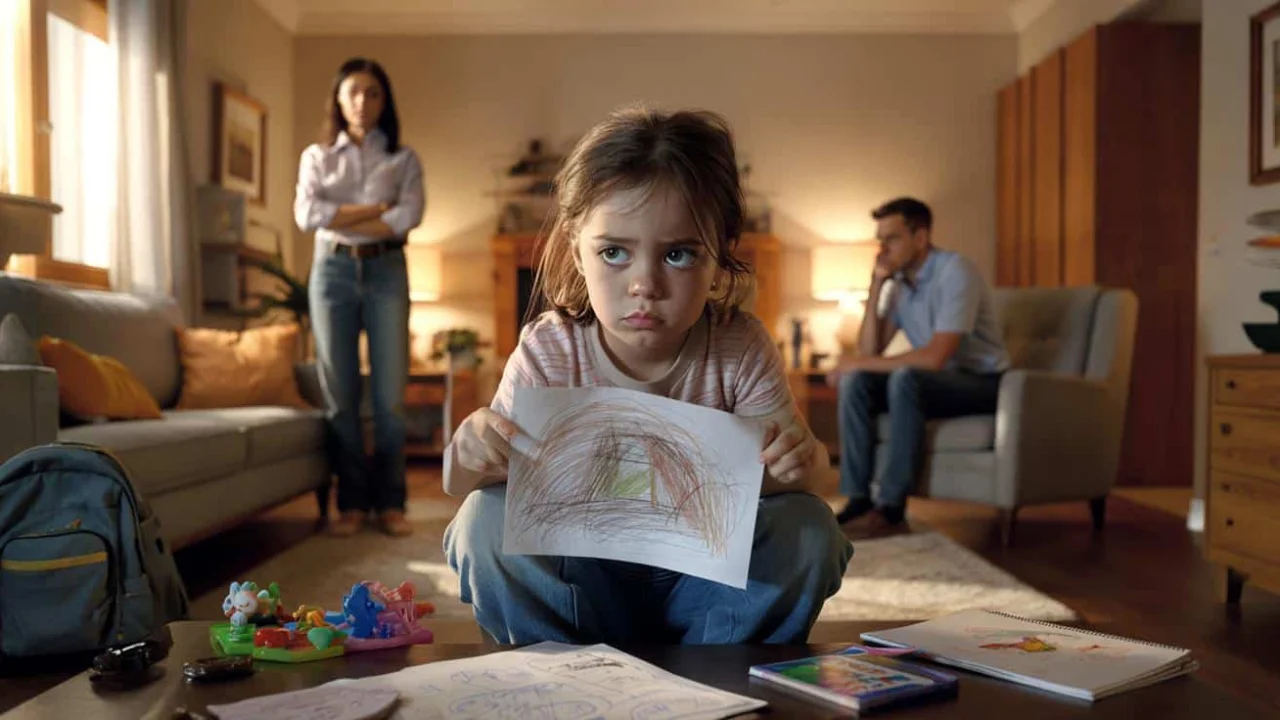
Sarah watched her 7-year-old son Max trudge through the front door, shoulders slumped after another difficult day at school. When he mentioned feeling left out at recess, her first instinct was to fix it quickly. “Just ignore them and find other kids to play with,” she said briskly, already mentally moving to the next task on her endless to-do list.

Max nodded and walked to his room, but something in his eyes had dimmed. Sarah didn’t realize it then, but in that moment, she had just demonstrated one of the most common parenting attitudes that psychologists warn can create lasting unhappiness in children.
What we think of as “normal” parenting often contains subtle patterns that, repeated over time, can profoundly impact a child’s emotional wellbeing. These aren’t dramatic acts of neglect or abuse, but everyday attitudes that seem reasonable on the surface yet slowly erode a child’s sense of self-worth and emotional security.

The Hidden Impact of Everyday Parenting Attitudes
Modern psychology has identified specific parenting attitudes that consistently correlate with childhood unhappiness, anxiety, and long-term emotional struggles. The troubling reality is that many of these behaviors look perfectly normal to outside observers.
“Children are incredibly sensitive to the emotional climate in their homes,” explains Dr. Rachel Martinez, a child psychologist with over 15 years of experience. “What matters isn’t just what parents say or do in big moments, but the daily micro-interactions that shape how children learn to see themselves and the world.”

Research from developmental psychology shows that children’s brains are constantly absorbing and internalizing their parents’ attitudes, reactions, and emotional patterns. These become the foundation for their own internal voice and self-concept.
Nine Critical Parenting Attitudes That Create Unhappy Children
Based on extensive psychological research, these parenting attitudes have been identified as particularly damaging to children’s emotional wellbeing:

| Parenting Attitude | What It Looks Like | Impact on Children |
|---|---|---|
| Constant Criticism | Always pointing out flaws “for improvement” | Creates perfectionism and self-doubt |
| Emotional Invalidation | “You’re overreacting,” dismissing feelings | Children lose trust in their emotions |
| Conditional Love | Affection only when child meets expectations | Develops fear of abandonment |
| Comparison Focus | Always measuring against siblings/peers | Breeds insecurity and rivalry |
| Emotional Unavailability | Present physically but distant emotionally | Creates attachment difficulties |
| Overprotection | Shielding from all challenges | Prevents resilience development |
| Unpredictable Responses | Reactions vary wildly to same behavior | Creates anxiety and hypervigilance |
| Achievement Obsession | Worth tied solely to performance | Leads to chronic stress and burnout |
| Dismissive Attitude | Child’s interests/concerns aren’t important | Damages self-esteem and confidence |
The most insidious aspect of these parenting attitudes is that they often stem from good intentions. Parents who constantly criticize may genuinely believe they’re helping their child improve. Those who dismiss emotions might think they’re teaching resilience.
“I see parents every day who are shocked to learn that their ‘helpful’ feedback has actually created deep insecurity in their children,” notes Dr. James Thompson, a family therapist. “The road to childhood unhappiness is often paved with parental good intentions.”

- Constant criticism teaches children to focus on their flaws rather than their strengths
- Emotional invalidation makes children distrust their own feelings and reactions
- Conditional love creates anxiety about whether they’re worthy of affection
- Comparison focus destroys children’s sense of individual worth
- Emotional unavailability leaves children feeling unseen and unimportant
- Overprotection prevents children from developing confidence in their abilities
- Unpredictable responses create a chaotic emotional environment
- Achievement obsession reduces children to their performance metrics
- Dismissive attitudes communicate that the child’s inner world doesn’t matter
The Long-Term Consequences Nobody Talks About
Children who grow up with these parenting attitudes don’t just experience unhappiness in the moment. The effects ripple through their entire lives, influencing their relationships, career choices, and ability to parent their own children.
Studies show that adults who experienced these patterns often struggle with chronic self-doubt, difficulty trusting others, and challenges in forming healthy relationships. They may become people-pleasers, perfectionists, or struggle with anxiety and depression.
“What’s particularly tragic is that many of these adults don’t understand why they feel so fundamentally flawed,” explains Dr. Lisa Chen, a trauma-informed therapist. “They grew up in homes that looked fine from the outside, but the emotional messaging was consistently damaging.”
The good news is that awareness of these patterns can break the cycle. Parents who recognize these attitudes in themselves can learn healthier approaches that foster emotional security and genuine happiness in their children.
Children thrive when they feel emotionally safe, genuinely seen, and unconditionally loved. This doesn’t mean permissive parenting or avoiding all challenges, but rather creating an environment where children can develop authentic self-worth and emotional resilience.
Breaking these patterns requires parents to examine their own childhood experiences and perhaps seek support in developing new ways of relating to their children. The investment in this emotional work pays dividends not just for the current generation, but for generations to come.
FAQs
Can these parenting attitudes be changed once they’re established?
Yes, parents can absolutely change these patterns with awareness, effort, and often professional support. Children are remarkably resilient and respond positively to genuine changes in parental behavior.
What if I recognize these attitudes in my own parenting?
Recognition is the first step toward change. Consider working with a family therapist or parenting coach to develop healthier patterns and repair any damage to your relationship with your child.
How do I know if my child is already affected by these attitudes?
Signs include chronic anxiety, perfectionism, difficulty expressing emotions, low self-esteem, or seeming to walk on eggshells around you. A child psychologist can provide professional assessment.
Are there specific ages when children are most vulnerable to these attitudes?
Children are vulnerable at all ages, but early childhood (ages 2-7) and adolescence are particularly critical periods when these patterns can have lasting impact on brain development and identity formation.
What’s the difference between high standards and constant criticism?
High standards focus on effort and growth while maintaining emotional support, whereas constant criticism focuses on flaws and creates shame about the child’s inherent worth.
Can a single parent avoid these patterns without a co-parent’s support?
Absolutely. Single parents can create emotionally healthy environments by focusing on their own emotional regulation, seeking support when needed, and prioritizing connection with their children over perfection.
About the Author