Last week, I watched my sister’s apple pie transform from Pinterest-perfect to disaster zone in real time. The lattice top was flawless, the crust golden brown, but when we cut into it, apple soup poured out like a broken dam. She’d used Red Delicious apples—gorgeous to look at, but they’d completely dissolved during baking. That moment taught me something every baker learns the hard way: not all apples are created equal when it comes to desserts.

The wrong apple variety can turn your carefully planned dessert into a soggy mess, while the right one elevates a simple recipe into something magical. It’s not about being picky—it’s about understanding that each apple has its own personality in the oven.
Once you know which apple varieties work best for different desserts, you’ll never have another baking disaster. The secret isn’t in fancy techniques or expensive ingredients. It’s in choosing the right apple for the job.

The Science Behind Apple Varieties for Desserts
Walk down any grocery store produce aisle and you’ll see dozens of apple varieties, all looking equally capable of becoming your next pie. But appearances deceive. Some apples are firm and tart, perfect for holding their shape during long baking times. Others are soft and sweet, destined to break down into mush the moment they hit heat.
The difference comes down to three key factors: water content, acid levels, and cell structure. High-water apples like Red Delicious release too much moisture when heated, creating soggy bottoms and runny fillings. Low-acid varieties lack the tartness that balances sweetness in baked goods.

“The best baking apples have dense flesh that softens but doesn’t collapse,” explains pastry chef Maria Rodriguez, who’s been running a bakery in Vermont for fifteen years. “You want varieties that can stand up to heat while developing complex flavors.”
Firm apples with higher acid content maintain their structure because the acid helps preserve the cell walls during cooking. Think of it like this: soft apples turn into applesauce, while firm apples become tender but distinct pieces that add texture to your dessert.

Your Ultimate Apple Variety Guide for Every Dessert
Different desserts demand different apple characteristics. Here’s your complete breakdown of which varieties excel where:
| Apple Variety | Best For | Flavor Profile | Baking Behavior |
|---|---|---|---|
| Granny Smith | Pies, tarts, crumbles | Very tart, crisp | Holds shape perfectly |
| Honeycrisp | Crisps, cobblers | Sweet-tart, juicy | Maintains some crunch |
| Braeburn | Galettes, turnovers | Sweet-spicy, complex | Softens but stays intact |
| Northern Spy | Traditional pies | Tart, wine-like | Excellent shape retention |
| Jonagold | Cakes, muffins | Honey-sweet, mild | Breaks down slightly |
| Rome | Baked whole apples | Mildly sweet | Perfect for stuffing |
For Classic Apple Pies: Granny Smith remains the gold standard. Their tartness cuts through sugar and spices, while their firm flesh prevents soggy bottom syndrome. Many bakers mix Granny Smith with a sweeter variety like Gala for complexity.

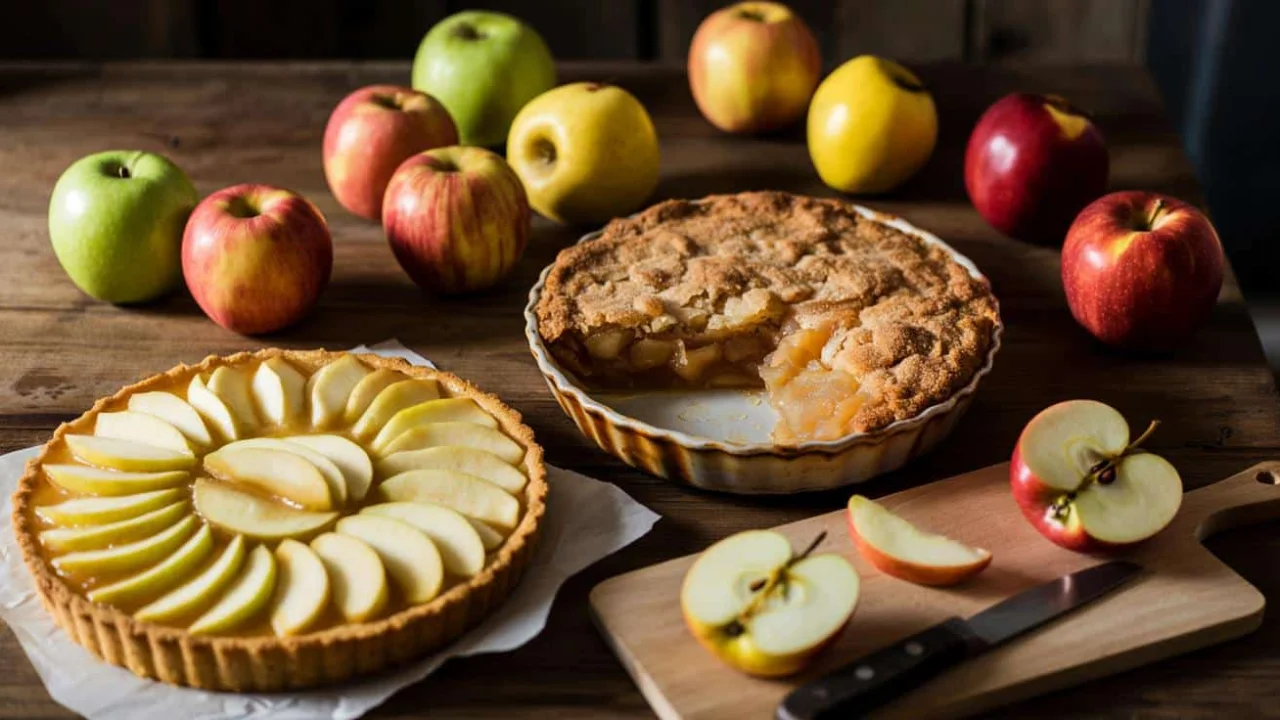
For French Apple Tarts: You need varieties that slice cleanly and maintain their edges. Braeburn and Pink Lady work beautifully, creating those Instagram-worthy overlapping slices that stay defined after baking.
For Apple Crisps and Crumbles: Honeycrisp and Fuji offer the perfect balance. They soften enough to meld with the topping but retain enough structure to provide satisfying bites.
For Apple Cakes and Breads: Softer varieties like Jonagold and Gala actually work better here. You want pieces that integrate into the batter, adding moisture and sweetness without competing for attention.
“I always tell my customers to think about texture first, flavor second,” says orchard owner Tom Bennett, whose family has been growing apples in Washington for three generations. “A perfectly flavored apple that turns to mush won’t save your dessert.”
What This Means for Your Home Baking Success
Understanding apple varieties for desserts changes everything about your baking game. Instead of grabbing whatever looks good, you’ll shop with purpose. That confidence translates directly to better results in your kitchen.
Consider the ripple effects: no more soggy pie bottoms, no more collapsed tart slices, no more disappointed family members staring at apple soup masquerading as dessert. Your reputation as the family baker gets a serious upgrade when you consistently nail the apple selection.
The financial impact matters too. Premium apple varieties might cost more per pound, but they’re still cheaper than throwing away failed desserts. When you know which apples deliver results, you stop wasting money on varieties that don’t perform.
“The right apple variety can make a mediocre recipe shine, while the wrong one can ruin even a perfect technique,” notes cookbook author and baking instructor Sarah Chen. “It’s the difference between confident baking and crossing your fingers every time you open the oven.”
Professional bakers have known these secrets forever. They don’t experiment with random apple varieties during busy season—they stick with proven performers. Home bakers deserve the same advantages.
Here are the key takeaways for immediate implementation:
- Stock your kitchen with 2-3 reliable baking varieties during apple season
- Read recipes carefully—many specify apple types for good reason
- When in doubt, choose firmer, more tart varieties over soft, sweet ones
- Mix varieties in large desserts for complex flavor and varied texture
- Test new varieties in small batches before committing to big holiday desserts
The beauty of mastering apple varieties lies in the consistency it brings to your baking. Once you understand how different apples behave, you can adapt any recipe to work with what’s available in your area. Regional apple varieties often outperform shipping-friendly commercial ones, giving you access to flavors most people never experience.
Your local farmers’ market becomes a treasure trove instead of a confusing maze. You’ll know which heirloom varieties are worth trying and which ones are better left for fresh eating. That knowledge transforms apple season from overwhelming abundance into exciting opportunity.
FAQs
Can I mix different apple varieties in one dessert?
Absolutely! Mixing varieties creates more complex flavors and interesting textures. Try combining tart Granny Smith with sweet Honeycrisp for balanced pies.
What’s the worst apple variety for baking?
Red Delicious and McIntosh are poor choices for most baked desserts because they break down quickly and become mushy.
Do I need to peel apples for every dessert?
Not always. Thin-skinned varieties like Gala work well unpeeled in rustic desserts, while thick skins should be removed for elegant tarts.
How can I tell if an apple will hold up during baking?
Press the apple gently—if it feels firm and doesn’t give much, it’s likely a good baking variety. Soft apples that dent easily will probably break down.
Are expensive apple varieties worth it for baking?
Premium varieties often have better flavor and texture, but many affordable options like Granny Smith perform excellently. Focus on choosing the right type rather than the most expensive.
Can I substitute one baking apple for another in recipes?
Generally yes, as long as you stay within the same category. Firm, tart apples can usually substitute for each other, as can sweet, softer varieties.
About the Author