Marie Dubois still remembers the day her elderly mother missed a crucial medical appointment in Lyon. Living in a small Alpine village, the 78-year-old faced a grueling six-hour bus journey through winding mountain roads – a trip that would have taken just 45 minutes by air. But the tiny regional airport hadn’t seen commercial flights in years, deemed too expensive and polluting to justify the service.

Stories like Marie’s play out across rural France and countless remote regions worldwide. Communities become isolated not by geography, but by the economics and environmental costs of keeping them connected. The aviation industry knows it has a problem, especially when it comes to short regional routes that burn massive amounts of fuel for relatively few passengers.
Now, a French startup believes it has cracked the code with an electric aircraft energy solution that sounds almost too good to be true.

The “Impossible” Promise That Could Change Everything
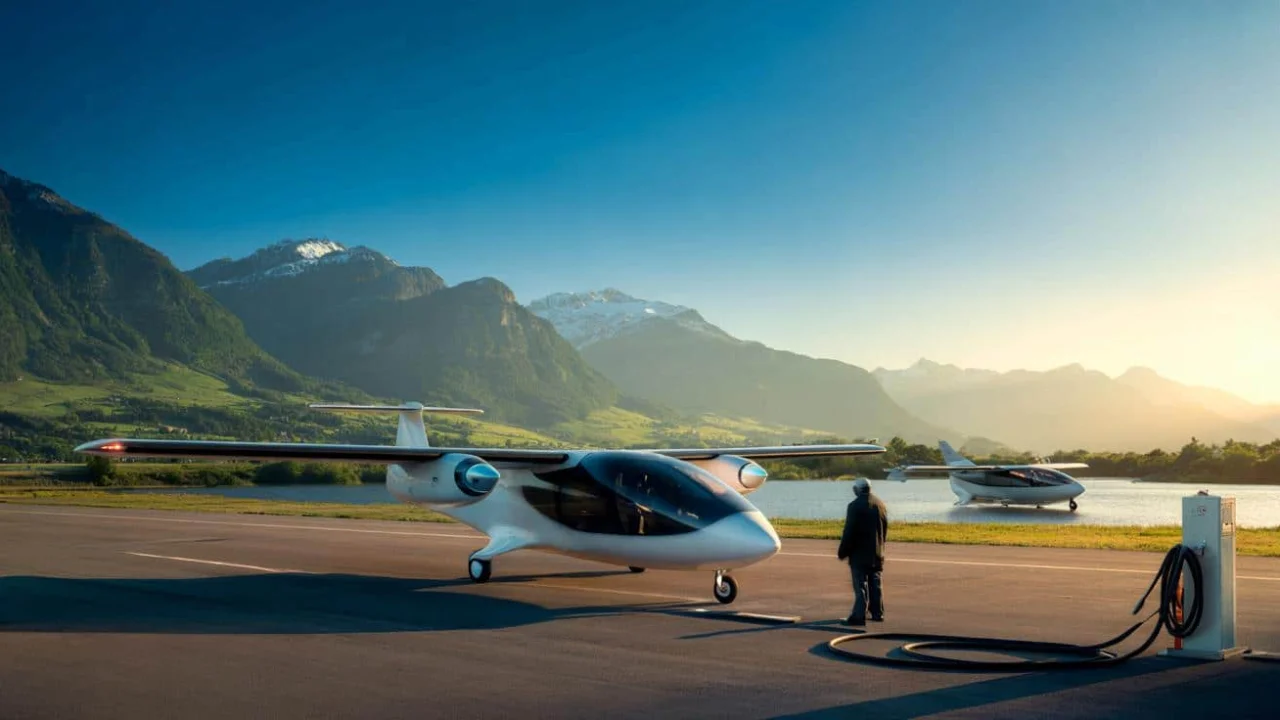
Deep in France’s Rhône-Alpes region, engineers at Eenuee are putting finishing touches on what they claim will revolutionize short-haul aviation. Their electric aircraft, dubbed Gen-ee, promises to use 11 times less energy than conventional regional planes while carrying 19 passengers up to 500 kilometers.
The numbers seem staggering in an industry where incremental improvements are celebrated. Most aviation experts have spent decades chasing 5-10% efficiency gains, not the dramatic reductions Eenuee is promising.

“We’re not trying to reinvent the wheel,” explains the company’s lead engineer. “We’re asking why regional aircraft need to be so energy-hungry in the first place.”
The Gen-ee takes a radically different approach to aircraft design. Instead of scaling down traditional jet configurations, the team started from scratch, optimizing every component for electric propulsion and short-distance efficiency.

Breaking Down the Revolutionary Numbers
The electric aircraft energy claims become more credible when you examine how Eenuee is achieving them. The company isn’t relying on breakthrough battery technology or exotic materials – instead, they’re rethinking fundamental aircraft design principles.
| Feature | Gen-ee Electric Aircraft | Conventional Regional Plane |
|---|---|---|
| Passenger Capacity | 19 seats | 19-30 seats |
| Range | 500 km | 800-1,500 km |
| Energy Consumption | 11x less per passenger/km | Standard aviation fuel |
| Infrastructure Needs | Existing small airports | Standard runways |
| Noise Level | Significantly reduced | High turboprop noise |
Key innovations driving the electric aircraft energy efficiency include:

- Ultra-lightweight composite construction reducing overall weight by 40%
- Distributed electric propulsion eliminating heavy gearboxes and fuel systems
- Optimized wing design for low-speed, high-efficiency flight
- Regenerative systems that recover energy during descent
- Advanced battery management reducing power waste by 25%
“The secret isn’t one breakthrough – it’s hundreds of small optimizations that add up to something revolutionary,” notes an industry analyst familiar with the project.
The aircraft’s unconventional shape plays a crucial role. While traditional planes prioritize speed and high-altitude performance, Gen-ee focuses entirely on regional efficiency. The result looks different from anything currently flying commercial routes.
Who Wins When Regional Flight Gets Cleaner
The implications stretch far beyond impressive engineering statistics. Rural communities like Marie’s Alpine village could regain reliable air connections without the environmental guilt or economic burden of traditional aviation.
Tourism operators in remote destinations see immediate potential. Island communities, mountain resorts, and wilderness lodges currently paying premium prices for helicopter transfers could access affordable, quiet electric aircraft service.
“This could completely change how we think about regional connectivity,” explains a transportation planning expert. “Instead of choosing between environmental responsibility and accessibility, communities might finally have both.”
Emergency medical services represent another crucial application. The Gen-ee’s quiet operation and minimal infrastructure requirements could enable air ambulance services in areas where traditional aircraft face noise restrictions or landing limitations.
Business travelers on short regional routes would benefit from reduced ticket prices and more frequent service. The electric aircraft energy efficiency translates directly to lower operating costs, potentially making regional aviation profitable on routes currently served by expensive, half-empty turboprops.
Environmental groups, traditionally critical of aviation expansion, are cautiously optimistic. The dramatic energy reduction could make short-haul flight compatible with climate goals, especially as electrical grids transition to renewable energy sources.
However, challenges remain substantial. Battery energy density still limits range and payload compared to traditional aircraft. Charging infrastructure needs development at regional airports. Certification processes for new aircraft designs typically take years and cost hundreds of millions.
“The technology is promising, but scaling from prototype to commercial operation involves solving problems we haven’t encountered yet,” warns an aviation industry veteran.
Eenuee plans initial test flights next year, with commercial service targeted for 2028. The company is already fielding inquiries from regional operators across Europe, particularly those serving mountainous areas where the Gen-ee’s capabilities align perfectly with operational needs.
The electric aircraft represents more than technological achievement – it’s potentially the key to reconnecting isolated communities while respecting environmental limits. For families like Marie’s, it could mean the difference between isolation and integration, between missing crucial appointments and maintaining quality of life in remote locations.
Whether Eenuee’s ambitious electric aircraft energy claims prove achievable at commercial scale remains to be seen. But their approach suggests that revolutionary improvements in aviation efficiency might come not from incremental advances, but from completely reimagining what regional aircraft should be.
FAQs
How does the Gen-ee achieve 11 times better energy efficiency?
The aircraft combines ultra-lightweight construction, distributed electric propulsion, optimized aerodynamics, and advanced battery management systems to dramatically reduce energy consumption per passenger-kilometer.
Can electric aircraft really replace conventional regional planes?
For short routes up to 500 km with 19 passengers or fewer, electric aircraft like Gen-ee could offer superior economics and environmental performance, though longer routes will still require conventional or hybrid systems.
What airports can the Gen-ee use?
The aircraft is designed to operate from existing small regional airports without requiring new runways or major infrastructure investments, making it accessible to remote communities.
When will passengers be able to fly on the Gen-ee?
Eenuee plans initial test flights in 2024, with commercial passenger service targeted for 2028, pending certification and regulatory approvals.
How much will tickets cost on electric aircraft?
While exact pricing isn’t confirmed, the dramatically lower operating costs should translate to significantly cheaper tickets compared to current regional aviation, potentially making air travel accessible to more communities.
What happens if the battery runs out during flight?
Like all certified aircraft, the Gen-ee will include multiple safety systems and backup power sources, with flight planning ensuring adequate energy reserves for safe landing at alternate airports.
About the Author