Last Tuesday evening, Marie-Claire stood in her Parisian kitchen staring at a block of fourme d’Ambert cheese and a bag of walnuts. Her usual quiche felt like too much work after a long day, but she still wanted something warm and satisfying for dinner. What happened next changed her weeknight routine forever.

She discovered what thousands of French home cooks are quietly embracing this winter: the blue cheese walnut loaf. No pastry to roll, no tart tin to grease, just a simple savory cake that delivers all the comfort of quiche with half the effort.
The results were so good that she’s made it three times since. “It tastes like a warm cheese board you can slice and serve,” she told her neighbor the next morning. “But somehow it feels like a proper meal.”

Why This Simple Loaf is Replacing Quiche on French Tables
The blue cheese walnut loaf represents everything busy home cooks want right now: maximum flavor with minimum fuss. While quiche demands pastry preparation, blind baking, and precise timing, this savory loaf takes a different approach entirely.
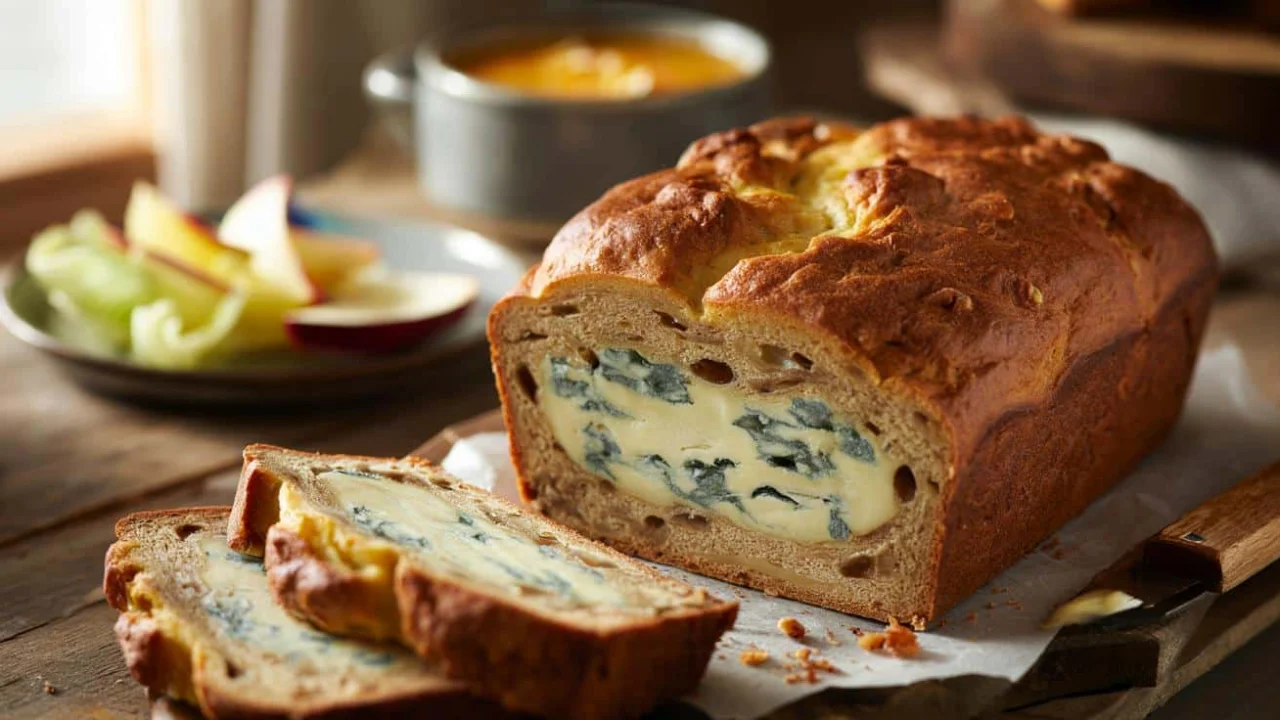
You simply whisk together a basic batter, fold in chunks of creamy blue cheese and crunchy walnuts, then bake. The result is a dense, moist loaf that slices beautifully and tastes like comfort food elevated.

“The genius is in the simplicity,” explains chef Laurent Dubois, who runs a small bistro in Lyon. “French home cooking has always been about getting maximum impact from good ingredients without unnecessary complexity.”
The star ingredient here is fourme d’Ambert, a mild blue cheese from the Auvergne region. Unlike aggressive blues like Roquefort, fourme d’Ambert offers creamy richness with just enough tang to wake up your taste buds. Paired with walnuts, it creates that perfect sweet-savory balance the French do so well.

Everything You Need for the Perfect Blue Cheese Walnut Loaf
The beauty of this recipe lies in its pantry-friendly ingredient list. Most home cooks already have the basics on hand, making it perfect for those “what’s for dinner?” moments.
| Ingredient | Amount | Purpose |
|---|---|---|
| Plain flour | 150g | Structure and body |
| Medium eggs | 3 | Binding and richness |
| Whole milk | 100ml | Tender crumb |
| Neutral oil | 3 tbsp | Moisture without butter flavor |
| Baking powder | 1 tsp | Light rise |
| Fourme d’Ambert | 100g | Main flavor component |
| Walnuts | 60g | Texture and nutty taste |
| Black pepper | Pinch | Seasoning balance |
The preparation couldn’t be more straightforward. Beat the eggs until slightly frothy, then gradually whisk in the flour and baking powder to create a smooth paste. Add the milk and oil, stirring until you have a thick batter.

Here’s where the magic happens: crumble in the blue cheese and roughly chop the walnuts before folding them through. The cheese should be in chunky pieces, not completely mixed in, so you get pockets of creamy richness in every slice.
“Don’t overmix once you add the cheese and nuts,” advises home cook Sophie Martinez, who’s been perfecting her blue cheese walnut loaf recipe for months. “You want distinct pieces, not a uniform mixture.”
- Preheat your oven to 180°C (350°F)
- Line a standard loaf tin with parchment paper
- Pour in the batter and smooth the top gently
- Bake for 45-50 minutes until golden and firm to touch
- Cool for 10 minutes before slicing
How This Humble Loaf is Changing Weeknight Dinners
The real appeal of the blue cheese walnut loaf goes beyond convenience. It’s transforming how families think about quick, satisfying meals during the darker months.
Unlike quiche, which often feels like weekend food, this loaf fits perfectly into busy weeknight schedules. You can have it in the oven within 15 minutes of deciding what’s for dinner. No defrosting pastry, no prebaking shells, no complicated timing.
French families are serving it alongside simple green salads dressed with vinaigrette, or with warming soups like leek and potato. Some slice it thick and toast it lightly for breakfast, creating an indulgent start to cold mornings.
“My teenagers actually ask for this now,” laughs Catherine Moreau, a working mother from Bordeaux. “They never requested quiche, but somehow this feels different to them. More like cake, I suppose, but savory.”
The texture sets it apart too. Where quiche can be delicate and sometimes watery, this loaf is substantial and satisfying. Each slice holds together beautifully, making it perfect for packed lunches or picnics once spring arrives.
Restaurant owners are taking notice as well. Several bistros across France have started offering their own versions, sometimes adding herbs like thyme or rosemary, or swapping walnuts for pecans or hazelnuts.
The adaptability is part of the appeal. Once you master the basic technique, you can experiment with different cheeses and nuts. Camembert with pistachios, goat cheese with pine nuts, or even cheddar with pecans all work beautifully within the same framework.
Food blogger Jean-Marc Petit predicts this trend will continue growing: “It hits that sweet spot between comfort food and sophistication that French home cooks love. Plus, it’s foolproof, which matters when you’re cooking after a long day.”
FAQs
Can I use other blue cheeses instead of fourme d’Ambert?
Absolutely! Roquefort works well if you like stronger flavors, while gorgonzola offers a milder option. Just adjust quantities to taste.
How long does the blue cheese walnut loaf keep?
It stays fresh for 3-4 days wrapped in the refrigerator. You can slice and toast pieces to refresh the texture.
Can I make this loaf ahead of time?
Yes, it actually improves after a day as the flavors meld together. It’s perfect for meal prep or entertaining.
What if I can’t find fourme d’Ambert?
Any creamy blue cheese works well. Look for milder varieties if you’re not used to strong blue cheese flavors.
Can I freeze portions of the baked loaf?
The loaf freezes beautifully for up to 3 months. Slice before freezing so you can take out individual portions as needed.
Is there a way to make this lighter or healthier?
You can substitute half the flour with almond flour, or use Greek yogurt in place of some of the milk for extra protein.
About the Author