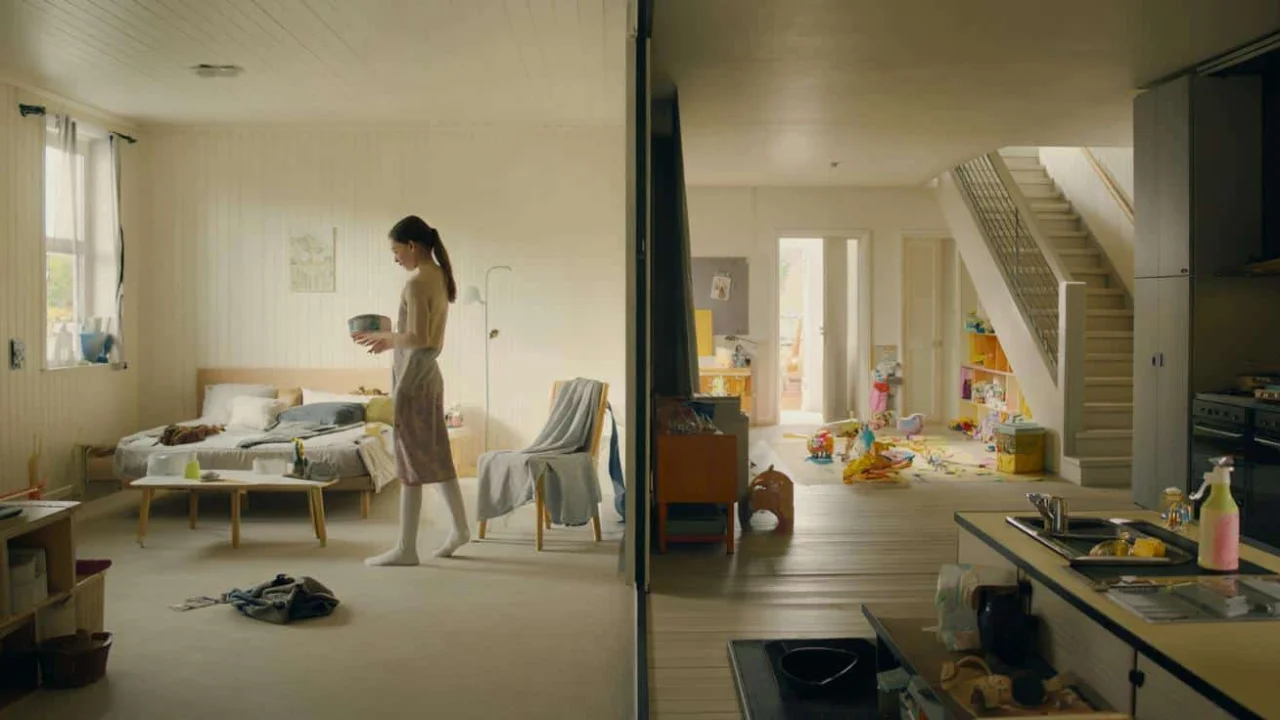
Maria stared at her 400-square-foot studio apartment after a twelve-hour workday. One unwashed bowl in the sink, a throw pillow on the floor, and yesterday’s jeans draped over the chair suddenly felt like living in chaos. Across town, her sister Emma walked through her sprawling four-bedroom house, stepping over toys in the hallway, ignoring the dishes in the kitchen, and promising herself she’d tackle the laundry room “tomorrow.” Both women were tired. Both needed to clean. But their experiences couldn’t have been more different.

This isn’t about being messy versus neat. It’s about how space itself shapes our relationship with cleaning. The psychology of cleaning in small homes creates an entirely different mental and emotional experience than maintaining a large house, even when the actual mess is identical.
Your living space doesn’t just contain your stuff—it shapes how that stuff makes you feel.
Why Every Crumb Feels Like a Crisis in Small Spaces
When you’re cleaning in small homes, every single item carries more visual weight. That coffee mug you left on the counter isn’t just a dish—it’s occupying precious real estate in your line of sight. In a 500-square-foot apartment, one dirty plate can make the entire space feel chaotic because you literally cannot escape seeing it.
“In small spaces, there’s nowhere to hide,” explains residential psychologist Dr. Sarah Chen. “Your brain processes the entire living environment in one visual sweep. When something’s out of place, it demands immediate attention because it’s always in your peripheral vision.”

This constant visibility creates what experts call “visual noise”—a persistent low-level stress that builds throughout the day. Your brain registers every misplaced item, every surface that needs wiping, every corner that’s accumulated dust. It’s like trying to concentrate while someone whispers a to-do list in your ear.
Large homes scatter this visual pressure across multiple rooms. The kitchen mess stays in the kitchen. The bedroom clutter remains behind closed doors. Your brain gets breaks between cleaning tasks because you can literally walk away from problems.

But in tiny spaces, walking away means stepping onto the fire escape.
The Hidden Challenge: How Big Houses Play Mind Games
If small spaces make every mess feel urgent, large homes do something trickier—they make cleaning feel endless. You finish the living room only to discover the dining room needs attention. Clean the upstairs bathroom, then notice the downstairs powder room. Complete the master bedroom, then face three more bedrooms waiting their turn.

The psychological challenge shifts from intensity to endurance. Instead of one concentrated burst of cleaning, you’re managing a marathon across multiple zones.
| Space Size | Main Challenge | Time Per Session | Frequency Needed |
|---|---|---|---|
| Under 600 sq ft | Visual overwhelm | 10-20 minutes | Daily mini-sessions |
| 600-1200 sq ft | Balancing speed vs. thoroughness | 30-45 minutes | 2-3 times weekly |
| 1200-2000 sq ft | Zone management | 1-2 hours | Weekly deep cleans |
| Over 2000 sq ft | Task completion anxiety | 2-3 hours | Room rotation system |
“Large homes create a different kind of mental fatigue,” notes home organization specialist Marcus Rodriguez. “You’re not overwhelmed by seeing everything at once—you’re exhausted by the knowledge that there’s always another room waiting.”
This leads to what researchers call “completion anxiety”—the nagging feeling that you’re never truly finished cleaning because there’s always another space to address.
Smart Strategies That Actually Work for Your Space Size
The key to effective cleaning isn’t fighting against your space—it’s working with its psychological reality. Small spaces need different strategies than large ones, and pretending otherwise just creates frustration.
For cleaning in small homes, think in loops, not rooms. Since you can see everything anyway, create a simple circuit:
- Start at the front door and move clockwise
- Carry a small basket for items that belong elsewhere
- Focus on flat surfaces first—counters, tables, bed
- End with a quick floor sweep or vacuum
- Total time: 15 minutes maximum
The magic happens when you do this daily instead of letting things pile up for a weekend “deep clean.” In small spaces, prevention trumps perfection every time.
Large homes need zone-based thinking. Instead of trying to clean the entire house in one session, rotate through different areas:
- Monday: Kitchen and dining areas
- Wednesday: Bedrooms and bathrooms
- Friday: Living spaces and entryways
- Saturday: One deep-clean zone
“The biggest mistake people make in large homes is starting without a clear endpoint,” explains professional organizer Janet Liu. “You need to define success before you begin, or you’ll clean for hours and still feel like you haven’t accomplished anything.”
When Your Space Works Against Your Natural Habits
Sometimes the challenge isn’t just space size—it’s the mismatch between your cleaning style and your living situation. Natural “batch cleaners” who prefer tackling everything at once struggle in large homes where tasks multiply endlessly. Meanwhile, “maintenance cleaners” who like quick daily tidying can feel overwhelmed in small spaces where every item feels urgent.
The solution involves adapting your natural style to your spatial reality. Batch cleaners in large homes need to artificially create smaller “batches” by limiting themselves to specific zones. Maintenance cleaners in small spaces need to embrace the 10-minute reset rule—short bursts of activity that prevent visual overwhelm.
Your space might also be fighting against your storage reality. Small homes often lack sufficient storage, making it harder to put things away quickly. Large homes can have too much storage, leading to “disappearing” items and forgotten messes in rarely-used rooms.
“The most successful people are those who adjust their cleaning approach to match both their personality and their square footage,” notes environmental psychologist Dr. Amanda Foster. “Fighting against either one creates unnecessary stress.”
Understanding why cleaning feels different in small versus large homes isn’t just about efficiency—it’s about mental health. When you recognize that your space is actively shaping your emotional response to mess, you can stop blaming yourself for feeling overwhelmed and start creating systems that actually work with your environment.
The goal isn’t to make a small home feel like a large one, or vice versa. It’s to embrace the cleaning reality of your space and work with it, not against it.
FAQs
Why does my small apartment always feel messier than my friend’s big house, even when there’s less actual clutter?
Small spaces force you to see everything at once, making mess feel more intense. Large homes can hide clutter in different rooms, reducing visual overwhelm.
Should I clean my small home daily or save it for one big weekly session?
Daily 10-15 minute sessions work better in small spaces because clutter accumulates quickly in your direct line of sight, creating stress.
How often should I deep clean a large house?
Focus on rotating different zones weekly rather than deep cleaning the entire house at once. This prevents burnout and ensures consistent maintenance.
What’s the biggest mistake people make when cleaning small spaces?
Waiting for a perfect time to do a “big clean.” Small spaces need frequent, short maintenance sessions rather than marathon cleaning sessions.
Why do I feel like I’m never done cleaning my large home?
Large homes create “completion anxiety” because there’s always another room to address. Set specific goals and time limits for each cleaning session.
Is it normal to feel more stressed about mess in a studio apartment?
Absolutely. Small spaces create visual noise that your brain processes as constant low-level stress. Quick daily resets help reduce this psychological pressure.
About the Author