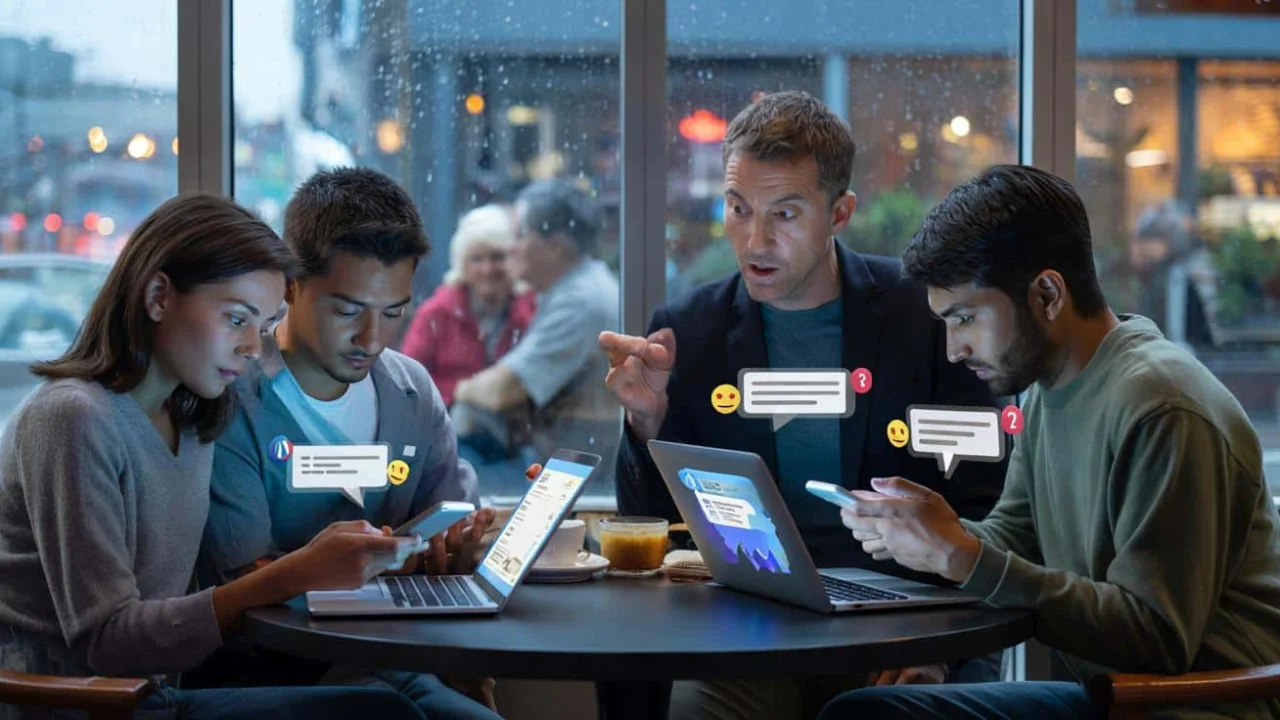
Sarah, a 23-year-old marketing coordinator, stares at her phone screen for the third time today. Her boss just asked her to call a potential client to discuss campaign details. She’s already written the perfect email draft, researched the client’s company thoroughly, and prepared detailed talking points. But her finger hovers over the call button, paralyzed.

“I can pitch a million-dollar campaign in a PowerPoint, but asking someone ‘How’s your day?’ on a phone call makes my heart race,” Sarah admits. She’s not alone in this struggle that’s quietly reshaping how an entire generation connects with the world.
What Sarah experiences reflects a broader shift happening across Generation Z. The generation that grew up texting before talking is now entering workplaces where face-to-face communication remains essential, and many are finding themselves unprepared for this fundamental human skill.

The Ancient Art of Speaking Is Quietly Disappearing
For over 5,500 years, humans have relied on direct, structured communication to build civilizations, solve problems, and connect with each other. From ancient storytellers around fires to modern boardroom presentations, our ability to organize thoughts and express them clearly has driven human progress.
Yet recent workplace surveys reveal a startling trend: approximately 40% of Generation Z workers report significant difficulty with basic verbal communication. This isn’t simple shyness—it’s a fundamental gap in what was once considered a natural human ability.

“I see brilliant young minds who can craft compelling Instagram captions and viral TikTok content, but they freeze completely when asked to explain their ideas in person,” says Dr. Maria Rodriguez, a workplace communication consultant. “It’s like watching someone who’s fluent in one language suddenly become mute in another.”
The numbers tell a compelling story. A recent UK survey found that 38% of young workers feel “uncomfortable or very uncomfortable” making phone calls. Another study linked Gen Z’s workplace anxiety directly to live conversations rather than workload pressure.
Teachers and managers across industries report similar patterns. Students who excel at written assignments struggle with oral presentations. Interns who create flawless digital content avoid client meetings. The skills exist, but the delivery method has fundamentally shifted.
Breaking Down the Communication Crisis
Understanding Generation Z communication skills requires looking at how this generation learned to interact. Unlike previous generations who developed communication through face-to-face conversations, Gen Z mastered digital-first communication patterns.

Here are the key differences shaping their communication style:
- Fragmented messaging: Communication happens in short bursts—texts, voice notes, and story updates
- Edit-friendly platforms: Digital communication allows for deletion, revision, and careful crafting before sending
- Asynchronous timing: Responses can be delayed, giving time to think and research before replying
- Visual emphasis: Emojis, memes, and visual content often replace verbal expression
- Low-stakes interaction: Digital mistakes feel less permanent and less socially threatening
| Communication Method | Gen Z Comfort Level | Required Skills |
|---|---|---|
| Text/DM | Very High | Written expression, emoji usage |
| High | Formal writing, structure | |
| Video calls | Medium | Real-time speaking, visual presence |
| Phone calls | Low | Voice-only communication, active listening |
| In-person meetings | Very Low | Body language, immediate responses, group dynamics |
“The gap isn’t intellectual—these young people are incredibly smart and creative,” explains workplace psychologist Dr. James Chen. “The gap is experiential. They simply haven’t practiced the muscle memory of real-time, unedited human conversation.”
This communication evolution has created what experts call “digital fluency with analog anxiety.” Gen Z can navigate complex online discussions but struggle with the unpredictable nature of live conversation.
Where This Communication Shift Hits Hardest
The impact of changing Generation Z communication skills extends far beyond awkward phone calls. Industries that rely heavily on interpersonal interaction are feeling the effects most acutely.
Healthcare settings report young nurses who excel at documentation but struggle with patient bedside manner. Sales organizations find that Gen Z employees can create compelling digital presentations but have difficulty with spontaneous client interactions.
Educational institutions see the gap widening. “I have students who can write PhD-level research papers but can’t coherently explain their findings to the class,” notes Professor Lisa Thompson from a major university. “The thoughts are sophisticated, but the verbal translation is missing.”
The workplace implications are significant:
- Leadership development: Traditional leadership roles require strong verbal communication and spontaneous decision-making
- Client relationships: Many business relationships still depend on phone calls and in-person meetings
- Team collaboration: Brainstorming and problem-solving often happen in real-time group settings
- Career advancement: Promotions frequently depend on presentation skills and verbal confidence
However, some organizations are adapting their communication expectations. Tech companies increasingly rely on asynchronous communication tools that play to Gen Z’s strengths. Remote work has also shifted many interactions to digital platforms where this generation feels more comfortable.
“Smart companies are recognizing that communication effectiveness matters more than communication method,” says organizational consultant Mark Stevens. “If someone can lead a project through Slack better than they can through weekly meetings, maybe we need to rethink our meeting culture.”
The challenge lies in balancing adaptation with skill development. While leveraging Gen Z’s digital communication strengths makes sense, many situations still require traditional verbal skills. Client presentations, job interviews, and crisis management often demand immediate, clear verbal communication.
Some industries are implementing communication training programs specifically designed for Gen Z workers. These programs focus on translating digital communication skills into verbal confidence, treating spoken communication as a learnable skill rather than an innate ability.
The long-term implications remain unclear. As Gen Z moves into leadership positions, workplace communication norms may permanently shift toward digital-first approaches. Alternatively, the premium placed on strong verbal communicators may increase as the skill becomes rarer.
What’s certain is that this represents more than a generational preference—it’s a fundamental shift in how humans learn to express complex ideas. The 5,500-year tradition of verbal storytelling and discourse faces its biggest challenge in the digital age.
FAQs
Is Gen Z really worse at communication than previous generations?
They’re not worse overall—they’re differently skilled. Gen Z excels at digital communication but struggles more with spontaneous verbal interaction than previous generations did at the same age.
Why do Gen Z workers prefer texting over phone calls?
Texting allows time to think, edit responses, and avoid the anxiety of real-time interaction. Phone calls require immediate responses and don’t allow for the careful crafting that digital communication enables.
Can these verbal communication skills be learned later in life?
Absolutely. Communication skills can be developed at any age through practice and training. Many companies now offer specific programs to help Gen Z workers build confidence in verbal communication.
Will this trend change how businesses operate?
Many businesses are already adapting by using more asynchronous communication tools and reducing unnecessary meetings. However, certain roles will always require strong verbal skills.
Are there any advantages to Gen Z’s communication style?
Yes. Gen Z tends to be more thoughtful in their communications, better at written expression, and more inclusive in their language. Their digital communication skills are often superior to older generations.
How can Gen Z workers improve their verbal communication skills?
Practice is key. Starting with low-stakes conversations, joining speaking groups, and gradually working up to more challenging verbal interactions can build confidence over time.
About the Author